Posted on

Short Story: Mrs Deacy and The Flood

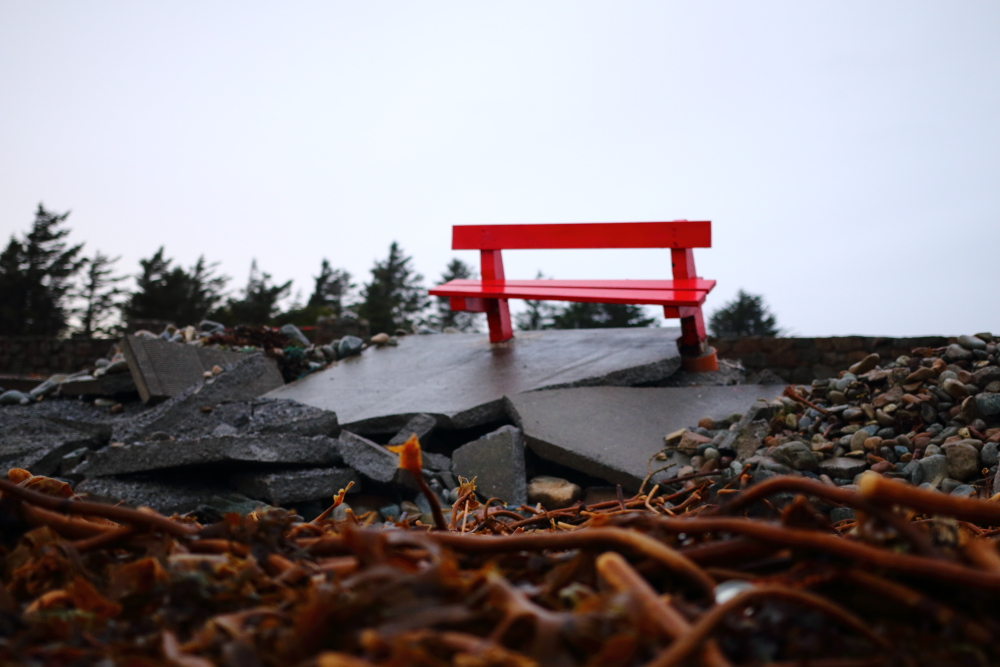
A bench in Spiddal after a storm

“It’s the wrath of God!” cackled wiry old Mrs Deacy with a smack of her stiff walking stick on the linoleum. “Settle down please, Mrs Deacy,” said Frank McDonagh. “It’s the same spring tide as every year, just coincident with a severe low pressure weather system.” Mrs Deacy persisted. “It’s the Good Lord’s way of showing us our moral corruption and lazy decrepitude.” “Settle down, Mrs Deacy” pleaded Frank McDonagh again. Rush Levins piped up. “Global warming, sure the Earth is fecked”. “Headlong to an amoral hell” said Mrs Deacy. Rush Levins was getting excited too. “The rest of them will get roasted and we’ll just get more water, more wind, and more winter!” There’d be no stopping them now. The hasty call for volunteers to survey the flood damage could go on for hours, at least until Seamus Kerins would inevitably lose his righteous temper and shake them into submission with the furrowing of his fiery eyebrows. I looked across at Tom and gestured my head towards the back door of the island’s tiny primary school. He nodded. Leaving the theorists to their rival interpretations, we each sidled carefully out of our seats, kept our heads down, held our breaths, and edged across the classroom. “Hey! Ye’re to blame!” cackled old Mrs Deacy after us from back in the classroom as we gingerly opened the door, which was eagerly caught by the blowing gale and slammed squarely back into the frame behind us as we fled across the yard. There was a dawn of untold damage to explore.

Down on the beach, the beach was no longer. Most of the sand had been hauled off, surely to somewhere warmer and more deserving and flecked with bronze bikinied girls on sunbeds reading modern novels. It had been replaced with a wild mess of greybluegreen stones and layers of dishevelled yellowbrown wrack. The small dunes that had for all our summers run up to the grass under the fences on the banks were missing, presumed dead, gobbled up by the hungry waves. “The worst flooding since 1949,” the newspaper had said. “Class!” was what Tom said, and we appended further impressed exclamations as we zigzagged up and down the blitzed shore towards Roche’s point with the wind and surfsound in our ears. “Mad!… Nuts!… Unreal!… Deadly!… Insano!” Sections of the beach road had been ripped up. The steel rails at the end of the road were torn from their bases. The benches past the car park were buckled. Cullitys’ field was filled from wall to broken wall with a pool of orphaned seawater. What power! What fury! The two empty holiday homes close to the point had been properly vandalized by the ferocious surge, despite the sandbags piled up against the doors: much worse than even our most ambitious graffiti.

As the storm damage investigation committee from the school finally began to gather behind us along the remains of the beach, we hopped out closer to where the tide had recently retreated. Big rollers still crashed out beyond the point: there would be another high tide again in the evening. Tom spotted the strange shape first, and darted off towards it. It looked like a giant lumpy football encased in a hundred years worth of winkles and seaweed. “What is it?” I gasped as I caught up with him. “Must be treasure!” he gushed. “From one of them Spanish ships that sank hundreds of years ago!” “Maybe gold!” We began to rip the seaweed away and hack at the barnacles. They were stubborn: Tom picked up a rock to belt them with. “Hey! Hey!” Old Mrs Deacy was advancing across the rocks, waving her stick. “Get away from that ye devils! Get back! That’s a symbol of God’s wrath for agents of immorality like ye!” We retreated the other way. “Leave us alone you old bag!” shouted Tom back at her. “We found it first!” I yelled. Old Mrs Deacy reached our treasure and swung her stick at it as she straightened up to issue another croaking judgement. With a magnificent mid-sentence pop, she exploded into an enthralling billow of sand, seaweed, crinkly flesh, and jellyfish.

Donal Kelly, February 2014

Week Four of the Creative Writing Class, with the homework being to write a short piece beginning with dialogue in a crowd. I wanted to include something from the flooding that has beset Ireland lately and had a sudden image of a group in a school on an island having a madcap meeting about what should be done. Then I figured the sea would wash something up, maybe treasure, or something mysterious, or alien, or from the future, or from a science fiction novel. Mrs Deacy was originally supposed to just be in the meeting but she has a set on the two young fellas, and followed them on the beach. She saved their lives- an act of heroic sacrifice! It could be a lot longer but I wanted to fit it on a single page when printing- challenge being to include the whole story within that limit.

Posted on

Story: Mitchell and the long way round

My hands shook. I couldn’t stop them. The magazine slipped from my fingers. I squatted and searched for it in the mud. Rain pinged off my helmet. Sporadic volleys of gunfire zinged through the greasy drops. We were supposed to be winging it through the bullets to take back the hill. It wasn’t going well. I couldn’t see any of the others, and everything was soaked and coated in thick wet oozing mud. I slipped again, and tried to dig my fingers deep into the soggy soil, but I kept sliding down the bank. Guns poking over the brow of the hill began to snap at my accelerating tumble. I heard two bullets, three, bite into the earth before I pitched forward into a sudden gully where a stream flowed noisily. That’s where I met Mitchell, who introduced himself by hauling me out of the water and pushing me up against the steep gully wall where we were invisible from above.

I can remember it pretty well, unless it’s true about memories being sensitive to fabrication; maybe I added details along the way. I’m sure he was unimpressed by the antics from the top of the ridge. I never did find out how he even ended up in the army. “They won’t follow you down that way,” he observed, while I was panting like a hot dog and rubbing dollops of mud from my face and eye sockets. “They’ll come down around the other side of the hill to cut off the road in a few minutes.” he added. He seemed crazily calm, taking in the situation and idly kicking the side of the gully with his boot. Looking back, it might have been more sensible to obey orders and head back up into the mud, but instead I followed Mitchell in a madcap sprint across some battered fields to the ruins of a farmhouse where we smoked his cigarettes and looked back from behind smashed walls as the soldiers came down round the other side of the hill and cut off the road.

In truth, I am following him still, even so long since that first ridiculous summer in Europe. We were stranded from our own army and dodging the others, lost in chaotic midnight flights from shelled cities, or caught under the bombs of an allied air raid, or holed up in a desolate country estate for two weeks until a squad of vagrant German soldiers showed up. I still don’t know where he learned to speak German. They just wanted to be done with it all. He wanted to go all the way East to Königsberg, I think to see where Kant had lived. Mitchell reckoned he could have made a good thinker, but I figured he couldn’t sit still for long enough to wait for his ideas settle. Back then, we survived from day to day, separate from the fighting, living off scraps, while Mitchell took it all in and seemed to know without thinking when it was time to slowly walk away, or when it was time to run full tilt towards the nearest shelter. I learned the different shades of calm that concealed his energy. “Most of us, we are derailed by the smallest of reasons,” was the kind of thing he would say. At the time I was suffering from the worst kind of fatalism, convinced that by the time the dust had settled there would be nothing normal left to go back to. “It’ll end.” He said. “It’ll end and it’ll seem like someone else’s lunatic dream. What value in losing your head?”

Anyway, what you were asking about, Paris. By the time we got there we had morphed into reporters. Well, he was the reporter and I was the photographer, and we had already published a bunch of reports in the Daily Press, mostly about bombing runs that had destroyed some beautiful towns. We were trying to find a way home, but we ended up in… Sorry, that’s another story. Paris, well Paris was in lockdown and we were holed up in Rue Damremont in an apartment above a bakery that had been bought by a distant relative of mine in the twenties.

Donal Kelly, January 2014

Written for class no. 3 of the Creative Writing Class in GTI. The homework was to use a 'fio' character to introduce another. I wanted to begin with an action scene, which began in a generic war scene and quickly became somewhere in Europe in WWII. AMazing how the thirst for details requires you to become more specific. As you try to provide solidity and realism, you need to add solid real details. Or so I found. I tried to use short sentences for action, as it all happens so fast and there is no time to think. In a dramatic moment we jump from perception to perception quickly trying to make sense of everything. Maybe it could be reduced further into sparse verbing? Think. Get up. Walk. Window open? Use door. Wake up!

Posted on

Poem: Solutions

Do not forget me when the door clicks shut
Let me linger and fidget as a breeze
I would prefer to persist
Like the smell of toast or coffee or Febreeze
And my foregone exit resist

The lake at its bloated winter zenith
Broad boatless surface burying slowly in its creep
The low jutting piers, the barks of scrawny trees
The green shore of summer now sunk grey deep

I would prefer to retreat
Like a high tide leaving things hidden
In the sand beneath our feet

The river blasting down its dug channel’s funnel
Mudbrown foaming rage hurtling against stubborn city concrete
The bridge’s pillars below my old borrowed Peugeot
Mudbrown roar muffled around the tinny engine drone

Do not desert me as I try to wade
From dream to dream, apologising in between
Clinging to the warmth of a snug burrowed bed
Hiding from decisions or what they mean
Wishing the weather would dictate my fate
Wash me into winter’s furrowed stream

January 2014

Posted on

Song: Lightseeking

Wrote this a few weeks ago and wanted to record a demo over the Christmas. On the last day of the year I managed to record a very basic version that I can work from.

Chords: C#m A (5th) E and C#m B E Bit samey, may need a bridge and some variety

Demo:

Lyrics
Now I’m curled up in a ball
Need to walk since I can’t crawl
Now I’m hiding in the pockets of your warmth
It heats us all

Now I’m searching for a shoe
Need to find a way to you
But what I’m finding is that all I am
Is the sum of what I do

Now I’m running down the stairs
Chasing days and chasing wares
Now I’m counting every step away
From the places my heart tears

And I’m dying to see the light
While I’m trying to seize the day
You cannot win if you will not fight
Or love without losing your way

Now I’m stumbling down a road
Taking heat for being cold
And I’m feeling every metre from
The comfort of your hold.

Now I’m waiting on the street
As the rain falls down in sheets
While my mind is getting soaked from all the
flowing thoughts it leaks.

Now I’m balanced on a chair
Drinking toasts to you somewhere
While my clothes dry out and I wrestle doubt
For the love in the world out there

Now an older man sits near
And he tries to tell me clear
To count my blessings and count my scars
Because they all add up to what we are

Other verse, not recorded
(Now I’m curled up in a bed
waiting for the dreams I’ve fed
On the ways I grow and go toe to toe
With the emptiness and dread)

Posted on

Short Story: Patients

After washing my hands with warm water I squirt disinfectant gel on them from the plastic dispenser that hangs on the wall, and stand looking in the mirror while I rub them dry. Looking older? Surely, but it’s so hard to notice, day by day changes, cell by dying cell. Show me a photograph of me from ten years ago and I will jolt with recognition and sadness. Older we go into the unknown, over and older again.

There’s a lot of that here. A mighty sum of accumulated years. I wonder what the average age of the patients is, as I push the bathroom door open with my foot, proud of not touching the handles. My elbows open doors; my feet lift unknown toilet lids.

Simon is sitting where he had been, in the thick green chair next to the bed. He looks noticeably older too. His face is paler; I guess this place adds a few years. He is holding the clipboard that had been hanging at the end of the metal-framed bed, and he is looking at the rise and fall of the numbers on the colour-coded chart.

The old lady in the bed to the right looks up and smiles through her spacious glasses. She is still working on the word-search puzzle. she’s up to page seventy-five now, though she told me she skipped sections when she got bored of them. Earlier I watched her draw surprisingly neat faces on the inside of the cover of the puzzle book then scratch them out. Rosie, the nurses call her, and they all seem to know her name: a friendly name for a friendly face. She talked to me about the kids that sometimes trespass onto her back garden in Athenry to get to the river bank and follow it through the town. She’s like a gentle river herself when she starts chatting, flowing from one topic to the next with an easy but constant rhythm: her son, her neighbours, the tea, the weather, and the changes.

Simon looks worried. I want to tell him that his worrying creases are becoming part of his default face, but it’s the wrong time. He doesn’t appreciate those comments. I don’t believe in Botox but sometimes I try to make my face fully expressionless, even if only for a few minutes. Anyway, I know what he will say. “I have a lot on my plate these days.” I know him well enough to predict full sentences, so they often go unsaid, though I still find it hard to sit still through the longer silences, and my mind keeps proposing phrases or sighs or meaningful long breaths to punctuate the gaps. “Ah well,” I will say, then maybe “It could be worse,” and perhaps I will make the effort of envisioning a potbellied child with flies around its head in a sweltering bone-ash dry desert a thousand miles from a welcoming door, even though I know I shouldn’t do that as it makes me feel too remote. In any case I will invariably fade away with “what can you do?” or “hard to know” or “I dunno”. “I don’t know… don’t know… know… no.” My utterances tend to taper into pregnant pauses that stretch out and taper, maybe like the universe expanding and losing its will to move.

A doctor strides by with stethoscope hanging from his neck. I’ve always been jealous of people who exude calm and stability, whose words seem to be infused with extra gravity, and whose conversation seems loaded with ballast. Even when completely wrong, theirs seems to be the path to follow. I tell Simon that people like this live in action, and not ideas, and that the consistency of their course matters less than what they are currently setting out to believe. Or at least I try to convey the idea, between all of the ahs and ams and inhaling: it’s a wonder we can even speak at all.
Simon smiles and the young worry-lines are redrawn into friendlier folds for a moment. Then he coughs a few times and they come back. He wants to know why the blood pressure is so low, and why the zigzag heart rate measures look like they were scribbled in by a shivering kid.

There’s a TV strung up on the wall behind me. I’m sitting at the outside end of the bed facing Rosie. Simon is watching it, but I can’t see it without straining my neck or moving. I watch his eyes dart up every few moments and force mine not to follow. I scan instead from him to Rosie sitting on her bed bent over her word-search with her feet dangling above the floor, and her thick ankles remind me of my late granny’s thick ankles and I wonder what gathers in them. Words well up: fluid collecting, pus draining, karma coagulating. black bile, yellow bile, phlegm, blood: The four humours sloshing around her swollen feet.

I scan back to Simon. We talk about the empty beds opposite. The Goth teenage girl had been moved from the one on the right to the one on the left because the one on the left is further from the exit. She arrived during the night and by morning there was a group of quiet worried adults holding a hushed vigil around the bed where she was squirming. “You know 20 paracetamol are not for your health?” That’s what Simon said he thought he heard the doctor say while the curtains were fully drawn around the bed. The Goth girl went to the bathroom later and came back bawling crying, then later again she tried to run away, twice, and then they moved her to the other bed and now she is gone altogether. Maybe she just wanted to skip across to SuperMacs? I was there yesterday with Simon, and he just sat and watched me scoff curry chips. I ordered a coke but the guy thought I said coleslaw. He was foreign but I joked about my thick country accent. Easier that way. Imagine if I went over now and the Goth girl was there, standing in the queue, looking up in the harsh white light at the red and brown and golden menus of fats soaked in burgers or chips or chicken nuggets. What would I say to her? What could I say? What could any of them say?

An alarm goes off in the next room. We listen to a rush of feet and voices, then it settles down again, and dinners are wheeled around. Simon looks unimpressed with the chicken and vegetables. “Food’s food!” I exclaim. “It’s ok for you, you can eat anything!” he replies. Visiting is supposed to stop during dinner but nobody says a word. I guess they enforce regulations when they need to, like the guards do with people drinking down by the Spanish Arch. I ask Simon what would happen if everyone tried to enforce every rule and regulation, I mean , really tried. He just shrugs. He’s looking at the pills in the little plastic cup now. He tries to learn their names and look them up on the Internet and worry about them being the wrong ones or about their possible side effects. They all seem to have a pile of side effects, like the same person is writing all of the lists, and wants to cover their ass just in case. I advise that given the situation it is best to gobble pills down without adding the worry of extra knowledge.

The same doctor hurries past in the opposite direction. When I walk down a corridor wearing my thick jacket I imagine myself as a doctor too, resourceful and knowledgeable, being tailed by a gaggle of eager but quiet student doctors, all respectfully admiring my every move. “Constricted left vastricular nerve” I will point out. “Notice the slight indentations above the hibea and the asymmetrical apsis glands? Now, look at the scan again… Gerry what do you think? No Gerry, the lymph node is normal, see? Alice? Good, but notice that the heart rate is elevated. Do a second liver biopsy and you look tired… Huh?” “I just said you look tired,” said Simon. I snap out of the daydream a little disappointedly. Can it still be called a daydream at night? Why not a wakedream instead? “You look tired too,” I say. “From all the hard work.” Simon grins, and I grin back. “It could be worse” I say. “I could use a holiday.” “Me too!” “You could always run away” I add, then we both look over at the bed where the Goth girl had been. They won’t be empty for long. Simon stands up and stretches. “It’s hard to feel healthy in here,” he says. “What’s the opposite to… what do you call it? A placebo?”

The evening has trickled by and we’ve hardly been saying a word. We walk down through and out of St Enda’s ward. The main entrance is closed now so we have to head on up to the A & E entrance. It’s a normal weekday night there. A drunken old man is sleeping across four seats and nobody is asking him to move. A worried couple soothe their child. They stare at the double doors and the blue door next to them with the letterbox. When you come in you fill in the forms and they go in the letterbox in the blue door. The triage nurses prioritize them and you wait until yours gets to the top. When a space is free inside someone will open the blue door and read out a name. While we are there a nurse opens the door and calls out “Samantha Reilly… Samantha Reilly?” I imagine Samantha Reilly sprinting down University road towards the Cathedral, convinced she has been cured, and then wonder if she could be in SuperMacs. But she would be too sick to run: she will have to come back. After the doctor sees you you will probably have to wait again, wait wait wait. A friend of mine reckons that some people exaggerate their symptoms to get to the top. A perfectly rational idea, though I doubt I would have the will to do it: I have a distended superego. I read somewhere that the most bang-for-your-buck easily fakeable symptom is (drum roll) shortness of breath. Wheeze when signing in, pant and pause to catch your breath. Quicker service. Might get a trolley, maybe an oscar.

I squirt some more disinfectant gel on my hands. In the olden days doctors would go from one bloody patient to the next with hardly a wipe of a blade, carrying along whole ecosystems of germs along with them, oblivious. Now they have all these gloves and sterilizers and disinfectant gel dispensers with helpful guides and a huge industry of drug-makers, and play a game of evolutionary chicken with strains of bacteria by filling everyone with antibiotics. “Forget about it!” Simon says. I tell him I’m not interested in conspiracies, but that I am very interested in systems and symptoms and simple incentives. “As a general rule, people, even the wicked, are much more naive and simple-hearted than we suppose. And we ourselves are too” I wish I could remember that quote: I wrote in my notebook. I can’t even spell Fyodor Dostoyevsky’s name without looking it up every time.

We are standing in the exit; close enough to the automatic doors to keep triggering them open and sending draughts of cold December wind in. Someone is probably cursing us from the waiting room. An ambulance pulls up and a man on a stretcher is pushed past with blood on his forehead. A thin woman in a nightgown asks us for a rollie. “We don’t smoke” is all I can say. It is time to leave; we are both almost asleep. I tell Simon that he shouldn’t stay so late and to take care on the drive home and then I head back down towards the ward, allowing myself to be a vigilant passing doctor again, peering into dark rooms lit only by TVs and machine lights to notice the numbers on the little screens and the restless figures curled up in their beds.

Donal Kelly, December 2013.

This is a case of Fragment:consider revising: I guess I will remove or rewrite this comment if I tinker the piece till it finds some better equilibrium. I should go back and hone existing stuff instead of oncemoreing into the breach and filling the world with new fodder. It has fodder enough, fodder aplenty, but the restless seeds must grow as they please. This story is based on some hospital visits: it's a strange place, a world unto itself, with so many personal dramas unfolding all the time. It got me thinking about what it means to be sick and how it can seem so similar to being healthy most of the time. I wanted to create a scene where it is very unclear who is the patient and who is the visitor. I have probably only succeeded in being unclear.

All rights reserved. Do not copy or use without permission.

Posted on

Street Style in Galway (with extra rain)

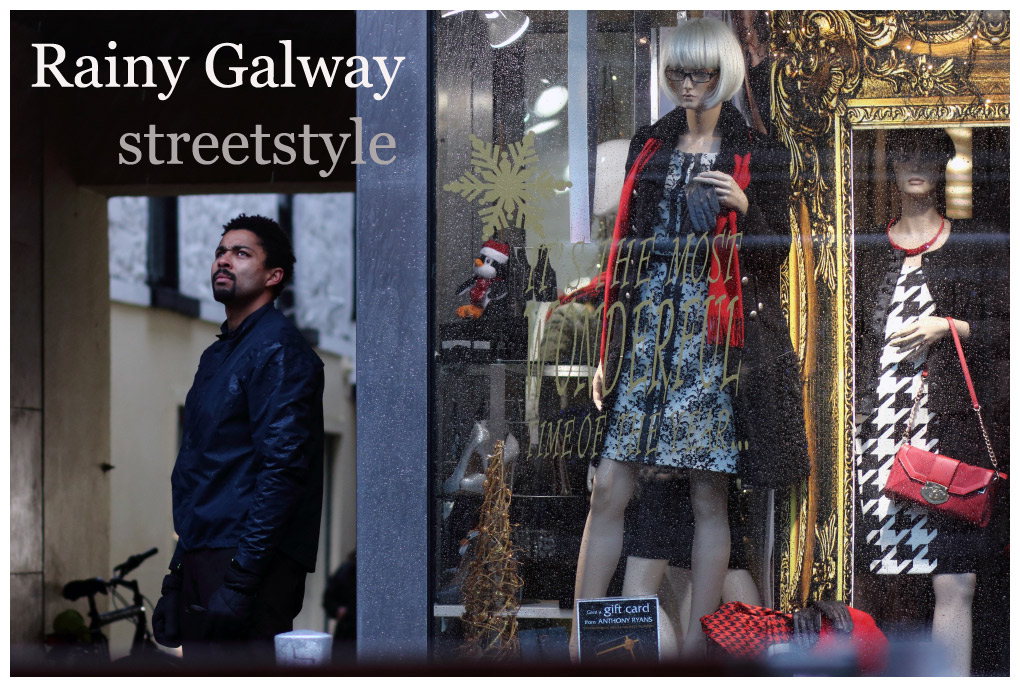
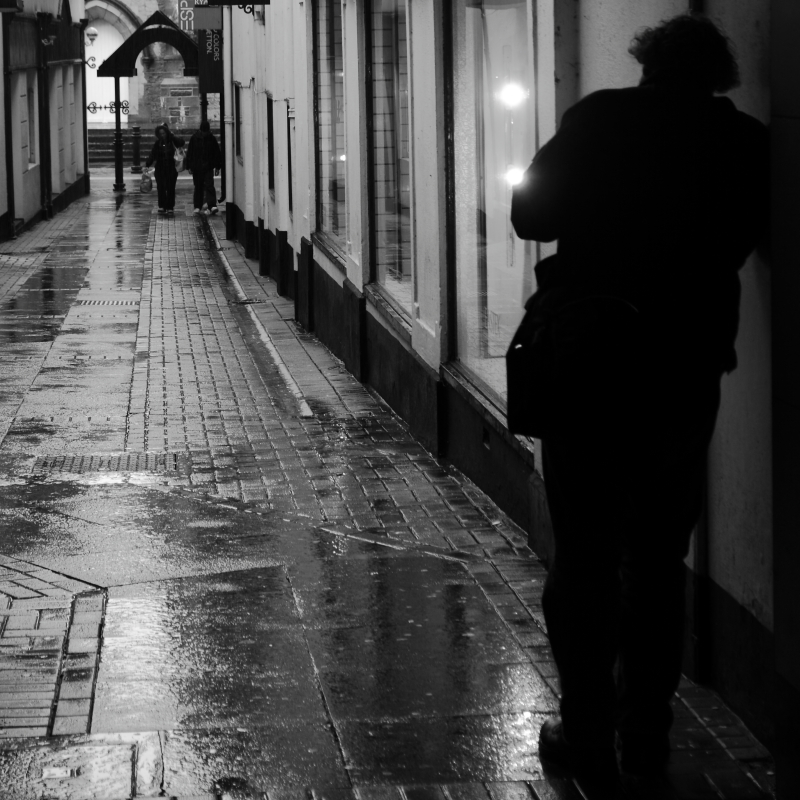
Shop street Galway in the rain

It’s a windy, dark, mid December morning, and I’m watching the rain pelt down along shop street. From the barely-there shelter of the cafe I annoy passers-by with my camera. But I like the atmosphere of the Sunday morning downpour, and there are few enough people to actually see them as they pass by. The shops are opening late and the rain is keeping people away, but needs must and the brollies come out. Street portraits in Galway on a rainy day.

Galway, street style, galway fashion, rain

Posted on

Short Story: Dossers

Baurisheen at dusk

When the branch of the beech tree broke Morris fell down in a heap next to the trunk. He lay there and stared at the sky. “Stupid branch!” he cursed upwards. The tree was unmoved, its leaves shivering in the early autumn afternoon. Morris struck its mottled trunk with a lunging kick. The rugged bark ignored his blow, and the unmoved tree carried on soaking up light, sucking up water, holding up its heavy old girth, and growing fantastically slowly into the azure.

Pasty-faced Dillon appeared above, his dishevelled mop of blond hair blocking the sun. “What happened to you?” “Nothing…” Morris shrugged, hopping up and hurling the broken branch as far as he could into the lake. “You cut your elbow.” “It’s fine. It’s nothing.” Morris rubbed the small smear of blood along his wrist as the two of them ran in fits and bursts up the path back to the house.

They raced each other to the pool room; Morris was first, as usual. The pool room was a converted shed with small square windows, attached to the end of the squat white bungalow, which in turn was perched right at the tip of a narrow peninsula, with water close by on three sides and the torn-up road leading from the other back towards the village.

Morris grabbed a cue and launched it at Dillon while picking out another. They set up the balls, tossed a coin to see who would break, rubbed the tips with a cube of chalk, and for half an hour focused on the crack of ball on ball, the selection of angles, and the gradual potting of solids and stripes. After arguments about rules and the eventual clearing of the table, winner and loser were defined and a new game began.

Halfway through the third game Morris and Dillon abandoned it, and instead brandished their cues as swords, and swung and hacked and parried their way in tangled swoops around the cluttered room, trying to belt each other clean on the arm or leg or back, until Morris broke his cue off the wall, and Dillon fired the white and black balls straight through panes of a window onto the lawn, and they both tipped over the tall bookshelf onto the desk and then legged it out across the grass.

“Who owns that house anyhow?” asked Dillon. “Some old foreign couple. They’re never here. My dad says they’re selling it.” “I’ll buy it! Twenty euro for the lot! I’m sick of home!” “Me, too.”

The bikes were where they had been abandoned in the rushes. The afternoon was moving on and swallows that would soon be going south were arcing over the lake after insects in broad mobile circles punctuated by flicks and spurts and fluid rolls. Morris and Dillon pedalled along the narrow briar-edged road, weaving back and over across the strip of thick grass growing in the centre, almost colliding, cycling with no hands, ploughing into the pot holes, using their shoes as brakes, until they skidded to a stop outside the McLoughlin house.

There was no car outside or sign of life in the windows. Morris looked at his watch. “Bet there’s nobody here.” Dillon was looking up at the tall conifer trees that ringed the garden. “I think there’s a shed out the back,” he said. “O’ Grady cuts the grass here on Saturdays.” They dropped the bikes behind low furze bushes, clambered over the wall and skirted round the house in the shadows of the pines.

The lock on the wooden door was old and rusted and gave away easily to blows from the heaviest rock that Dillon could lift. An acrid smell of petrol fumes soon filled the small shed as they tilted the lawnmower onto its side with the fuel cap open. They found two red life jackets and inflated them after putting them on, roaring with laughter while tipping a tin of thick green paint into the fuel tank. Morris wanted to use his lighter to ignite the mixture but Dillon gave him one of the cigarettes he had loose in his pocket and they puffed and coughed in the paint and petrol fumes with the emergency lights on the swollen life jackets flashing on and off. When they heard a car in the distance they took off again, scrambling back out over the wall and onto the bikes and sprinting down the shore road.

Dillon had taken some screwdrivers and a heavy vice-grip, and they stopped whenever they could to unscrew or dismantle things. They took down one signpost completely and twisted others in wrong directions. “Glann Road” now pointed up a cul-de-sac boreen, and “Lake view B&B” aimed straight into the hedge. They hid when they heard cars and opened gates into the small fields that lined the road. In one of them a dozen or more cows were quietly chewing. With the gate wide open they were easily provoked by energetic shooing; out onto the road, trotting awkwardly on their loud hooves in a confused herd. “Stupid cows!” yelled Morris. “Go on ye good things ye!”

The farmer must have spotted them from the hill that ran up behind the field, since that was where he came running from in his green wellingtons, swearing at the top of his voice and waving a stick above his head. Morris couldn’t help but grin with glee, as happy as he could remember ever being, pedalling and freewheeling down the leafy narrow road on a long bright evening under low dappled sunlight being chased by the angry cursing farmer and his two dappled barking dogs, and swerving between the dozen stupid dappled cows that were now clattering clumsily in all directions. Dillon, close behind, was tossing away tools and trying to get the flashing life jacket off over his head while pedalling furiously. For five minutes or more they tore along breathless towards the lake again, until they pulled up panting and laughing beside an outcrop of old concrete piers.

There were boats tied to the piers and more pulled up onto the shore. The two of them leaned against one until their breathing began to slow back down. Dillon launched the last of the screwdrivers into the jetty. Morris followed it with stones, then larger rocks. They made bigger and bigger splashes in the shallow water until they were half soaked. Morris untied a few of the boats and tried to get them to float away, but the small waves pushed by the light east wind sent them back to bump and nudge the piers and turn sideways and scrape against the rocks. One of them had a dented old Yamaha 15 outboard engine mounted on the stern. There was no petrol tank in the boat but there was one hidden behind floorboards leaning against an alder tree. When Dillon found it Morris dragged it down and hauled it into the boat and set about pulling the cord to start the engine and soon they were thumping through the waves with the choke out and the throttle wide open and the whole lake opening up ahead of them.

The shore shrank away. Dillon lay flat on the wooden decking at the very bow of the fibreglass-hulled boat, letting his hand hang down until it caught the speeding water and split it with a foamy crease that dragged his fingers back. Morris swerved the boat abruptly into the wind and Dillon almost fell out, his arm catching a wave on the full and a sharp slap of cold water jolting up into his face. “Quit it!” he yelled as he scrambled for grip, but it was lost in the engine’s hoarse rumble. Morris threw the boat left and right, easing off then accelerating again with noisy jolts, his yells joining the engine-pitch as they sped erratically across the deep open bay out towards the islands.

* * * * * * * * * * * * * * * * * * * * * * * * * * * * * * * * * * * * * * * * * * * * * * * * * * * * * * * * *

Morris and Dillon looked back at the distant houses from the short stony shore that ran around the outside of the densely-wooded island. There were swooping swallows here, too, and a motley medley of other small birds flitting among the branches, and telltale swirls of rising trout puncturing the calm shallows along the sheltered side. The boys threw stones until a group of idling ducks triggered suddenly into scattering flight. Morris stood with a stone in his open palm and watched them whirl overhead. “They’ll really kill us now.” “Yeah, but it doesn’t matter, does it? We were gonna get shafted anyhow.” “Yeah, but… it was all Fitzy’s fault.” “They’ll go nuts when they find out. Maybe they know already.” “Screw it! It’s pointless anyways.” “He was asking for it!” “He’s a moron!” “They’re all a shower of gobshites!” “They think they know everything!”

Dillon pulled more loose cigarettes from his pocket, but they were soaked. He let them fall. “Yeah, we’re really dead this time.” “Can’t go back!” “What will they do?” “Dunno. Your aul fella will throttle me if he catches me.” Morris made glum joke choking sounds. “He’ll do worse to me!” “Why are they always telling us what to do?”

They left the water and wandered into the wood, where their conversation faded among the quiet damp branches and trunks. Further in, past rings of stones that once bounded fires lit by cold fishermen, there were no more signs of people, and the light became dimmer and moody. The island seemed much bigger from the inside: dense and deep. There were no birds and the earthy air was cool and heavy. Aimlessly the two unspeaking teenagers pushed their way into a clearing. There were two men in the clearing. Morris and Dillon froze. It was too late, for one of the men had noticed, and looked up, and gave them a bewildering half-smile. “Well?,” he said.

He had a stubby beard and long unkempt hair and stood askance against a fallen tree. “Well?” The teenagers didn’t budge. They looked at each other and warily back at the strangers, muscles tensed to flee. The ground was strewn with empty beer cans, wrappers, upturned wooden crates and boxes, cloths and papers. “What took ye?”

His companion, shorter and heavier, was sitting on the horizontal trunk swinging his legs. “Messing, I presume,” he said in a high pitched voice. “Stealing Trevelyn’s corn?”

“Who?” asked Dillon. “Who are you?” “Who, indeed?” replied the man. “Which one are you? Dillon or Morris.” “Dillon, of course!” said the bearded man. “Don’t you remember?” “How… how do you know who I am?” asked Dillon incredulously. The two boys were edging backwards. “How does anybody know anybody?” asked the shorter man. “We have a good view from out here.” “But it has been too long,” said the bearded man. “It’s hard to stay in touch.” Morris had retreated into a dark shadow. The bearded man looked worried and lifted his hands. “Don’t go lads, wait here a second,” he entreated. “There’s nothing here to plunder or pillage! Just a grand view! A grand wide view. Anyway, we’ve been waiting for ages…”

“Waiting for what?” asked Morris from the shadows. “For you, waiting for you.” The bearded man looked unsure. “We’re supposed to tell you something. Or show you something. Well, I think the errors of your ways or something,” he said. “But we’ve been waiting for a long time; it’s hard to know now: hard to remember the errors from the… from the other stuff. You know every message has a best before date?”

“Message, what message?” butted in the shorter heavier man. He pushed himself clumsily off the trunk and wiped his hands off his dirty jeans. “Anyway, they’re still only kids.” “True,” said the bearded man. “Just kids. They know not what they do. But… taking a path all the same, going a certain way. Break all before them but unbroken themselves. Not for long now! Finding boundaries by smashing through them will leave you stranded sooner or later! You can only live outside the rules if you don’t break the ones that count… and it’s getting late now, or it’s already too late. What ye did to Fitzy, what we did, that was a big line crossed.”

“How do you know about that?” asked Morris, barely his eyes visible. The bearded man stepped forward and looked intently and indirectly into the patch of shade. His voice became low and slow and forceful. “The world doesn’t care, Morris. The world doesn’t give a shit. Why would it? But you have to care to make it… to make it real. You can run from being a man, but that just makes you a running man, see? One way or another you are just a part of the messy whole. The end is in the beginning, the beginning in the end. There’s still time to turn it around I suppose but…” He stopped and turned to look back, shoulders tense, his voice evaporating into a sigh.

“Does that make sense?” he asked. “I guess,” answered the short man. “It’s hard to say. Man the measure of all things; nothing good or bad but thinking makes it so, and so on and so forth. We’ve had enough time to think about it.” The bearded man nodded. “Gets muddy,” he said, “, when you’re out here waiting. I thought I had it off by heart.” “But we have to say something, “ replied the other. “Should remember something. There was definitely a message. We had a message, no?” The bearded man shrugged. “We’re disconnected now. Maybe they forgot about us. No good to them. Why were we left here so long? What was the point?” “Because we were dossers,” said the short man. “They stopped bothering to ask if we were still around. They measure once and keep cutting forever.” They stopped to face the boys again. Morris and Dillon were gone.

They sprinted back the way they had come through the undergrowth. They could hear the bearded guy yelling after them. “Where are ye going, lads? What about Fitzy?” The other guy too. “Don’t leave it till it’s too fucking late! Get us out of here!”

“What about Fitzy?” he asked again loudly when they walked onto the shore. Dillon and Morris were standing waist deep in the cold water trying to reach the boat with a long branch, but the boat was floating slowly away. “Ye didn’t pull it up. Of course ye didn’t.” The lingering warmth of the evening had ebbed away. Flies hummed in the air as twilight enveloped the water and washed purples and blues into the soft sky. “I think ye have to stop breaking things! Ye’re untied, unscrewed, unmoored, the two of ye!” Morris spun in the water and roared. “Who the hell are you? What do you want? Leave us alone!”

The men said nothing until the boys eventually gave up on the boat, and they all watched it float away, bobbing on the small quick waves. The boys came back onto the shore, shivering and moody. The bearded man was apologetic. “Well, it could be worse.” “Who are you?” asked Morris again. “Well, it’s tough to say exactly,” replied the shorter man. “We think we might be possible future selves of you two, but we’re not sure. We’ve been here a long time and it’s hard to remember exactly.” The bearded man absent-mindedly kicked a stone. “We think what happened with Fitzy was too far,” he said, “if my memory is right”. “And we think we have some, you know, advice: advice from your possible future selves, to set ye straight, maybe.” He kicked another stone and looked down at his foot. “We think we should tell you that you have to give a damn to get any of the good stuff. You two are on the edge between feckless boy and guilty man, and once you go over the edge you can’t go back. It’s hard to change tack after a while. We think ye are making shite life choices, and they’re ones ye’ll have to live with.” He paused then started speaking again. “Might be too late. It was supposed to happen sooner, I think. I guess ye might not grow ears till it’s too late to listen. It all goes round in circles anyway.”

Nobody said anything for a while. They looked at the lights of the houses on the far shore blinking on in the growing gloom. “How will we get back now?” asked Dillon. “We don’t belong there anyway!” snapped Morris. “Well, ye don’t belong here,” said the shorter man. “You have to work to belong, wherever. You have to let them in, and you can’t belong without letting them in. ‘No man is an island, entire of itself’, as the poem goes.” “No? We can go where we like!” said Dillon. “Hah! With only yourselves to bring, where can you really go?” The bearded man butted in. “But how can we open yer eyes? Look at what they see: two feckless idle dossers who wreak the place and think they have it all figured out! Two hooligans on the path to a cautionary tale for the next crop! Are we free, stuck out here? Is this where you want to be, waiting for God knows what for God knows how long until you forget what you were waiting for in the first place?”

He glanced back at the trees and sighed. Ah… well, what would we know? I wish someone could have talked some sense into us before we…” His voice trailed off again. “We were just having fun,” said Morris. “Why the hell should everyone tell us what to do anyway? All they have are stupid rules. They’re too afraid… they didn’t even invent them, just learned them all off. Why should we care?”

It was almost dark. The bearded man began to walk away from the water. “Come on, let’s go. I think we can leave.” His companion straightened up. “Yeah? How do you know?” “Gut feeling. I’m wondering, maybe we were waiting for them to remind us… about something. Maybe we had it mixed up; maybe they came here to tell us… to show us… that we were just dossers… no different from the rest of them…” The short man started to walk away as well. “Maybe there’s no lesson, and this is just another random experience, the devil and his dog in the detail passing by. Never the same river twice. Maybe we can just clear out and they won’t notice.”

“Maybe.”

The taller man scratched his beard and looked at the two boys. “It’ll get cold but ye’ll be ok. Someone will come sooner or later. Ye just have to wait. Waiting is not that bad… though it’s bad enough. It gets cold. Try to remember… the world owes you less than you think… owes you nothing really. But there are things, that can be worked on… that can be valuable. I guess it’ll take time. Maybe it’s different now, after Fitzy, maybe too late, maybe not up to you or us to decide.” He was almost in the trees.”

They disappeared. Dillon and Morris stood shivering for a long time where they were, as moonless blackness sealed the canopy from end to end, broken only by the lights of distant houses and the ultra-distant stars. The odd unwinking planet. The story of their latest crimes would be moving like a rainshower through the village, their absence would be manned by a hostile welcome party armed with threats and promises. It would be a cold night. A dog was barking somewhere in the dark.

Short story by Donal Kelly
Written in November 2013

This took a while to write, and I have no idea if it is actually finished. I started with the idea of two teenage boys on a rampage of divilment through a rural village, only to meet scary future visions of themselves carrying warnings about their life-paths. But what emerged when I tried to write it down were two very unsure possible future selves with an unclear message, stuck in confusion about what they were supposed to be doing. It seemed inevitable that the cliche of message-wielding future selves would be undermined, and it made weird sense that the two older men had been waiting too long to remember their message properly, if it ever existed in the first place. Maybe the whole episode is in doubt then? Hard to know. I spent a fair bit of time trying to, at the very least, iron out the small mistakes, and I got caught up with the dialogue in the second section. It’s my longest effort in a long time though, so it can serve as a better beginning to the onward-and-upwards of today. I love the idea of capturing little snippets of nature in flowing sentences and interspersing them into a human story to give it a real sense of place and time, but… I can only work on the assumption of failure.

Posted on

Another poorly recorded underdeveloped moody tune.

Come on over. Could be a good song in their somewhere. I like some of the lyrics and how they gel together. But maybe chords are too samey, the structure lacks progressions, and the opening verse is too vague? is it about motivation? trying to get out of inertia, reach for a meaningful life… the usual stuff? Maybe, I guess. The nuts and bolts of the ways it goes, “down where all the ladders start, in the foul rag and bone shop of the heart

ADIO (original recorded version)

VIDEO (outdoor onetake version with different bridge section)

G Em C D7

It’s hard to start when everything seems so far apart
No centre to turn into when lovers lose their heart
It’s tough to say when exactly night becomes day
When the blackest backdrop begins to fade into grey

I was at a crossroads, at a standstill
come on over, you’ve got time to kill
I was at a junction, out of the running
Come on over now, what is done is done.

I’ve seen the tears fall away through the bad years
Fears burning holes out of dreams hitting low-flying jeers
Of the people from the people to the people on the ground
Social trauma being so blunt packs a punch when you’re down

Every coin’s got two sides and an edge like a sledge,
Money’s money honey drives a big wedge
See the green bills, won’t take you from the ledge
Won’t take you from the pills
Look how the time spills

I was at a crossroads, at a standstill
Come on over, there’s still time to mend
I was at a junction, out of the running
Come on over now,what was then was then

–bridge–

I thought I knew enough to steer clear of dark days
Here in the haze ways veer through the maze
Of the people from the people what the people say they know
Catch you off your guard and hit you; such a low blow

I needed help needed rescuing from myself
Twos company threes a crowd, but one’s lonely- see
from the bottom of a bottle far too often how the world can be so
grey, turn to get away, turning all day

I was at a crossroads, at a standstill
Come on over, there’s still time to give
I was at a junction, out of the running
Come on over now, it can’t be undone.

Posted on

Oh dear, another rambling musical interlude: The Endless Search For a Cure

I’ve been listening to Bring It All Back Home. Had I a better voice, better guitar skills, the smallest echo of lyrical ability, or a pronity to happy accidents, this might be said to be influenced.

Chords are very simple… A D C Blues 12 bar with interlewdeling bits.

Lyrics. Mouthfuls and mouthfuls or rambling lyrics:

Well I parked up my dreams, in a house by a field, called up the the operator, said What do you need?
He said grow your own vegetables, comb your own hair, take your own advice, and don’t listen to what’s there.
I reached out for the medicine, but it fell out of sight, I reached out for everything, woke sweating in the night.

I went and took my temperature, listened to the clock, counted how many heartbeats, It took for tick to tock.
I silenced every idle thought, and read a bunch of books, that showed me all the tricks you need, to have good thoughts and looks,
And I rolled back the curtains, and squinted at the sky, and everyone I had to meet, had already gone by.

I went to the doctor and demanded what he knew. He said I have no secrets now, all them TV shows are true.
I held up my swollen limbs, and wrote my symptoms down, then I put on his rubber gloves, and gave myself a gown.
I imagined up some conditions, and cured them in a flash, I created some prescriptions,aAnd I had some peace at last.

But it turned out to be temporary, too good to be true. By the time I’d done the verse, my world once more turned blue.
I went right back to searching, for there must be a cure, for every little annoying thing, that makes it all less pure.
There’s dirt in the water, and noise on the line, there’s blood in my arteries, and stains on my mind.

But entropy keeps telling me, that all we are is dirt: Wake up your dreams from slumbering, to give it all some worth.
If you really have no little itches, you’d better check your pulse. You might have drifted off again, to a far less interesting world.
Pinch yourself to test this, Kick yourself for luck, try another experiment, Or wallow in the muck.

Posted on

Short Story: Signing On

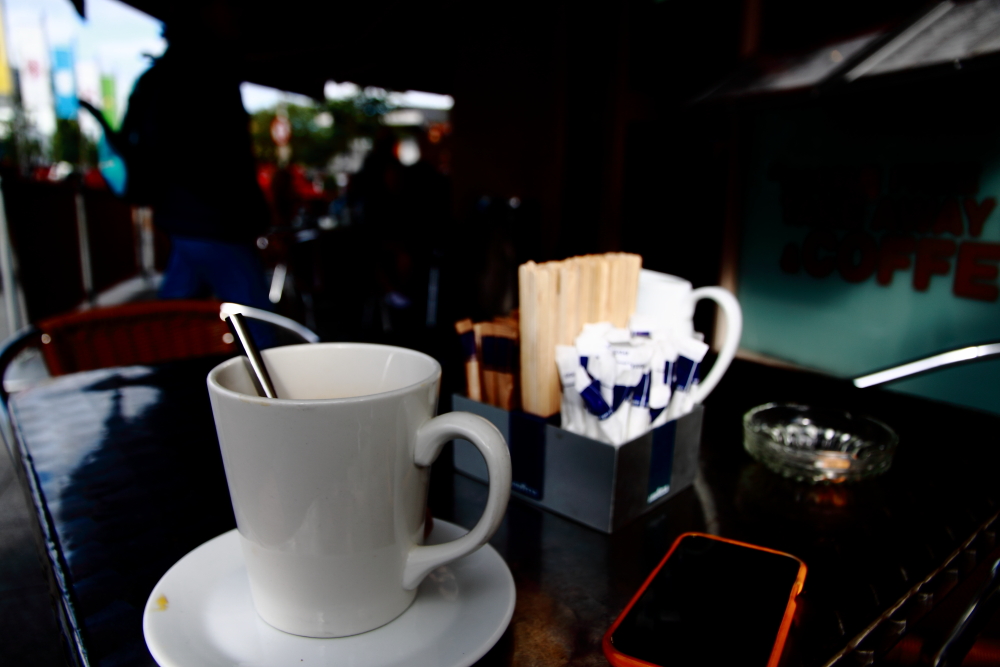
Coffee in Eyre Square

Burgundy. Cabernet Sauvignon. Merlot. White, red, rosa, bubbly. Brian bought 500 grams of dry fusilli pasta in Dunness Stores before going to the Dole Office to sign on. He should have gone earlier; it was overflowing when he got to the doors. Now he was back outside looking at a display of wines through a pane of clean glass that reflected all the way back up St. Augustine street. He shouldn’t have paused. So long as you are moving you exude a sense of destination and purpose.

Brian had already checked his watch seven times and his phone twelve. There were no beeps or alarms or missed calls. But when he stopped for more than a few seconds he couldn’t help but go through the motions. So long as he didn’t stare into space it was possible he still might have a place to urgently go or a vital message to check or need a second to choose how to portion his precious time among many worthy options.

Between left index finger and left thumb he had clamped the queue ticket. The machine in the dole office had rolled it out with a whine once he figured out which of the three buttons to press. All of the seats were taken so he had searched for a clear stretch of wall or pillar to lean against. From the pillar he had listened to the numbers being called out by the officious recorded voice and watched the glacial progress of the dense crowd: a young mother trying to pacify three restless children; two young guys with moody lowered heads in hoods; a middle-aged man with a faded corduroy jacket; a girl with headphones and plimsolls at the ends of skinny jeans looking out of the windows. In the dim light the dense group waited and listened and kept a low-key order.

“Ticket number one hundred and twenty-four to counter number nine”

A heavyset man raised himself with effort and pulled his shopping bag from the floor, leaving a vacant seat. Brian stood close by but didn’t budge. He looked at his ticket and then at his watch. Two hundred and sixty-eight. Eleven thirty-four. He really should have gone earlier; lined up outside before the opening of the doors. He really should have a job and be at work, busy turning some little wheel of the ocean of little wheels that keep the whole show on the road. Now the simplest things were hard to justify. Why is the taste of food affected by the slightest weight of mood? Brian tried to remember Bertrand Russell’s unromantic view of work from a half-forgotten lecture:

What is work? Work is of two kinds: first, altering the position of matter at or near the earth’s surface relative to other matter; second, telling other people to do so.

Stepping back out in the sunshine was startling. The narrow streets seemed impatient for his feet. They slipped along of their own accord, cobbled treadmills. A light salty breeze blew in from the sea, whose tides lapped out of sight behind the apartment buildings along Merchant’s road and the docks. Morning was done, day was winding out and on. If it wasn’t for those pauses he might have been on his way somewhere important. But he was still in the queue, waiting to sign on, number clutched in his pocketed hand. Eventually he let it drop into the small collection of loose change and receipts for pasta and tea and a lifestyle magazine.

There was time for food but Brian walked up one street and down the next on an empty stomach until he couldn’t avoid retracing steps. He glanced at window displays and their reflections, peered into their wares, followed the gaits and graces of passersby, caught snippets of their conversations, noticed their bags and brands and faces and walking paces.

Eventually, like a spun coin he came to rest, at an outside table of a cafe at the corner of Eyre Square, where flags of the fourteen tribes of Galway ruffled over the edge of the park. A horse and carriage stood waiting opposite the tourist kiosk. The horse had its head wedged deep into a nose bag and chomped. A rich medley of accents flowed up and down towards Shop Street: thick Connemara Irish, high-pitched Japanese- now a noisy gaggle of gregarious Spanish students wearing matching yellow backpacks.

Brian checked his phone again as he went through the menu. Coffee would give him energy, but for what? His forms were filled and signed and ready to be checked, his day was ebbing away in an idle agenda. Yet like every day for everyone, bounded by food, sleep, maintenance and upkeep.

When the chirpy waitress spotted him and came over he ordered a tuna sandwich and Americano. At the next table two men and a woman were finishing their coffees and talking about money, marriages, and the price of houses. Relaxed in tidy suits, comfortable in their lunch break banter, Brian had narrowed them down to banking or insurance when the beggar approached.

He emerged from the passing crowd not unlike the way Brian had paused at windows, as though some force had plucked him out of a current. Ragged redgrey beard, puffy brown weathered skin, loose old sports jacket, short squat fingers, faded blue tattoos behind worn stubby knuckles. Brian didn’t catch the first muffled request for money but one of the men slipped out of the group’s conversation to say “Sorry mate, not today”.

Something made the begging man stay. He repeated his entreaties to the others one by one, stepping closer and leaning against the table. Their conversation disintegrated.


“I said not today”
“Just a couple of euro for some food”
“Do you mind? We’re trying to eat our lunch in peace!”
“Sure I just want some lunch too love”
“Yeah? I can smell the drink of ya! Leave us alone will ya? Go beg somewhere else”

Lunchtime peace shattered, the intrusion sprouted hostility. The security of outdoor tables was called into question as a wave of uneasiness spread out from the confrontation. Other diners began to look abstractly away but pay close attention. Their pupils narrowed and heart rates rose slightly and their movements became forced. The beggar now snarled. “Look at ye! I hope ye have a life like mine- the worst kind of life.” Then suddenly he reversed and shrank back, and held out his hand. “I don’t mean you any harm, shake my hand. Will ya shake my hand?”. After an uncomfortable pause and stare at the outstretched hand, it was accepted limply, but a low addition from another, “Make sure you wash them now” brought out another twist of anger.

So it went for a minute or two. The beggar flipped from direct nastiness to apologetic gestures, while the group, long since committed to ignoring or getting rid of their assailant, battled to restrain their tempers and tones. Pitches rose and faces flushed. “This is a welfare state! I pay my taxes! Everyone is entitled to a meal and a bed! No, I’m not shaking your hand.” A cafe waiter tried to get the man to leave but instead he shuffled a few yards and returned, this time to Brian’s table, close enough to share a smell of stale beer and disrepair.
With averted eyes and muted gestures Brian reached into his pocket and awkwardly handed out a two euro coin, getting a thank you and a tattooed hand on his shoulder. He stayed in his chair and focused on his coffee cup until calm returned.

The risen tide of lunchtime groups retreated. Streams of passing people continued up and down Williamsgate Street. The sun came out and the patches of grass in kennedy Park dried enough for people to sit. A wino slept in the warmth on a bench next to teenagers kicking a football. Brain checked the progress of the afternoon on his phone. Two ten. Two hundred and sixty-eight.He wondered who two hundred and sixty-nine was. The machine must still be rolling out numbers, its button faded from the pressing of infinite unemployed fingers. A gust of fear blew sharply through his unemployed interior, which felt suddenly hollow. Formless, jobless, in flux. Who owes whom? How does it keep meandering on? Every life spilling, eroding, wearing, growing, backing up behind disruptions and into cracks and through tight narrow bends and eventually tricking on again and falling forward, drop by drop… Was this town really a graveyard of ambition, too comfortable and walkable and visited and prone to grey misty days to foster urgency and success? He rested his eyes again on the river of moving faces and crumpled up the ticket with the discarded napkin on the empty plate. His body seemed distant, his mind a dreambound pilot fighting to awaken, in control of a moody vehicle from a long way away, bidding it to stand up, breathe, walk inside to the till, hold the door for a couple on their way out.

The chirpy waitress smiled as he paid. Her dark darting eyes were brown and a loose strand of wavy hair fell over her face. “Was Everything o.k.?” She asked, her eyes tilting up with the smile. “Sorry about that guy. He’s so hard to shift!” The coffee machine let out a hiss of steam. “That’s ok. what can you do?” Brian had fallen back into first person, living in the brimming details, catching the trail of darting dark eyes, lingering awkwardly, dropping two euro into the jar marked ‘Tips’, deciding that tomorrow he could queue, that it would be something to do, and walking out between the chairs into the tide of people all going somewhere.

Ticket number two hundred and sixty-eight to counter number four.


Ticket number two hundred and sixty-nine to counter number four.

Donal Kelly, August 2013. Trying to be more consistent and follow one effort with another in the hope that something will stick. It seems that a good story is, no more than a good joke- easy to perceive but cursedly hard to invent. Does it take a certain kind of person to think up a new joke? Do you have to be a joker? Can you stumble upon one by accident? Who starts chants at football matches?

Yet maybe drama is not always necessary, action not always vital, and the growth of some fresh edge or digging claw enough to set a frame and get to the thick of a scene.

Posted on

Short Story: The Frape

Buttermilk Lane Galway

Jamie works in one of those offices down on Abbey Street. It’s a call centre or something: the European office of some American tech company. Anyway he’s been there over a year now. Most of his gang are in Australia, though Tommy O’ Rourke is home next month. I’ve been living with him since he moved out of the place down at the docks. He’s a sound guy, though I don’t know him that well to be honest.

Anyhow, he spends all day at work on the phone or on the computer. Half of the time he’s on Facebook, putting up random links and fishing for likes- the usual shite. But he’s a bit serious now, has a streak in him. Nothing nasty but… it doesn’t take much. I don’t think he likes the job, but who does? Sure isn’t work what you do while you want to be doing something else?

Well there’s another guy in his office from the same village Jamie grew up in; another culchie head. They were practically neighbours but there’s no love lost between them. It must go way back, to some primary school row, or an under twelve GAA fight; you know the carry on. There might be something older: a family feud or something. If one met the other in Timbuktu he’d cross the road and look the other way.

So this other guy is a real Facebook addict too; can’t tie his shoelaces without telling the world about it. Isn’t it mad how we’ve all become OCD about checking something that didn’t exist at all a few years ago? Jamie reckoned this fella went to Spain just to get a better profile picture. Sure it’s hard to know what it all means nowdays. You share nothing and people think you hate yourself or do nothing. You share too much and they think you’re full of it, or too insecure to just let life be lived. We’ll all be buying books soon about how to let it go and live in the moment, whatever that is. Didn’t my aul wan buy me one for Christmas? “Getting to Now”, it’s called. I read about five pages.

Sorry, I’m going off on a tangent. I was telling you about this bad blood. You see, Jamie sneaks over to this guy’s computer during lunch and makes changes to his Facebook the odd time. I told you he had a streak. He told me about it one night in here when we came down for a few scoops after work. He keeps it real subtle, small thinks hard to notice, like commenting on strange pictures and adding odd friends. I think he changed the guy’s birthday and ‘de-friended’ some of his best friends and stuff. He was really proud of it. He reckoned he was some kind of psychological secret agent, wreaking the head of his enemy. Sure we all do the same stuff, but normally to our friends. The closer the friend, the more you can get away with! But that subtle stuff, where you’re hiding your tracks… that’s a different style altogether. You know, it’s all about hiding your intentions, or allowing yourself the space to make it out to be a joke. There are fine lines being drawn up all the time; new etiquette needed now that us monkeys have come down from the trees and are up all night spectating on each other instead.

Sorry, sorry, you know I get carried away after a few pints. Jesus I should get rid of those books. To cut a long story short, Jamie was in awful bad form this week. I think he had a row with his girlfriend at the weekend. He went to lunch early yesterday, and when he got back he snuck over to yer man’s desk, , as usual still logged into Facebook. He starts liking a few dodgy groups and sends a message to a total stranger, and God knows what else – I only know what he tells me – and then up pops a message. Right then and there, and it’s from his own girlfriend, and it says something like “C U @ 5 so?” So he must have lifted off the chair, and before he has time to look again he sees the fella coming back into the office. So he ducks out of the cubicle, and I can imagine he was falling over himself getting back to his own desk. Sure when he came home from work he was still white as a sheet. I had to ask him what was up; I thought he was sick or something. His head must have been going a mile a minute. I was like an old granny making him tea and calming him down.

He told me he rang his girl but got no answer, and I got the impression that he tried to follow that guy after work, but he must have lost him. He was totally convinced there was something going on, but how can you know? That was how he went- no half measures, bit of a drama queen. I think he must have gone for a drink. He might have gotten on to her later but I was out training with the Astro-Turf team so I don’t know. He left early today for work, but he sent me this message a few hours ago. We normally meet up here on Friday anyway, but hard to know today. Here, look: “Know now, see u later”. He’s normally the first one here, but it’s after nine now and no sign.

Like I said, it’s a weird one. I hope he didn’t go off and do anything stupid. Funny fish. Anyhow, Your round is it? I know you’re good for it. Same again for me. Hey, what’s that on the news? Is that…? Hey, turn it up would ya?

**************
Donal Kelly, August 2013
Had a go at a first person perspective, let the narrator be a local guy in a local pub telling a story to his mate about another. As usual I have no idea if the end result is any good, though it was interesting to try. It's amazing how different our written speech differs from our spoken. It feels sometimes that how we speak is a pale mistake-ridden version of how we write, but speech is a lot older than writing, and is so much more efficient and context-aware. Speakers use shortcuts and omissions and smatterings of slang and pauses filled with ums and ahs and a 'protocol' for managing question-response, etc etc. With dialogue you have to get the story across in the voices of character, setting the scene without being able to jump in and out of descriptions of mental states or directly describing the setting.
Making the narrator an actual character also forces you to be more aware of the role that a narrator has, always present but often stripped into an objective know-it-all. More food for thought!

Posted on

Short Story: The Hunter

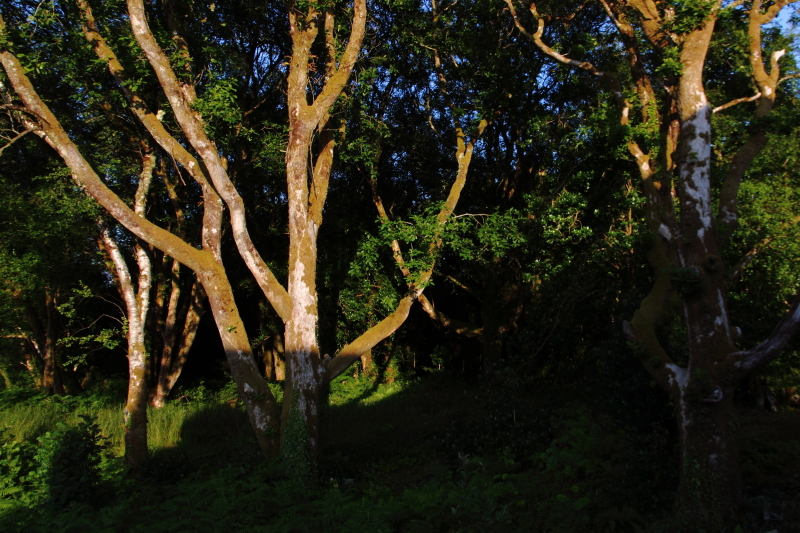
Oak trees in light and shade

Richard Sadler stayed perfectly still as drops of sweat began to form on his forehead and trickle down his long nose and lean cheeks. It was already mid afternoon. Completely enveloped in a dense thicket, He was invisible from beyond a metre, darkly camouflaged clothes blending into the sprawl of summer overgrowth, stock of the rifle wedged against his shoulder, barrel barely protruding out of the leaves. It followed the line from Richard’s eyes to an open clearing a hundred metres upwind, where a lion was going to appear.

It seemed like an age to Richard since he had been holed up under the unblinking fluorescent lighting in the stuffy basement office on Weston Street, going through the D’Estre accounts figure by figure, welded to a cheap office chair on flimsy swivel wheels, punching numbers with index finger while trying not to squint, supping stale coffee and blinking. Clouds never drifted across to change the lights, and they never dipped and dimmed by the hour. Breezes carrying smells of the season never sifted through the stacks of papers or down the sterile corridor. “How many hours slowly seeped away here? How many ticks of a clock -beats of a heart – passed in that sunless scentless interior, where raw life’s natural dramas declared a ceasefire and raw life’s potentials evaporated?”

A fly lands on Richard’s neck but he does not budge. Out here there is no ticking clock; but his pulse thumps out a steady rhythm. It is important to be able to not scratch every itch. This is what he has been training for. He must not give away his position, not after all of the effort. The climax is close. He wanders again over scenes that seem to be from a previous life. “How inhuman and unnatural! How cruel to senses honed over thousands of generations to be deprived of the rhythms of day and season; the morning sun, the spring rain, the cold winter nights. How stifling and strange to portion off precious heartbeats according to mechanical regularity, an indifferent exactness, labouring for an abstract currency under digital timers, removed and twice removed from the guts of existence. How far we are from the sowing, the growing, the harvesting, the killing, the filling of bellies from hand to mouth, wild on wild under an open sky? Contemporary man, struggling to define himself in a chaos of artificial structures and orders. Where now the synergy between the ebb and flow of the Earth and the straining of finger and thumb? What of a man chained to a painted plywood desk, badly postured on a squeaky chair, prey to a needling middle micro-manager called Harris, captive in a closet world pinned down by structure, by institution, by regulation, by fear and order? Did those D’Estre accounts ever balance out? Why were they so slow in submitting expenses?”

Something snaps him back into the present, and thankfully he is still frozen into his pose, a solitary hunter drawing neat breaths of pollen-heavy air. He lets his glazed focus sharpen again on the scene, the dappled light and dark patches of bush leading out onto the short-grassed embankment where the lion was going to appear. Any second now. He has to remain in the here and now. From now on, from now on, at one with emerging experience, and no more second-guessing or easily-provoked doubt. Embrace the unregulated fear.

One hundred metres from the unmoving barrel of the rifle, a two-hundred and twenty-three kilo adult male lion rises softly from his slumber and pads from a familiar shade to a familiar clearing, flicking his ears. Fresh despite his eleven years, clear-eyed, thickly-maned, carrying some healthy fat around the shoulders, he yawns deeply, exposing glinting curves of teeth. Only moments before a sudden hole opens from shoulder to torso via heart and lung, he scans his domain: two lionesses lying with a restless cub down in the hollow to his right, a medley of afternoon odours in the air. He flexes his claws and finishes the yawn with a bored growl.

Richard balances his promise of deliverance against the trigger and squeezes. The sharp snapping booming sound rips out and fades slowly. A steady clean shot. A perfect kill. Pumped up on the kick of adrenaline, he strives to grasp the primitive identity as it falls into him and through him. “I am erasing the doubt! I am connected to the earth! I can feel the rawness of life and death, I can find purity in the hunt, and solace in the kill. I can feel at ease in the meat aisles of supermarkets, and relax at the desks of domesticity. I having faced the primeval, accepted the challenge, have blood on my hands and in my veins and stand above the dislocation and separation. I am a legitimate man, I can eat in peace, and stand at the copier machine with a faraway glint in my eye.”

************************************

The South Bay Zoo officials were slow to react to the inexplicable gunshot that shattered the normal Tuesday afternoon calm. It took several minutes for scurrying keepers to converge on the lion pen, where a small group of shocked visitors had just seen the zoo’s star attraction shot dead with a hunting rifle in broad daylight. The African lion Helmut had been an expensive investment, brought in from South Africa after long-running negotiations with the board; management were radically upset. He had been bought from the zoo in Capetown using a five-year loan on a fixed interest rate, to try and boost the visitor numbers that had been falling steadily for the last decade, but his calm demeanour and propensity to hide away from viewers hadn’t captured the public’s imagination or coffers.

Thankfully, the subsequent news reports and flood of journalism, the drawn-out manhunt, dramatic capture, fascinating trial, and final sentencing of some deluded assistant accountant brought more publicity and visitors then most of the previous carefully planned campaigns put together. It was the lead story in even the major newspapers for the best part of a week and popped up in catchy headlines for many months. A large plaque was erected in the clearing where he was murdered, a small ceremonial burial was photographed and shared, a line of flowers gathered along the railings, and debates raged about whether of not he should be replaced with another lion. The whole enclosure was named in his honour and a Wikipedia page was created to document the whole affair. Every so often, Charles Smith, the Zoo Media Coordinator, logged on to his laptop just to see if it had been changed.

Posted on

Short Story: Nothing Happens

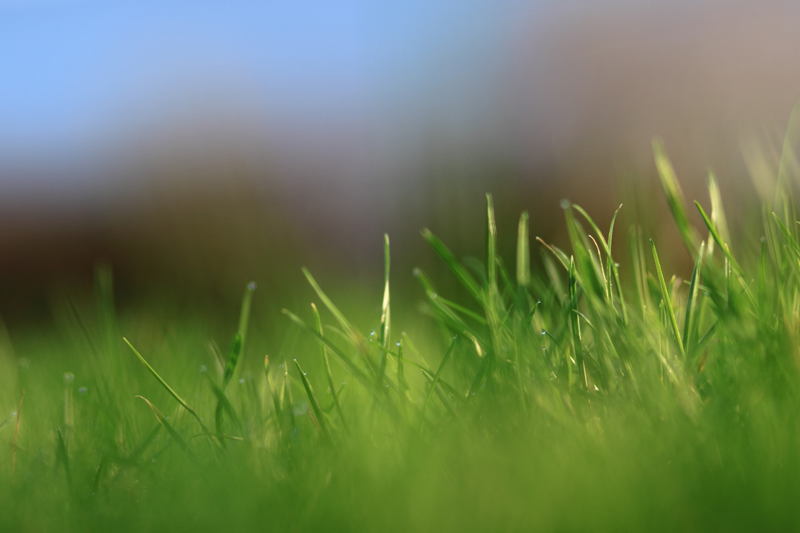
Grass in the Morning

Joyce sat on the wall looking over the road at the lake. Small quick waves lapped against the stony shore. “Nothing ever happens here”. Ray stopped sharpening the stick and stuck it experimentally into the ground. “Not my fault.” “Never said it was.“Yeah, well you have to cut the lawn today.” “You do it!” “Your job. I cut the hedge.” Joyce looked sidelong at the stretch of raggedly rectangled hedge. “It’s stupid. It just grows back in a week.” “You have to.

Deceptively full silence returned. Leaves rustled, waves lapped, insects buzzed, and small birds chattered. The midday sun hung above a flotilla of slowly drifting clouds. Joyce examined a loose flap of dead skin on his wrist where it had been burned. Ray walked out onto the lawn and began throwing the sharpened stick in spinning arcs. Sometimes it caught the soil at the right angle and dove in deep. The rest of the time it came in too acute or obtuse and glanced or bounced forwards.

An hour later a white Toyota pulled up to the gate, slowed, and turned into the short drive. It stopped at the gable, the engine shut down, and after a pause, Mr and Mrs Billory got out. Mrs Billory looked moodily at the tarmac then wrestled a box of groceries from the back seat. Mr Billory cleared his throat as he lifted bags from the boot. They walked wordlessly in the back door. Ray appeared from the living room, chewing and humming. Mrs Billory heaved the box onto the kitchen counter and turned sharply. Ray stopped humming. “Are you two watching TV?” Ray stopped chewing. “No”. Mr Billory straightened up. “Did you cut the lawn yet?“I cut the hedge. Joyce didn’t do anything.” “Where is he?” “I told him to do it.” Mr Billory took a step forward just as the sound of a lawnmower’s uncertain first revs burst into life. “Go down and tell him to use the petrol from the black can.” Ray grunted as the adults started to put the groceries away without looking at each other.

“Why do you always cut the edges first?” yelled Ray over the drone. Joyce shrugged as he kicked the red can back into the corner. The throaty cackle of the engine swelled as he pulled the throttle lever all the way up and pushed the mower onto the lawn. The power drive was broken so he had to push and pull it around the garden. He started at the edges, letting the blades skim right up against the flower bed. With a loud crack they chewed some soil and hit a stone. Satisfied, Joyce continued on. Every so often the racket was punctuated by another satisfying crunch or snap.

Ray stood leaning against the shed door and watched until he could see that Joyce was sectioning off the lawn by going round the edges and mowing joining lines. He sniffed the hanging petrol fumes, looked around for the stick and saw it wedged in the grass. As he watched Joyce approached it and kept his line dead straight. “Crackksnackksnapsnackksnackk”, gargled the struggling blades as they chewed up the wood. Ray sighed and put his hand in his pocket to feel his cool metal penknife. Thoughts of undone homework flitted erratically across his awareness. He swatted them away, turned on his heel, hauled his bike from the shed, and pedalled it out onto the road. As he passed the corner of the house he could hear arguing: the shrill angled pitches of his mother followed by low defensive returns from his father.

Joyce was yelling over the din. “Nothing nothing nothing”. He had finished the edges and was halfway through an almost square area whose sides were steadily shrinking with each length cut. Nobody could hear him. “Nothing nothing boring boring” he sang out, the tuneless air hidden. A flock of flies hovered around his head carving aimless doodles. A startled blackbird fled suddenly from one of the birch trees. Wilted daffodils had given way to bluebells and greening shrubs. Some dog or fox footprints criss-crossed one of the flowerbeds. The sun went in and out of the patrolling fleet of clouds sending patches of shadow and light across the lake, over the little house, and out into the fields. “Nothing boring boring nothing”.

The next sudden crunch was satisfying at first too, but when Joyce looked down he saw the frog’s leg on one side and the rest of the frog on the other. He stopped singing, stopped moving, stopped breathing, and stared. The leg twitched and the body writhed. The frog’s bulging eyes looked helplessly up as it tried to kick itself away but only flailed in convulsive half circles. Its smooth green skin was darker than the grass and its tiny delicate digits opened and closed in disorder. A thin growing trail of blood followed its jolts from the glistening pink open wound. Joyce swallowed and unbreathing stomach-tightened stared. His hands loosened then gripped the metal mower handle. His mouth dried up and he felt like he was falling forward. Another cloud-shadow was edging towards the garden over the road from across the water. Three crows flapped over the roof of the bungalow. The birch trees shivered in the late spring breeze. Joyce could see his mother angrily peeling potatoes through the back kitchen window. Her head was down and her hair was over her face. The mower roared on, eager to mow more.

The sky suddenly looked huge and the world impossible. Joyce closed his eyes and took a short breath then held it again. He remembered his granny’s funeral and the frogspawn he had forgotten to take from the jar, and wondered what Ray would say as he pulled the machine back and pushed it forward to the left, breaking the line, trying not to listen. But he had no voice for singing now, and no choice but to hear.

**********
Donal Kelly, August 2013. I've been trying to find a 'way in' to a story. I am always amazed at the rich tension or insight that a master storyteller can weave with even the sparsest of details. They say you should write what you know, but what do you know? A motley collection of gathered and mostly dropped, discarded, and forgotten undeveloped ideas. A litany of paths trod on then abandoned. Maybe what you need is a stubborn insistent search to root out and develop ideas from the myriad potentials. Look at the wealth of drama and violence in even a local newspaper. I wanted to try and capture a little of the complexity of life through hints and details, suggestions and nudges. The reader creates the story; the reading has its own short life. Surely I have crushed any possible delicacy and spoiled the fruit, but maybe next time.
**********

Posted on

Inchagoill in Summer Shades (Photos of Lough Corrib)

–Photos of Inchagoill and Lough Corrib—

After the long winter and slow-rising spring the green explosion finally happened.

The mayfly season on Lough Corrib rolled around again. Birds and fish feast on the short lived flies as they rise to the surface en masse. They are easy pickings, their defence lies in being so numerous over a short period that they can’t all be eaten. Trout pick them off as they rise up through the water and emerge into green fliers, letting their delicate long wings dry in the sun before taking off. They are poor fliers and can’t get airborne on a windy day; their only hope is to surf the waves to the shore and wait until calm to fly up. Seagulls scoop them out of the water. Agile swallows pluck them out of the sky. Spiders snare them in webs. Fishermen and enterprising kids pick them from rocks and trees, pack them into wooden boxes, buy or sell them by the dozen, impale them onto barbed steel hooks, and dangle them from long telescopic dapping roads over the surface of the lake to entice trout to a final meal.

The trout themselves end up eaten, gutted and cleaned and decapitated and baked in the oven. no less brutal but far less remote than the sanitized slabs of meat parcelled out in plastic from a supermarket.

The fuel cord that connects the tank to the outboard Johnson 9.9 engine is missing a connector. The newer Yamaha ones won’t fit. My uncles try to find one for me in their shed but no luck. Instead I head out in the punt.

It takes about an hour to row to Inchagoill from Baurisheen, with a few flies trailing behind on the off chance that a trout is dumb enough to go for them. The calm lake in the warm evening is deceptive; there are a lot of flies hatching on the surface, and near the island trout slurping them at the surface. Black winged post-mating females fly their final flights back out onto the lake, laying eggs then dying. Perhaps their spasms as they die attract fish that might otherwise be eating the fresh unmated flies with a whole day or three left to live.

The island itself is a riot of green. The amazing trees are in full leaf and a cacophony of birdsong washes into the sounds of water. Huge oak, beech, and pines spread their branches and leaves up and out towards the sun.

The island has long been a significant site. There are are two small churches. One dates back to the 5th century.

Outside in the adjoining graveyard a simple vertical grave stone is engraved with one of the oldest examples of Ogham script.

The second church dates to the 12th century and is more ornate, with carvings over the doorway. A japanese yew once grew by the entrance, but was cut down as the huge roots threatened to damage the 900 year old building. The stone is weathered and riddled with small holes, punctured by hundreds of years of erosion, seasons of wind and rain against the carvings. Unlike the dense green life that returns with fresh leaves every year, the stones remain to live long and slowly wear away.

It takes me 40 minutes to row home, some slight ripples blowing from the south, and the sun going down in the distance over the maamturks. The oars cut into the water with a rhythm of little splashes. I count the strokes until I get distracted.

A late dinner: trout, potatoes, carrots. The old cat sits at my feet meowing for more as soon as she gets the scent.

Inchagoill, Maflies, Lough Corrib, Oughterard, Galway, Ireland

Posted on

A new brood of Swans

Mute swans, Cygnus olor, are a common sight on Lough Corrib. Cygnets are rarer, but this couple have a healthy flock of five following bundles of grey. They chirp as they trail after their parents, darting after anything edible and squabbling. The hen is cautious, hanging back while the more confident cob approaches, signalling safe distances with his growling hiss. Adult swans are strong enough to break a leg: they will hiss first as a warning, then start to raise their wings and curl their neck, and should never be provoked, especially with cygnets!

Swans, Lough Corrib, Baurisheen, Oughterard, Galway
I can tell they are familiar with people as they eye me up and bob around the short piers, balancing their hopes for scraps of food with natural wildness. They have been fed before. The cob snaps at a scrap of wet brown bread that I offer, his ridged beak catching my fingers, all the while signalling his independence with that hiss, his neck raised and eyes watchful of the cygnets as they paddle and chase and chirp.
Swans, Lough Corrib, Baurisheen, Oughterard, Galway
Mute swans were hunted almost to extinction, saved perhaps by royal decree, and can be killed by pollution such as discarded lead weights (banning these weights saw a recovery in some populations). With luck this brood will avoid the pollution, escape the jaws of pine martens and mink, and moult their way to strong stately white wild royalty.

Posted on

Galway,May 10th, 2013

Showery, bright in between. Meeting people that you know randomly on the street. Walking an hour from a broken down car to a locked office. Wandering around doing errands.
Field of Grass, Galway
Glenlo Abbey Golf Course Tree
View from Glenlo, Galway
Kelehens Bar Galway
Galway Cathedral
Galway City Buildings
Ferris Wheel, the Docks, Galway
Eyre Square, Galway
Wall and Door, The Docks, Galway
Loading a Bouy onto the ILV Granauile, The Docks, Galway
Glór na Mara, Galway
The Claddagh and the river, Galway
The Spanish Arch, Galway
View From the Wolfe Towne Bridge, Galway
Raven Terrace, Galway