Posted on

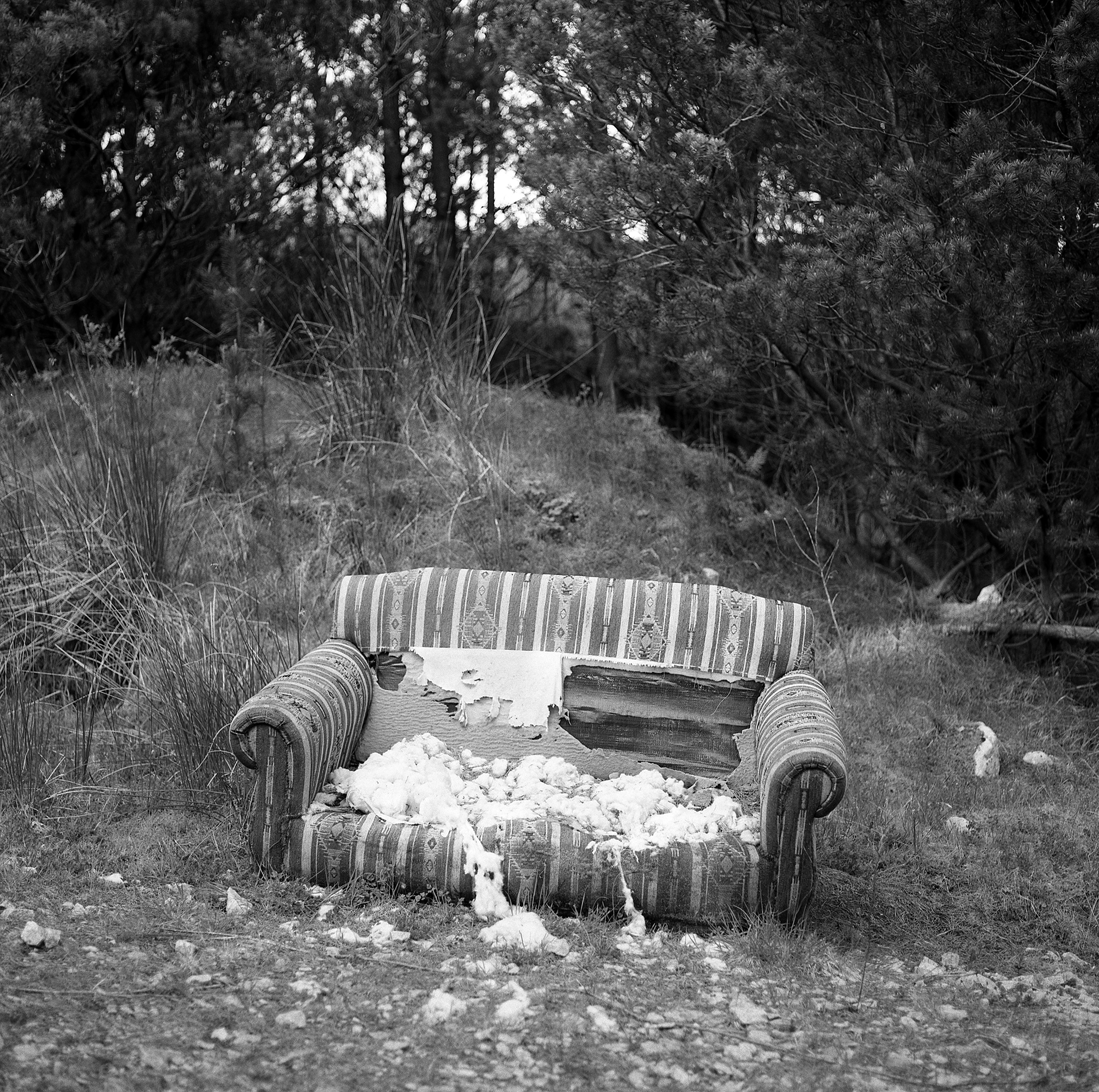
To tidy a room.

Donal Kelly photography

Trying to clean the room and failing. Drawer by stuffed drawer, box by shoved-under-bed box, beaten back in each skirmish.

home, black and white film photography, Donal Kelly

Beforehand the room had a precarious equilibrium, dusty fullness, every nook having been gradually filled past full, things balanced, stacked, compressed and wedged away over years, a slow accumulating, the residues of different periods of me. Fadó fadó here I was a child in a bunk bed, then a teen in a cave built from posters and drawings, later arriving at and gathering speed into adulting and never quite coming to terms with it, with being me or being at all. Such a strange thing, to be a thing.

Every strand of stuff I pull at releases a new plume of disorder. I wade into a treacle of material memory.

home, black and white film photography, Donal Kelly

Insurance and NCT letters, faded receipts, letters and postcards from friends and loves. I aim to go through a morsel each day.

Some nights I push aside a heap on the duvet to reach the solace of bed. 1 am probably, maybe as deep as 2. The small quiet hours where poetry and curious low tides that leave things uncovered on the sand come from. Where does the night go? Drips down to dawn.

Perhaps it is a comfort, to lie under a cairn like this. Half a dozen pairs of swimming goggles. Cycling shorts with holes on the hips from crashes. Bits of helmets, shoe cleat bolts. Rolls and rolls and rolls and rolls of undeveloped film. Oh shit how will I ever get through all of it? Bags of screws, bits of broken cameras, lenses with stuck shutters or with guts hanging out. Envelopes with my name on them and nothing inside. Notebooks of unfinished sentences, unanswered questions, tangents and trails. Officious letters reminding me how awful I am at the systems of living in systems. Dead watches, torn straps, safety pins, scraps of paper. Batteries and coins and books and books and books. So many unread. My tendency to shove the ones I’ve travelled further out of view.

home, black and white film photography, Donal Kelly

Two tiny plastic snow-globes of the Taj Mahal that kids sold me on that business trip to New Delhi. They trailed us full of eager gestures, brandishing trinkets, marking us as rich foreigners.

Bottles and cups and medals and tickets and boarding passes and nails and screws and shoelaces and thickets of cables and creams and toothbrushes and florescent golf balls and two baseballs with writing on them- indecipherable. Not mine. Brother’s.

Shaving blades. A shirt that I’d refused to wear again because of a memory, stuffed into a plastic box with no lid. Two packs of out-of-date condoms. Camping gear. Four gas cannisters, all used but none emptied. Expired survival meals. A broken typewriter, a broken Gameboy, broken watches, a whole graveyard of broken cameras. Blue and red boxing gloves. Heart rate monitor straps. A set of postcards so neatly written that they draw tears before they can be put back down. Anxious letters from someone to a brother from two decades ago. Two stopwatches and two whistles. How it all flies by. In between the bank statements and marketing junk and delivery invoices, the river of everything.

Each day I aim to go through a morsel but it feels like fighting an Atlantic tide, thrashing against the unperturbed waves.

A little stack of letters that crossed an ocean and sparkle and glimmer with heart and the holding on to that.

home, black and white film photography, Donal Kelly

Here’s how we go back over our lives of accumulation, and here’s the stuff from which we’ve erected who we are. I think about the difference between getting, having, and having had.

Through heaps of detritus, I divide the artefacts, aspiring to two pure categories of yay and nay, but inventing labels as I go. Good, not good, don’t know, dump, keep, unsure, dump, keep, good, good, crap, nope, unsure, uncertain, maybe, confounded, need a break, what even is this? From a need for clear binaries come hello-ing more options, various levels of unsureness. Each time after a few ticks of the clock the question “have I done enough for now?”

Assemblies of things I do not know what to do with survey me from somewhere between nostalgia, possible-future-use, how icky it feels to put them to landfill, and the low level need for a clearing in the woods that set this whole thing off. I’m not even sure but perhaps it will feel like an escape from a trappedness, a smotheredness squashedness narrowness compressedness. Caught in a purgatory flapping in the wind of various energies, making fitful efforts to move and clarify, but so randomly that the average from afar is a wobbling kind of silly stillness.

Clare, Burren, Atlantic ocean, photography, Donal Kelly

I cannot win, but am slowly shrinking some mounds while cycling many pieces of interest back into boxes and shelves for another time, another discussion. it is getting a fraction neater. Why do I need three bottle openers? Is this bulb ever going to be used? Is it wrong to dump unbroken objects?

I remember helping Jackie clearing out the attic of Nanny’s house, the tiny cottage in Mullaghglass within earshot of the sea’s rumblings. Its stout stony walls had raised two generations but how little now there was left, only vague scraps, nothing worth money. It was good to find no material treasure, good to have only memories, to remember that I am partly made from those ocean sounds and the fuchsia hedges and the many scramblings down and up the grassy cliffsides in search of adventure.

home, black and white film photography, Donal Kelly

I think of spare contemporary homes, chic modern minimal restrained grey clean, and the landfill needed to curate a path to hallowed hollows, all the once sought-after things binned in favour of the space of their absence, the habitats cleared to make the businesses to make the things that will never be used and be stored away until still in their packaging sent to a mountain of waste.

Is it a moral virtue to use what you buy? I imagine an evening cooking a fine dinner slowly, then chucking it into the bin without eating it, and going to bed hungry instead. Why is this so unjust?

Clare, Burren, Kilfenora, cemetary, graveyard, film photography, Donal Kelly

I give up again. Little victories. Our domestic spaces and trailing traces. Our materiality, the fill and crumble of our bodies and the river of stuff that we buy.

A big part of art for me is noticing and reflecting in a less than instrumental way. Listening to the world, letting it dent and imprint, and then asserting something back into it, something that you can’t articulate at all clearly. And this is all tied to honesty. And honesty seems to contain the holding of as many details as possible, witnessing them in a oneness, having them speak in a way through you, skirting around the contradictions. Maybe.

home, black and white film photography, Donal Kelly

Perhaps I can keep on tidying my room now, the room of me, the physical space but more truthfully the scaffolding of memories and beliefs, desires, principles, urges, wishes that I inhabit as my roving interior.

I feel sometimes that I should pray, not to whatever gods may or may not be, but to the absurd speeding cosmos that refuses to be reduced to an understood entity. Sentences directed not to any other but towards the idea of everything, and some untouchable oneness that might move within it. To accept the clutter and the weight of memory while reaching beyond it, to tidy while knowing about entropy, the dance of order and disorder, to keep returning to the wild world.

From the front pocket of a backpack I fish out a decrepit fossil of a banana skin.

home, black and white film photography, Donal Kelly
Posted on

On Turning an Age

What have I learned but
Nothing
Nothings
Somethings about nothings
like
Heart is wild animal
Wild animal is pilot.

Life is absence much as presence,
names, stones, the splitting of sticks
missyous strewn across the holy scape like erratics.
Cavern deep, rope narrow
one day bow, next day arrow.

Some verses will be supermarket queuing to buy
discounted cleaning spray
and words may not mean tomorrow what they mean today
but breeeeeeeeathe;
dig for voice when you strain from want to say,
though we know that the roll of the tune can matter
more than the words we sing
and power is busy and to its children will cling
and what really punctures us happens faraway
to the hearts of others.

And water can shimmer and glint and take our weight and
contain everything that we meant and
hold us in and hold us up if we only stroke stroke strooooke
past the depths where we sank and
the shores where we broke.

And from a distance many things sit pretty but
touch is the more true
and through parts of me folds the feel of
you.

And times we sow solitude and let it grow
teeth that chew loneliness into
this coat rack we call soul
whose shadows are never quite the whole
even if they towering sway and
you may not be tomorrow who you are today.

This is the way:
light will play on the surfaces and
we will dream forwards and backwards and
Love is wild animal
Wild animal is pilot.

Posted on

Notes from the blunderground

Haven’t been on Twitter since Russia invaded Ukraine. Hot takes, meme noise, and am-i-the-asshole all powerless when that nasty power-bloated shit decided to assert his vision as of course, guns and bombs, death, blood and soil.

Today I’m trying to stay off Instagram. Just for twenty four hours, just for today, just to feel that I have agency or something that feels like agency, though I’m not sure I actually have that agency or where it might begin and end. Me of little faith. I’ve been saying words but have I been saying words, really? Seems to me they’re a cloud of flies, a column of smoke, gibberish spoken from a mountaintop into a ferocious wind, swallowed by some much larger and unknowable conversation, of which I am not a voice. Not a voice at all. What is it that this stuff implies, what of the speaker, can you say it is real, that it has a soul? Could you have a conversation with it?

I’ve been compulsively checking it, Instagram, and it tastes sour, like going hungry through a pile of crisps, desiring more and annoyed at yourself and feeling kinda unwell and both full and empty at once. Crumbs and sticky fingers. I am mad needy, needing pings of love, wanting not to count the total after but to feel each tiny jolt of arriving heart, one by one. Reassure me you little zaps of soothe. The algorithms have us figured out you see, have learned how keen we are to see ourselves seen, to base our sense of ok-ness on validation by likes. Loves even. They’ve stolen our languages of love because they know we want this love deep down we want love and we’re suckers to feeling more of it, a river of love that has no end and maybe no beginning and maybe tomorrow the most love of all if I can only optimise my content. I check my phone for any new messages.

o p t i m i s e

It is raining. Steady heavy mild mist-rain, late September fading greens rain, here comes the dark half rain, shrinking day rain. Swallows still here but on the verge now. Packing their bags. On the wires. Or perhaps they’ve just now set off south? How in the fug is it late September? How now? All an abstraction, this time business. Maybe it’s already March 2028 or June 3045 or whatever. I go back to this again and again, same themes, the strangeness of being and oddness of time and the resistance to actually taking part in the normal schemes of life and living. I feel I run in tight circles, the same thoughts and maybe there is a loop that I have been in since I began. A little toddler bemused that he is already 1 and a half, almost two, and nothing done, nothing done at all.

What is it then? Let’s try to define anxiety without looking it up. A fine challenge for a man who figures out about 1 crossword clue from 20.

Anxiety is a humming shifting of unquiet, a buzz of fearful tension, a microphone turned up way too loud, a barking dog chasing a car’s wheel, grinding gears, a wobble in the spin of a washing machine, static in the nerves, a pot boiling dry, the heater left on, a phone ringing, driving into thick traffic, reading a newspaper, and the bit before you reach to check Instagram or whatever feed you feed.

Later I develop film for the first time in months and 6*6 negs begin to emerge with memories from last year. There are people. Some of these people are now out of reach. And places too, that feel like they were once a big part of me and are now a part of the big strange. And the melancholy that played for the whole summer and before starts to tune up again. It swoops and curves and there is a falling away, an unmooring that is always unmooring and never quite unmoored, falling with no ground below. AM I learning something about the nature of loss?

Work to do, work to do. I need to try and fix the tripod and order more fixer and figure out how to develop lots of film quickly.

I breathe yet and here breathe into that old website that feels a billion me’s out of date and receding.

Work to do. Work to do. We’re always living the dream, it’s just not always the good kind of dream.

Posted on

Soilmates (Short Story)

Donal Kelly Feenish Island Black and White

Out in the rhododendron, an old wind lies coiled lengthways along thick roots. The acidic slopes they twist through drop steeply towards the curve of the fjord. Sounds of the Atlantic and its dwellers drift up on younger, more eager airs. This tired wind has lost most of its voice, taken to a bed of sinewy shade. It has grown accustomed to perpetual dimness, tolerant of its intolerant soilmates, respectful of their drive, their entrepreneurial vision. But it struggles to relax, to unhitch memories from hungrier ages hurling foam-tipped gales or exhaling light sighs across glint-rippled tapestries.

Some days the fishermen retreat, cursing. Other days return with blessings. Always somewhere hearts are left unsealed to draughts.

Reilly is in the school’s round room. Nothing seems to have changed since he walked out ago ago after the last exam. Faded watercolours and a framed inspirational quote. “Words must be weighed, not counted”. When he’d started reading heavy books he’d felt big in a small town, but now a piece of furniture, identifiable from distance. The real heft lies in the oral tradition, in such venerable classics as “MAYBE SOME OTHER TIME” or “NO”. You can be big in a small town if passing through. Or become scaled down by a narrow description that pares your mysteries back, as far back even as wherever the bare line of dignity is drawn.

That’s Pat Reilly’s middle lad, the dropout who missed the free in the quarter-final.

Out near the lakes, in roofless ruins, a dream of lost love is wedged, a folded note in a gap over a big irregular hearthstone. It once burned bright enough to throw light across the back of a winter, but comings and goings faded to goings alone, and later the village was emptied of its dreamers. This survivor has grown used to silence, tuned to the wear and tear of season etched onto season, grand palimpsest of skins.

It watches the thin sally growing amid tumbled stones, spring fuzz being overtaken by impatient leaves, impossible greens bucking in the breeze.

“Will wait for you on Tuesday at Lough Shindilla by the pier.” ends the note, after much leaking of love. The dream reads its text often, alternating the focus, perhaps on the yearning opening, notes of despair about the middle, urgency towards the end. It looks like it took a long time to finish, many drafts deep.

Can it still be unfolded?

Andrea reaches for her water bottle, wedged into the backpack’s side pocket. She keeps walking. It must be more than four miles to the hostel. Here would be an ok spot to pitch, but after last night’s fragmented sleep and loud rain, she wants a shower, soft bed, sound of voices.

Anxiety from the early days has gone quiet. Now there’s a basicness, the gradual changing of terrain, the carrying of food and planning of meals, the arriving and disappearing of towns and villages. Out here in the wilder sections, wide skies, map checking, big silences, mountains. Soon, the ocean. Can almost smell it.

She pauses to take a photo. She likes verses of skies that carry soft pales, subtle gradients, the vault opposite a sun sliding down horizon’s lip.

Is this what she needed? Is she healing? The better days are when she doesn’t ask.

“The green’s too green. Looks fake.” says Reilly. Michael glances up at the bobbing poplars, continues his tangent. “Which is more important?” he asks. “To be able to do something, or to want to do something?” They are behind the boathouse. The swelling of late April is giving way to the riotous advances of May. Reilly is, as he says, “flat”. The greens look like someone added a filter.

“I suppose if you have things you want to do then you are probably not depressed?”, he says.

Michael snaps open another tin. “Think of all the things you could actually be doing right now if you had a reason. All the places you could be.”

“But how much time should you spend thinking about being somewhere else?”

“Yeah. Tricky. Selling discontent; that’s how a lot of the world seems to roll.”

“There’s a market for it.”

The river gurgles, water boatmen skim about a calm crook in the shelter of a bay in the bank. “I didn’t realise that hanging out by yourself was an ability until I couldn’t do it.” says Reilly. Michael reaches out to kick a low green plant. “That’s another one. Invasive”, he declares. “Probably brought in when they widened this car park”. They survey the car park and what it had brought in. More cars. A jogger goes by, nodding.

“Knotweed,” says Michael. “That’s the real bastard.” He begins to list its qualities. Grows ten centimetres in a day, gets right into concrete foundations, wreaks them from the inside out. Invincible to potions. Sword hacking only makes it spread. “And once it gets in! You can spend years at it, think it’s wiped out, and a horse can trot along after a decade, kick up the ground, and boom, off it goes again.” They both sup. “You know you can’t get a mortgage or sell your house in England if they find it?” They silently consider such a predicament. Neither would be given a mortgage or feel comfortable talking to a bank manager, even about the weather.

They both struggle to explain their unmortgageable trajectories, or would if asked. Let sleeping black hounds lie and so on, but these things have a tendency to gatecrash the small hours.

“Sharon said there’s a pile of it out her way, you know, where the old road goes out to the lakes. Someone dumped a load of topsoil. I heard it was Fitzy’s dad.”

The apathetic old wind has no plans to unwrap itself, but today, all is change. Distant engine noise since morning, getting closer and closer, until soil twists and buckles in a torrent of sound and hack and slice. An attempt at clearing is underway, heavy machines cutting into the soft earth, saws buzzing into stems, Roundup in syringes.

Dislodged, the wind is thrown into the light. It spins, knocks off a man’s hat, rustles the glossy toxic leaves, then rises, jostling awkwardly with the prevailing, afraid at first, confused, then higher up beginning to waken.

It will blow inland, find something loose to scatter.

A forever home is being hoisted up where Fitzy’s lane ends, down past his dad’s sheds, in on the field where Reilly’s oldest brother once tore his knee on a chunk of sheep bone when attempting a sliding tackle. The raft is down, nine feet of wall waiting for a roofer, thick layer of the latest insulation padding up the floor atop a warren of air-to-water pipes. “You can’t even build without this stuff now” says Fitzy. “They won’t sign off on it.” He says he doesn’t know how the Dublin crowd got planning permission in the first place, but they have connections. And cash.

“They’ll fire it up on Airbnb,” he says to Reilly, pulling a leaf from a trendy shrub. “Money flows, price goes up, they’ll come down for a few weeks in the summer.”

Fitzy has the engineering job, mortgageable, never says how much his aul fella got for the site. Claims he doesn’t know, though he bought the beemer after. “At the end of the day it’s money coming in,” he says. “The place needs it. And what’s the alternative?”

Over Lough Shindilla, a stray memory roams, hovering between oaks on the little island, then across to the blackstoned shore. The water is starting to warm. Spring at late tilt, skylarksong, hawthorns preparing to wear white. It has been detached for so long, so free, so lonely, trying to keep its now from seeping into its original. How does it go again?

Two by the water, evening into night, bats flickering over the lake, an unlikely pairing, an intersection of stories, simple but charged hours, hinge on which change spins, one with a name that the other cannot hear later without darts of prickly blue.

The memory has to be careful not to over-remember itself, aware of a delicate co-existence, so easy to distort.

As it traces another lap of the dark lake, a red van comes bouncing down the narrow track running to the east, and the memory is nudged that way by a sudden kink in the air.

Just off the path, Andrea sees a cluster of ruins. Instinctively she begins to walk over, crossing spongy ground, a stream, an undulating field of lazy beds. A wind blows by, throwing hair across her eyes, shaking a skinny willow that grows in one of the long-deserted homes.

Reilly figures he has the right spot, leaves the van on the rough road, pulls the plastic bag from his pocket, walks to the mounds where people dump, marked by a pair of ancient mattresses. On his phone he opens up the knotweed picture. Mike said even a few morsels would do. A fine gift for the blow-ins and their tidy lawns. But he sees first only an indistinct mess of plants, and by the time he starts to resolve them and pick out the segmented redgreen stems of Fallopia japonica, evening is afoot. He puts on gloves and pulls scraps of stem and root and soil into the bag. A wind kicks up. Everything mobile shivers. He straightens up suddenly, shivering too, and he remembers sharply.

She did come after all, down to the pier and she threw stones into the water and cursed them all to hell and they had both cried and sat there for a long time in silence. Until darkness chased the last glimmer of orange over the hills and a crescent moon walked.

And then. Then the long lapse. Heavy whether weighed or counted. And what exactly did she say? And what did he say back? And why?

Andrea lifts the camera up in front of the unusual hearthstone, inside the remnants of cottage. The odd wind returns, stronger, swirling round the little space. The world begins to flap, and when she moves to fix her balance something small and folded blows out from the wall, lands by her feet.

Reilly stuffs the bag into his pocket, leaves the van where it is, starts walking down to the lake, trying to remember better. How is it so urgent and yet so vague?

Impossible blues, impossible greens, impossible kinds of memories.

The note is almost worn through, and tears when she unfolds it, but Andrea can read parts, and a part of her that has been still, stirs.

She sets her bag down, slides out the map. It wobbles in the wind. There’s the lake it names, Shindilla, just a few hundred metres west, right next to the track. She hauls the pack onto her back and clambers out over a crumple of stones.

Beyond the pier the wind is giddy, digs creases into the water. It too remembers being here before. It cannot help but caress, pick and drop, poke or knock, whatever will budge to its bidding.

“Oh, hi, sorry, I didn’t think anyone was out here!”

“That’s ok! Neither did I. Are you from nearby?”

“For my sins. You doing the Western Way?”

Night has set. A red van bumps from a narrow track onto the N59, turns towards Clifden.

Inside, an unlikely pairing of unmortgageables chat with the openness of unguarded strangers.

In his pocket, a plastic bag of dirt and invasives. In her pocket, shards of paper. Between the worn engine pistons, an old wind, massaged by the vibrating drone. In the cabin air, a detached memory that is letting go, ready to be written over. All are
Flimsily tied to
These fleeing hours
That we sometimes share
In happenstance hush that flies
Between the tumbling walls of
Noise.

Written Spring 2022. Been some time since I finished even a very short story. Such is life. Is it even finished now? Every time I read it I see tweaks. I tweak and untweak, never quite sure about the direction. Better or worse? It’s not quite like left or right. I think my stories are both too simple and too complex. Narrative cluelessness, too much texture. I have a tendency to slip into poetic fancies. Fallacies. How much of our mental scape is fantasy? I think life has a tendency to slip into many different kinds of clothes. On it goes. Thank you for reading, you are part of the chosen few. Praise be with you. Go surf that void.

Posted on

Fragments, #438

I will go to the cafe, pull up the chair at the table by the window, and become at once both swallowed by the world as if sucked into the gob of a passing fish, and a poster of this little stub of universe hung up to make newcomers feel at home.

I am that shrugging embodied man who does not care that he is in an advertisement.

There is a little round tabletop and a pen with a fine click and a soft blank waiting page and her darting but settled yet darting eyes from across the bay of coffee smells and clinking spoons. I add in such restlessness to make this agenda mobile, give it room. I pull on lines and tweak tensions as the hull knocks on waves and ocean opens out. But that is not what this is about.

Of course that sea is near enough for gulls to shriek in their harbour of creased skies, and the narrow street outside to parade a trail of intriguing characters. No diesel fumes here. No letters from the bank or hospital. No unexpected phone calls. But I miss the point as always.

Where are you now?

Someplace else.

Am I with you?

I cannot see.

You cannot look?

My hand above the page, grasping the pen. The bustle glancing to acknowledge a hush, like new Spring watching the sun raise its conducting gleam. The apex of ease, spasm of creation, an airman heaving his propeller round until it catches and abruptly explodes into smoky clattering go.

Did you leave out the bins?

Did I?

The bins?

No.

No, I refuse to cast this with characters from my spare interiors. I love you all but I cannot. I cannot be let loose in my own free domains. I will bring me to a standstill again. It is another I, that comes here, sits intensely and exudes unities, notes unruffled the passings of weather and  emptying of cups and clocks. Here they will not ask exactly what it is that this I does, or where exactly it is that this I comes from or goes back to. Outside wait empty sets of possible futures, uncorrupted by script or gesture. Of course I wander as usual right off the script, such as there is.

Can you fill out section 3 B on Pensions?

Will you forget me before I reply?

Have you ever made previous contributions to a public scheme?

Can you tell me what you really think?

Is this your employee code?

Sorry, I was miles away. Miles away.

Dreams are so fragile, too eager for the intrusion of anxious ripples. The part that cooks up suggestions, that has been shouting ‘is it a ghost?’ since a child’s mind painted in the first shadows, is always busy in the kitchen. True fantasy takes diligent work. Commitment. Dedication. I imagine, in any case. My efforts to meditate are like trying to juggle with clumsy limbs. Thoughts go up, come back down, spill to the ground. What am I left holding? Bare fingers and a clock that refuses to stop beating.

So I’ll call you in a few weeks and organise to pick up my stuff.

Fine.

Ok.

Americano, no milk or sugar?

Yes please.

I endeavour to project a light and open confidence. A high road overlooking the ocean. A break in the clouds. There are some people in but the table is free. It is always free.

And could I get a chocolate brownie?

For here?

Yes.

I will sit and flicker between shabby slouch and collected poise. It is more difficult with the backpack shoved under my legs. It is far too bulky and old. I wrestle out another sheet of blank paper. It is the same sheet. If only I knew how to draw. Then I could be free.

Posted on

Short Story (after Rumi): The Dragon Charmer

( -- after hearing the Rumi story from Matin B. on the London Underground -- )

A poor snake charmer, feeling that he was passing his prime, went to the mountain to pray for a better life. “God, I have served you well,” he prayed. “I have paid my dues and expected little in return. But I am getting old and weary and life is avoiding me. I am tired of being invisible to my family and friends. Soon they will forget even my name.” He hiked higher and higher, until he became lost on a holy peak capped with snow and ice.

Somewhere high on this mountain he stopped again to pray with chattering teeth next to the ice and noticed there was a large shape buried within it. Next to the surface, he could make out huge curved teeth and an enormous head. “It is a dragon!” he cried. “A real dragon! This is my future. I have charmed asps, adders, constrictors and cobras. But people lose interest. But a dragon, a real dragon; this will make me famous. I will not be forgotten.”

So the snake charmer returned to his home village far below in a quiet valley. He traded all of his remaining belongings and claimed all his unclaimed favours to assemble a dozen deadbeat donkeys, a big old wagon, and a sack of food and supplies. With great difficulty he went back up the mountain, and began to chip out a huge block of ice with the dragon inside. After a long week of cold cold work, the massive ice cube was carved out and over the next two days he used logs, wedges, chains, ropes, and the donkeys to slide it onto the wagon. Slowly they slipped and slid back down the steep frozen slopes.

Once they reached flatter ground again, they set off, not for the snake charmer’s village, but for the ancient city of Baghdad. There he would find the people who would appreciate his dragon and see that he was no simple dull snake charmer from the highlands.

The road to Baghdad gradually became hot and dusty. The donkeys strained, complained, and grew irritable. They threw kicks and bit each other. Hot sun poured down for hours on end. Faintly at first the heavy block of ice began to melt. The snake charmer gave meltwater to the bickering donkeys and drank more himself. For a long time it seemed they barely moved. But slowly the weight reduced as the ice melted and the pace quickened, and the snake charmer forgot how tired he had become and straightened his shoulders and sang to himself walking behind the cart.

After some days, they began to meet other travellers on the dry road, and some noticed the strange wagon with its strange cargo of melting ice. They began to follow behind, arguing about what was going on and breaking off chunks of ice to suck and share. “What is this ice for? What is that shape inside? A frozen cow? But it is too big. An elephant? Hey old man, where are you going? Your strange load is shrinking with each step.”

The snake charmer soon lost his patience and tried to get them to leave, cursing them and urging the reluctant donkeys to trot, canter, gallop. They refused. So, he stopped at a traders and swapped the two weakest for a huge sheet of canvas that he fastened over the ice. Now it looked inconspicuous, except for little streams of water that fell from the sides. Despite this, the group behind the ice only grew larger as he approached the city. Water poured busily and at times the whole wagon lurched unpredictably. The snake charmer had not slept in a week and down his forehead dripped an unending line of sweat.

Finally, they reached one of the city’s big open squares. Exhausted but happy again, the snake charmer patiently began to lay out his wagon and for a crowd to gather. “Come see!” he shouted. “The most amazing sight of your lives!” “From the frozen peak of an ancient mountain.” Under the covered wagon he lit a fire to melt away the last of the ice. “Come see the world famous Mahmoud, the famous dragon charmer.” By now a crowd had indeed gathered. But they mocked the snake charmer. “There are no dragons you fool!” some cried. “Go back to the mountains.” “Where is your eel, your worm?” The snake charmer paid no heed and eventually took his carefully polished snake flute and began to slowly begin his favourite melody. Every time he played this he was brought back to early boyhood, sitting on his grandfather’s knee in the evenings in the village, listening to sounds of family and mountain, singing and chirping and dozing until dusk had fully dropped into night. And when he played it, it seemed to share the canopy of its oasis with others, even the mesmerised snakes. The rustling crowd quietened, stopped mocking, and pushed closer.

Now the wagon began to twitch and the canvas to shift. The charmer gestured at two of the followers. They grabbed hold of the canvas on each side and dragged it off. Underneath was a groggy thick-scaled emerald green dragon. Waves of gasps rippled through the people. The dragon lifted its head and opened its bright golden eyes. The snake charmer missed not a note, and played with tears flowing down his cheeks. “I have done it” he realised. “They will not forget me now. They will not ignore me nor disrespect me again. I have realised my inner truth on the canvas of life.”

The dragon swayed its head in time. But it was still waking. It began to unfold and stretch powerful wings and flick a long narrow tail. The closest people began to back away. Still the charmer played, smoother and faster than he had ever managed before, than he had ever thought possible with his thin fingers. His life’s many little failures and few little triumphs all passed through his lips and fingers and down into the melody and out into the air of the crowded square. Smoke was now pouring from the dragon’s snorting nostrils. it opened huge jaws revealing glittering dagger-sharp teeth, and it yawned a huge long yawn and stared at its surroundings. Then its eyes began to focus, narrow, notice. Suddenly it casually spat an arc of liquid flame across the square, and the tree at the centre burst into fire. People began to scream and push and run.

Now fully awake and impossibly hungry the dragon stood fully upright, and tore at the donkeys still tied to the wagon. The snake charmer, through his playing, was unable to stop, staring up while staying in tune, his fingers a blur. Huge blasts of red and white heat shot over his head. The dragon looked at him, blinked, and reached down to neatly bite him in two. The tune ended. The dragon swivelled to grasp at more people with tooth, claw and molten flame.

The square ran red with blood and burning, and when nothing was left that stirred a living limb, the fully wakened dragon spread wide its wings, rose into the air still belching fire, and set off to find some other excitement. The snake charmer’s mute flute drifted by on the red river.

**Donal Kelly, January 2020.**

A version of the original Rumi story can be found here: https://harpers.org/blog/2007/12/rumis-the-snake-catchers-tale/

The snake is your animal-soul. When you bring it
into the hot air of your wanting-energy, warmed
by that and by the prospect of power and wealth,
it does massive damage.

Posted on

Short Story: Constables Three

Thump thump thump of stiff hull on salty mound. Gannet gull tern rising and falling in and out of sight. View pulled apart to its original full width, in the broad hiss and hum of ocean passage.

Three constables crouch in the lee of the short concrete wall at the stubby pier, their leaking boat bouncing in the miserly harbour shelter. Away from worn old pots and barrels, pipes of a half dozen stills are piled in a tangle by their mud-caked leather boots. The dusk has been swallowed early by thick torn cloud. An unexpected storm is dragging over the small island, raising broad hills of wave on the exposed stretch back out to the mainland.

Having appropriated the poitín operations in a rush, and quit the rising frustration of the islanders, constables three have returned to find their boat scraping loose against the pier in the opening notes of rising gale, with a fresh hole torn near the waterline. Retreat blocked, angry locals behind, in the half shelter of a loose wall, they consider the long night ahead.

Three young constables crouch and mutter and swear.

“Why did we start so bloody late?”

“Why send three? What use is three? They sent a dozen and more to Inishkea, and that was in June.”

“Is that a light up on the hill?”

“Up where?”

“Did you see it?”

“Can’t see a thing.”

Flick flick lights in corners of eyes. Snapping in and out, eager winking notions. Partly there and mostly not. Why does this life of constabling flicker along its edges?

“We should have left.”

“Go if you want. I’m not getting in that boat.”

“Send the three buckos out, and himself grigging behind the desk.”

“How was I to know?”

“It’s rotten cold.”

“There it is again.”

Squat glass bottles of the bitter contraband, fragments of grass floating inside, stacked in a short line. To pass the tumult, three constables taste the fiery liquid. A little to warm cold limbs, a little to burn hungry throat, a little to steady tight nerves. Sip and swig in the leaky lee. Constables three lament their troubles.

“What if we fall asleep?”

“In this weather?”

“With this stuff.”

“We shouldn’t drink it.”

“It’s bloody freezing. Pass it over.”

“We’re sitting ducks.”

“It’s alright for ducks, we’re not made for this.”

She was a fine morning alright and held the gaze and what more could a slosher hope to hold? Respectable receptacles and the same dinner for every tomorrow and pension enough to repair old window panes. Don't mind them they're only jealous of a clean-ironed uniform. An instrument of the wholey God himself and holding hard onto that gaze still it's only a job and who would want to leave a solid patch and rogue away?

“We’ll be good for nothing soon, sleepy and pissed.”

“That’s when they’ll sneak down, throw us into the harbour, sink that bloody boat.”

“Would they?”

“Send the three gombeens to the islands. A great joke.”

Another swig, another rumbling gust over three constables crouching further down.

“I saw lights, up there. Look again.”

“Why are we waiting?”

“Lights out in this gale? Have to be out for us. What else would they be at?”

“We broke up their stills. Probably their only easy money.”

“How do they make a penny out here?”

“Less shite than we have to put up with I’d say.”

“We’re soft. Wouldn’t last here.”

Mallards landing in new canal and the rustle of new park grass under a shining new pram and always something new in the pockets and in the mind and no holes in the new socks and why would they be shouting and roaring over old shite they can't understand and why hiding rifles in damp sheds and always cursing the world and dumb with threats and isn't it good enough as it is?

“A week maybe, never a winter.”

“Now’s our chance. They’re just watching us get drunk.”

“What do we do so?”

“I’m just saying, why wait?”

“This really is strong tack.”

“I think I’d like this wild life.”

“Never mind your wild life muck.”

“We can cut them off up there, or scatter them. We have these ties. We can lash them down. For Christ’s sake we’ve pistols. What do they have? Only old blunt tools.”

“Blunt Knives still sharp enough.”

“Shovels? Oars? Or rocks. Pitchforks. Haven’t they fists and boots?”

“We can tie them down easy. Sleep out this gale, get out quick in the morning. It’s a short run in.”

“It’s long enough.”

“Send out the townies. I’m sure they’re having a good laugh now round the fire.”

Night steadily clamps down on the island. Constables three match each flung gale with fresh sup, squirming and cursing their discomfort and fear.

“Now or never.”

“I’m not staying on this blasted pier all night.”

“Sons of bitches laughing at us.”

One unfolds unsteadily, finally emboldened enough, and the others haltingly follow. For a moment they stand and rock, clumsily checking pistols and waiting for bubbles of dizziness to burst. Then they set off up the knuckle of hill where they swore they saw torches. Up mushy slope, with squalls haring down against them. Boots sliding in short sheep-chewed grass, clumps of rough heather, spurts of rushes, knobs of weathered stone. Boots sticking in holes of wet black soil, falling into hidden hollow drops, taking jerking arrhythmic steps.

“Keep low. Keep low.”

“What?”

“No, the other way, right, right.”

“Quit roaring.”

“What?”

Constables three, table fed mainland gombeens far from the paved ends of regional towns, labouring over unsympathetic soil.

“Low, low, come on, get up.”

Marooned keepers of parochial peace at the mercy of concealed savages, offical steel pistols loaded and cocked and cleaned in prescribed belts.

And now up and over mushsoft hill brow, wind squinting into sharp whip, barrage of rain slung over dull blunt dark. The entire Atlantic tilting from sky to ocean bowl, emptying ancient fatigues on harassed outskirts of rock. Tide after tide of rolling wild, breath chasing breath with barely a gap between.

Three bone drenched constables can no longer speak or swig or see, and wobble under each wave of rushing air. By no choosing now they follow in hunkered lean a furrow towards faint broken cottage walls where field stones converge. Wordless they stumble over spillings of knocked wall and in under the flapping last scrap of roof.

Suddenly they are inside with the islanders.

Teak tough currach-worn men of scythe and oar and long dark damp-turf winters and unshielded ocean sun, blunted on rock-ridden land and giddy pitchfleck sea. Six of them in a low huddle round a lean fire, drunk.

A sudden disorderly straightening of men in dark, one groggy as the next, in the careless lashings of wind singing round the gable to lift and drop the rusted morsel of roof.

Shouts in two languages, severe postures of expectation, all muted in the noise and clutter. Two huddles separate, and constables raise shoulder to shoulder three shivering steel pistols.

“Stay back.”

Goose loose in a bog's bag of flesh. Badger sow stuck in a scraw of tunnel and skinny terriers yelping down down down. Accumulation of wave on wave, one nameless as the next. Creases in bare skin that will soon be leather cliff face waiting to crumble. Wave on wave and the wearing of rock into small round beach stones. Holding on to the gaze of the world.

“Go on. Back.”

Two poitín poised drunk huddles in a broken cottage. An islander leans carefully forward with oar calloused palms showing.

“Steady, lads. Steady now.”

Gawk into shadows on the handle end of a prescription pistol. More polished than pointed. Not what they teach you in constable school. Girth of a long night's craw, carbuncled tunnels of trapped badgersows stonesundering on an uncle's farm into hollow tiers that narrow to thin points. Every man's mainland has breaking shores.

Filled to the gills with the nectar of appropriated island stills, rocking on snapping air snatching at poor shelter. Every man has his myth to maintain, for his sons of sons to be or not to be, or the torture of a bad word from one neighbouring ear to another.

“Steady now. It’s a bad night to be out in lads. A bad aul wind.”

There are myths to maintain and defences to be manned, for fear of being caught on the wrong end of logical inductions. But here, they may reason, before or behind raised handle ends, of gains and losses and future returns, and of the distance of defendable truth from boozeshot memory.

Gusts in the gulley. Constables three consider the drying of feet and the knowing grins worn by sergeant suits.

“I don’t remember exactly, sir. It was a long night. A terrible storm indeed. At least nobody came to harm.”

“We waited out the night sir, by the pier. No shelter at all, not even a tree. Damn lucky to get out of it in one piece.”

“We held our ground, sir, and were well surrounded. But held firm sir.”

“You can have this damn uniform back, I’m done done done.”

Oar worn fingers hold out an open bottle of illicit booze.

“No need for any trouble, is there lads? Don’t we all have homes to go to?”

The thin fire fizzes flame enough to throw weak wobbling shadows.

Lowering shaking pistol, a constable of three reaches his free hand slowly for the outstretched bottle.

“It’s a fierce storm for sure. I don’t know how ye manage them out here.”

“`We manage, same as everyone.”

“`But the winters must be cruel.”

A long pause swallowed in gust. Slowly shoulders relax, soften, and two huddles shrink into one over lean flame.

In the brokendown island cottage tough men drink themselves dumb on dense spirits in the dark of a wild storm. The night folds into itself, and folds again. Stained terriers chasing tumbling down views. What can you grow where the hardiest of trees can’t hold a root?

Far from the paved ends of regional town streets, wave and wind drum away as deepdrunk sleep soaks up the remains of the night.

Hours later.

After elongated waking with coughground draganchor sunkbog wetskull heads, surfacing into fresh dawn, with sea drone from edge to edge, three constables whole stumble out alone over broken stones.

The storm has blown its guts out. The small hill over the harbour is soggy and benign. A skylark pauselessly sings somewhere above. Loose lumps of cloud trawl higher up in implausible blue.

The copper pots and blackened barrels and scraps of pipe have all disappeared from the pier. The hole in the boat had been hastily plugged. The stretch out to the mainland is calm and flat as new road and glimmergreen in the sprinkled glint of early sun. You could make out the white gables of houses speckling the strip between the sea and the hills.

On a clear day, they say, you can see out what’s cooking inside through the open windows.

Posted on

Song: Deep Blue Eyes

demo memo recorded in Baurisheen. Crows scratching the air in the back garden. Early September 2019. Look at where the time has gone, how is this possible?

See the line, it’s far away but
Getting closer all the time
I turn my back, try to run, but
Can’t escape what’s in my mind.

Anyway, anywhere, it is waiting
For a slip, for a fall, for my failing.

Under the boards of all our floors is a hollow space
Where we confide in what we hide in our shadows’
Deep blue eyes
That recognise us
Our secret sides and
Our trapdoor smiles.

See his box, concede, I’m in it
It’s all I’ve got, so paper thin
Salutate my loves, my limits
Something’s loose under my skin.

This is a simple salute to the folds in our shadows and the rustles in waiting dark nights. You never know when a fog will fall, a darkness will drop, or a day will snap in two. It’s not something that can be outran, or contained or pacified. So sometimes you have to sit and confide, and stare into its pools of eyes, dark and blue and wide. Sink or swim. Things get out or they get in.

Posted on

Essay: What does irony taste like?

A shallow meandering attempt to understand irony

Here’s a fun way to generate a headache. What’s the definition of irony?

Is it when you write a song called ‘Ironic’ that lists examples of irony but which aren’t technically ironic?

First, here’s how a movie can get a definition to lodge in your memory.

Exhibit A: Reality Bites. Ethan Hawke, Winona Ryder, 1994, written by Helen Childress.

“It’s when the actual meaning is the complete opposite to the literal meaning”

Ok, so irony is an opposition. I say X and X, taken literally, means X. But the actual meaning, in the context is -X, the very opposite. So… sarcasm? The words “Well done!” taken literally are an expression of praise, like “Nice work” or “Good job”. But If you drop the vase and it shatters into a gazillion fragments and I say it slowly in an exaggerated tone with my eyebrows raised, then it means the very opposite. Its literal translation, without context or tone, might be “You idiot!”

But this seems incomplete. Irony is used in more ways than to indicate only a clash between literal and intended meanings. It hints at other forces. Dark ones. Good stuff just doesn’t seem to be as ironic. And this definition includes the word “literal”. Literally. Oh God, a word that gives my brain indigestion. They seem akin, do they not?

The way people use the word “literally” is literally ironic.

Is it not interesting that these concepts are often seen together? Irony plays with literal meanings versus reality (whatever that is). ‘Literally’ itself is used to add adjectival force while also keeping it ironic. Despite its own literal meaning. Maybe because of it. You can get mad as hell and not take it anymore or accept that language changes even if its use requires rules and coordination.

Moving onwards. Or backwards. Sideways?
Exhibit B: a divisive list of coincidences that may or may not be ironic or whose lack thereof may itself be intentional or otherwise a case of irony.

  • Dying the day after winning the lottery at a grand old age
  • A black fly floating in your beougeoise glass of white wine
  • A death row pardon arriving 2 minutes after the execution is carried out
  • Rain on your wedding day
  • A free ride offered after you’ve just paid for one
  • Good advice that you ignored
  • The one time you confront your fear of flying, and the plane really does crash
  • Getting stuck in a traffic jam when you’re already late as hell
  • Going out for a cigarette break only to stand under a No Smoking sign
  • Looking for a spoon and finding all knives
  • Meeting the person of your dreams, then meeting their partner

Also 1994! Alanis Morissette.

Bitterly has this divided the west, into those that hum along and the rest, who call foul, foul!: “NOT IRONIC! (how ironic)”

But switch on your ironometer and consider: You live in the west of Ireland. Rain is a natural state of being. Aha, you declare, not on my damn wedding day. You organise your big day out in the Atacama desert, where it hasn’t rained in years and years. You joke about escaping the shite weather at home. Most people decline the invitations: why the hell are you going so far away? Do you know how much it costs to get there? And then of course it rains. In the Atacama. And back in Ireland, blazing sun. Is there not here the sweet taste of irony?

Now, you may argue that this is just plain old misfortune- a regular-sized portion of coincidence. Ketchup?

Exhibit C: So what do dictionaries have to say?

Definitions of Irony seem to list a few bases. Here be three:

  1. Using language where the intended/suggested meaning is opposite to the literal/straight interpretation of the expression, often used as wit
  2. When something happens that is contrary to expectations
  3. When an audience knows something that a character in a play doesn’t (dramatic)


Definition from https://dictionary.cambridge.org/dictionary/english/irony

Seems plausible. Look at the last example though: “The irony is that his mistake will actually improve the team’s situation.” Did he intend the mistake?

The examples have it, but does the definition itself describe how that taste arises, that ‘delicious’ irony that might be ‘gotten’ like a joke. In what direction are the roots?

Like a joke, irony seems to involve reversal and revelation. It also seems to require some kind of jarring juxtaposition or incongruity: a clash between what is expected or literal, and what is actual. Now, if I use sarcasm, it could be argued that the intended, sarcastic meaning implied by tone and context, is itself the expected/intended, even the literal meaning (see, it can always go meta). But there is still a clash here, a use of language to indirectly express a meaning, a usage that includes “I intend the opposite to what the words add up to normally” that is immediately revealed as it is said.

So, getting closer, maybe. Maybe not. There is a contrast. But also, a connection, a… drumroll… symmetry. For example, here’s a non-ironic rain:

  • It rains on your wedding day in the west of Ireland

.
And here, an ironic rain.

  • It rains on your wedding day in the Atacama after you travelled there from Ireland specifically to avoid rain. Meanwhile there’s a grand dry day at home

Ok, you can protest. See, you can always protest about the effect of ingredients. But what was added to make it seem much more ironic? I declare that it was this polar symmetry: a link, connection, that the brain immediately recognises and appreciates on a narrative level, the level where we ascribe intention and blame and significance. It satisfies us; resolves like a joke can. Intentions and outcomes, or even different aspects of an event are linked in some tasty way, or on some plane of expression or meaning.

Here’s another example: Not ironic

  • You crash your car

.
Oops. That’s unfortunate. You weren’t hurt though; it was a hypothetical crash. Now, add something that gives it a taste of irony

  • You crash your car on the way to attend a safer-driving lesson

Hmm, can I add some more?

  • You crash your car on the way home from a safer-driving lesson

yes, yes, getting there

  • You crash your car on the way to teach a safer-driving lesson

Mighty, it stinks of irony!

  • You crash your car, distractedly commenting on an article about dangerous driving, while driving to teach a safer-driving lesson.

Interestingly, while this seems strongly to taste of irony, you can still contest. Contesting levels of irony is fun. There’s a website called http://www.isitironic.com/ that allows you to vote on whether something is or is not ironic. Currently, popular results include:

Exhibit E Things whose ironic quality is popularly voted on, on a website dedicated to exactly this sort of thing:

Paul walker, actor from fast and the furious, died in a fiery car crash? 54% taste irony
Bears are actually hairy? Bear- Bare: 32% taste irony
If you have a phobia of longs words you have to tell people that you have Hippopotomonstrosesquipedaliophobia? Ooh 92% taste irony

So, irony is difficult to pin down in a way that will cleanly cut the ironic from the non-ironic. It’s almost like asking to split jokes into funny and not-funny. Count the laughs? It also shows that some stuff is more ironic than other stuff. At some point most of use will taste it, at another very few of us. It cannot boil down to strictly looking for black flies in (white) Chardonnay, or saying ‘good’ when you mean ‘bad’.

I propose to explain it as I have been using it here, as a taste that is affected by a bunch of things and which may be argued about until the cows come home and listen to Miles Davis while drinking hot chocolate until 5 a.m. But deep down what we are looking for most of the time, at least according to current use, is some satisfying connection or symmetry on some level, plus a conflict or jarring incongruity, and generally misfortune. The conflict/contrast/clash needs to be related in some way to the similarity.

A stab at an alternative definition:

Irony is a quality attributed to expressions or situations involving some revealed intersection of incongruity and symmetry.

Let’s say I say X but mean -X, i.e. sarcasm. There is an incongruity between the literal and actual meanings. Where’s the symmetry? Well, there’s a polar symmetry to opposites, as in black and white or great and awful. The polar symmetry of using opposties intersects with the conflict of saying something that seems to be untrue.

Let’s say I’m in a group trying to organise where to eat, and we go on and on and nowhere will get enough consensus. “Great to see such agreement :-)” I post. I indicate irony with the smile/tone. There is a literal/actual disparity. There is a symmetry of these opposites. It’s not the same as saying “Sad to see such disagreement”. Consider how you might react to it.
Us (loads of texts): Arguing
Me (text): “Great to see such agreement :-)”
You (thought 1): Ok, he said it’s great to see agreement.
You (thought 2): But there is no agreement!
You (thought 3): Ooh, is he doing sarcasm?
You (thought 4): Look, he used a smiley face: yes, definitely sarcasm
You (taste): irony feels?
The irony is used as a device of wit. What does that do? It points out the disagreement without attributing blame, without challenging the actors. If I say “Jeez, why can’t we agree, it’s simples” people might get defensive. The tone is different. Language that tastes of irony can be a useful tool used with nuance. Wit can allow you to say stuff without directly challenging people. Suggestion not force.

Going back up to the car crash example: You crash your car on the way to teach a safer-driving lesson. Hee hee. You end up doing exactly what you teach people not to do. This symmetry is where irony seems to be very strong.

And the bear/bare? just a pun? But see the contrast between ‘bare’ and ‘hairy’ and then the connection/symmetry between ‘bear’ and ‘bare’. They intersect at bare/bear. It is the opposite (bears are hairy) to the meaning of another word that sounds the very same (bare is NOT hairy)

How about posting this comment: “I think you’ll find its ‘their’ not ‘there'”. Ah the sweet irony of a grammar error in a post deriding a grammar error. What has happened? Message 1: “the grammar be bad”. Message 2 (revelation): Message 1 has bad grammar. Symmetry: the mistakes are the same. And it’s self referential to boot. Irony and its kin contain within the urge to eat one’s own tail. When it appears, is recognised, language loses transparency, shows its mechanics, and a game may begin. Must begin- as when a pun is made and conversation dissolves into competitive pun compositions until everyone gets tired of being meta and language drops back into the service of pointing at things.

Dramatic, Socratic, and Cosmic Irony
In dramatic irony, an audience knows something important that a character doesn’t. In these cases there is still a disparity: the characters will say and do things that have a titillating symmetry with that audience knowledge. Hamlet will play mad, then Polonious interprets it in a totally different way. The audience sees both. When Polonious talks about the madness they feel that symmetry and the incongruity/discomfort of knowing it. “You fool” you want to shout, “you’ve got it backwards!”. “It’s behind you!” “In the curtains!”

With Socratic irony, Socrayts plays dumb and pretends not to know the meaning of supposedly basic words like, er, justice. Pfffsh! who doesn’t know what that means? “Tell me Thrasymachus, since I haven’t a clue myself, being but a fool- what does this word ‘justice’ actually mean?” In this case, we are the audience and we know that Socrates is feigning. And there it is, the very taste, as he exposes Thrasymachus’s concept of justice as being dumb by himself pretending to play dumb. Educational dramatic ironying?

‘Cosmic’ irony is like dramatic irony and close to the feel of a joke, except the joke is being played, by the universe, on you. This generally involves something bad happening to you that you didn’t expect, and in fact, seems to indicate dramatic irony at your expense where someone or something else knows your situation and does something very specific to screw you up. For example: you haven’t been pulled over by the police for years. Today is the very first time you’ve driven your car without a tax certificate, and boom, you get pulled over, and fined. What are the chances? This is an unfortunate coincidence, but it also draws on expectation-vs-reality and symmetry. The more effort you put into avoiding getting caught for tax, the more irony generated when you do. There is a symmetry and a surprise: the very specific thing that could happen, does happen. Yet it is not simply coincidence. “What can go wrong, will go wrong.” Sod’s Law. Murphy’s Law. It’s a coincidence to bump into a friend on the street. It is ironic if you met him while specifically taking that route and going well out of your usual way, to avoid him. And he is doing the very same thing! You can argue that it is still technically coincidence and therefore not ironic because irony does not equal coincidence.

Wouldn’t if be funny if… ?

Going back to the idea of jokes and a cosmic joke being played. The situation can often be framed in the question form: “Wouldn’t it be delightfully funny if X happened?” , says the Universe itself. An implied human mind at play. Our minds are designed to find this agency everywhere, like seeing faces in towels or rocks or clouds or worn on the front of heads.

  • Look, he has gone to all this specific effort today to clean his car today- wouldn’t it be funny if a gaggle of gulls cover it in guano?
  • Hmm, she has traveled halfway round the world to make sure it doesn’t rain- wouldn’t it be especially funny if it pours (for the first time in a decade)?
  • Ooh, it’s a list of supposedly ironic things. Wouldn’t it be funny if they weren’t ironic at all?
  • heehee, he’s writing about how he hates splling mistakes. Wouldn’t it be funny if…?
  • He’s walking down the street. Wouldn’t it be funny if a car ran him down?

See how the last one is not the same? Where’s the irony? Where’s that peculiar symmetry between what is going on and what could happen and what actually happens,
to the view of a cosmic doer of do’s? Humour being what it is, and language being what it is, and isn’t, some people will find the poor guy getting run down funny (it’s ok, he didn’t get hurt too bad and doesn’t exist), and some could probably find irony too.

I don’t see this “wouldn’t it be funny…” format as being a pure reversal of expectation. I see this as a symmetry and opposition between plans, intentions, expectations, normality, and actuality. For a person, as cosmic irony, it is taking your plans and intentions and flipping them. They are read and understood by the universe and then deliberately inverted. Such fun! Your thoughts can be heard and they directly impact the future. Santa can hear. Jesus, too. And your parents and partners and kids and friends. And that guy in the office. The world is listening and it reacts. We try to cull those “wouldn’t it be awful if…?” thoughts as they arise spontaneously inside. Don’t even think that. Superstition (writing’s on the wall) Interestingly, this is like dream life, where merely the suggestion of something going horrible when asleep after gobbling a full platter of cheese can make it so. I hope these wings don’t melt… oh darn. I hope that car doesn’t grow teeth and look like my old teacher… shoot! Not a reversal of expectation but a reversal of a feared outcome that you might have worked hard to avoid (the harder you work, the crueler the twist). And in the symmetry between twist and intention, what looks like the hallmarks of intention.

Pics or TLDR

Here’s what the taste of irony might look like: a commons image taken from Wikipedia’s irony article (research depth 1)

This seems like a paradox, like the verbal one ” I am a liar; everything I say is a lie, including this”. It is a STOP that has been defaced by a message saying “STOP defacing Stop signs”. This can be put in the “wouldn’t it be funny… format”: wouldn’t it be funny if a sign to not do X was itself an example of x? This could be a coincidence, or ‘cosmic’, or it could be arranged by the writer of a play, or it could be the way that you cope with the absurdity of existence.

I did some more cutting edge research by searching twitter for #irony and making screenshots of ones that I understood; that I tasted irony in (I didn’t get lots of them).


1: A sign where the word ‘QUALITY’ is itself broken. The intention is to express ‘quality’ but this intersects with the brokenness of the actual sign, which suggests the very opposite.


2: Posting on social media that you hate social media. Now, this also seems to taste of hypocrisy, where there is a clash between what you say you will do and what you do… but hypocrisy also suggests intentional inconsistency for some personal gain, i.e., it’s nasty.


3: Following a campaign talking about how the US has tons of problems and so much is wrong and how there’s a giant swamp that needs draining, Trump now swivels to saying “if you have a problem with things here, just leave”. This seems much closer to the strong aroma of hypocrisy. Hypocrisy certainly seems to also contain the ingredients for irony. But whatever. Use it to attack a group of black women senators to energise your racist base. If it angers the liberals, then great- success! Maybe that’s most of the aim, not a side effect? It’s actually not racist, it’s just trolling. This whole thing is about the innards of the big whole of voters and one baiting the other. The direct targets are not even part of it, and that’s just the way it is. Reality, see? Oh dear.


4: We spend our lives trying to get to some happy place, but the journey itself takes up our whole life. A similar example might be spending all your free time reading books on what to do in your free time. But the whole ‘life is a journey’ thing is moot. Do we really dedicate our lives to reach some specific point? Do we have to stop all goal-based-behaviour completely to really live? Where does one draw the line?

The symmetry that seems to be at the nub of irony is often ‘meta’, in that it can be on a different layer or form, or can feed on itself like that coiled snake gnawing its own tail. Here the taste of irony might become a quest, and the quest immediately starts hitting loops, where everything is meta, everything is seen as part of a search to expose irony, and irony is found everywhere, in every bush in town. This state is akin to the general ironic stance mentioned above. A style of language is used to keep fixed descriptions of reality at a distance, while there is always an urge to turn this on itself, to treat this ironic distance itself in an ironic way, to flip in and out of actual sincerity and try to impress or deride strangers on the internet and urge each other to meta meta meta. It can seem that irony itself is an endless loop of no return. There is a whole aesthetic of irony online.

Irony it seems can be a ‘way of life’.

It’s perfectly possible to take a long term “ironic stance” that becomes a hallmark characteristic of your youness. You float off into parody and deflective language, and abandon sincerity having judged all efforts to form systems of meaning to be lacking. Take nothing I say or do at face value as I no longer believe in systems of face value. In the way that so many things can be labelled as ironic, perhaps a whole life or period of life or of civilisation can evoke that taste.

This might be plain old cynicism. If your world view is cynical, you might not maintain the notion of a framework to validate or categorize in terms of a big Truth or a patchwork of little ones. You might start seeing and injecting irony everywhere. But is it pure insincerity or cynicism? Perhaps it is itself a sincere reaction as a stance on the lack of reliable truths or Truth from experience?

Irony here now seems to morph into a blend of self reference, cynicism, and possibly a hint of asparagus… I mean fatalism. Is everything meta or meta-meta or more ironic? If an expression includes a reference to itself as expression, is this irony?

Here’s a final artefact from the world’s wild web: a look at David Foster Wallace on Irony… well, a look at a video that looks at Foster Wallace on Irony but mainly talks about TV shows. Actually I don’t like video essays any more. Is that just me? Maybe I’m jealous. It looks at a shift back towards sincerity and away from irony, where irony is being meta, “Hi, I’m an actor doing an ad… yadda yadda yadda… buy buy buy!” and being cynical and mocking society and your own format.

Exhibit Z A video essay (and I don’t like video essays anymore and I’m not even sure why but I did watch it twice):

And here’s the top comments. Enlightened, much?

Will you now start seeing irony everywhere, or nowhere? Do you already pepper your pronouncements with it? What percentage of the language you use do you reckon is less than literal?

This ‘essay’ started as a ten minute effort to jot down the guts of what irony is in one of those pretentious notebooks. It morphed into this sprawl that yet defies a conclusion. Irony is rich and invasive, circular and evasive. Hopefully I can come back to this and straighten out a thought or two.

Posted on

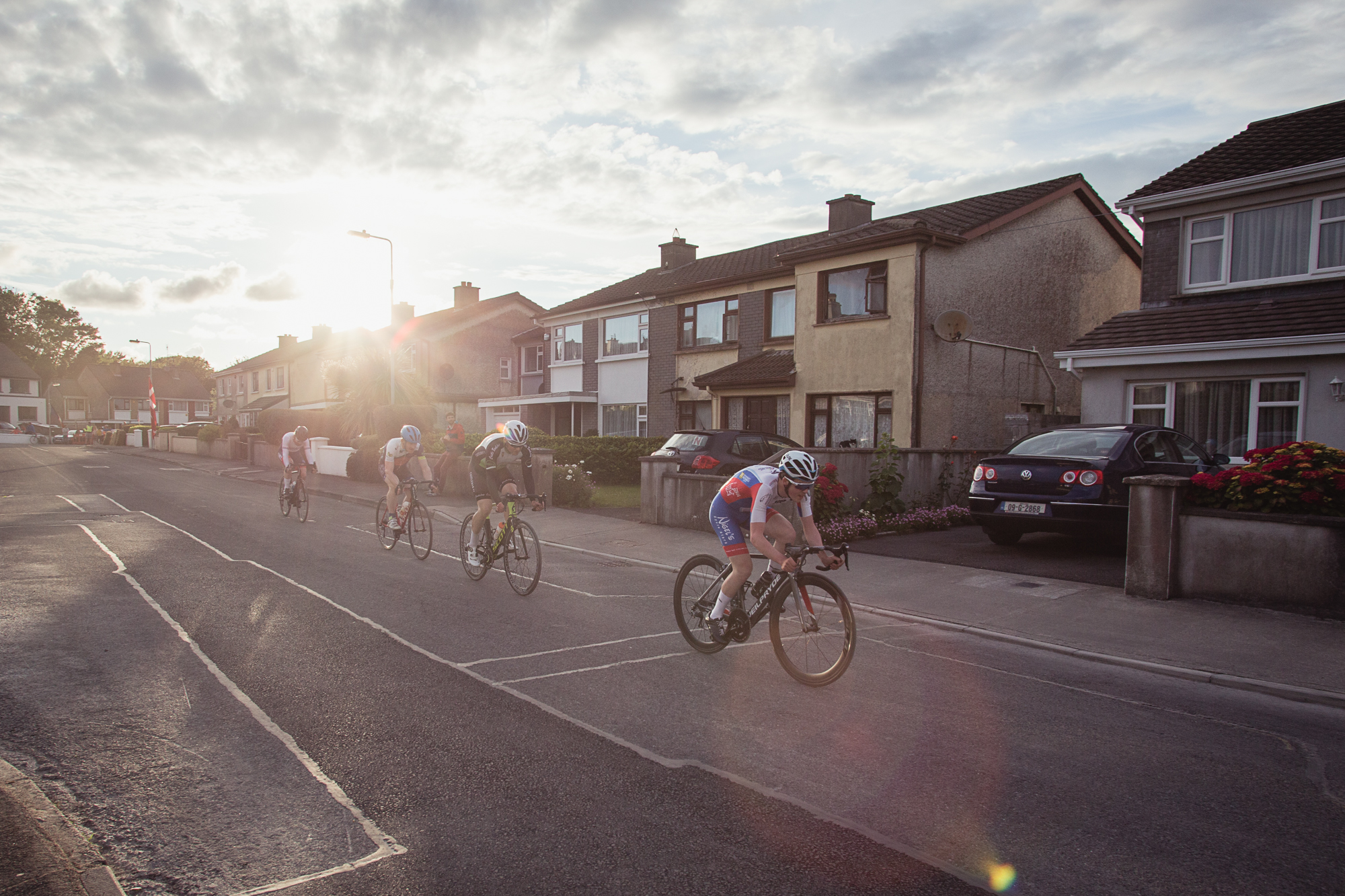
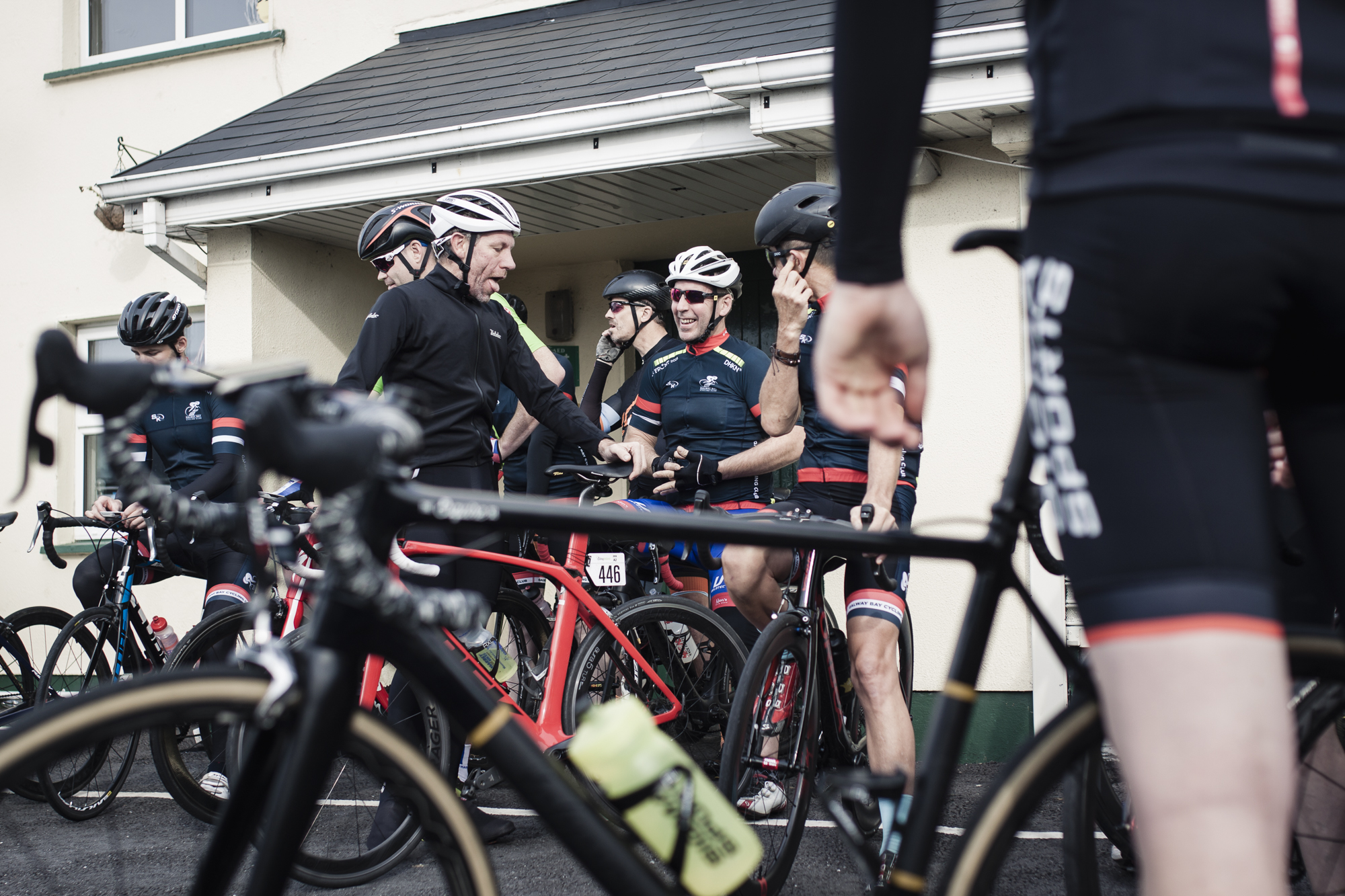
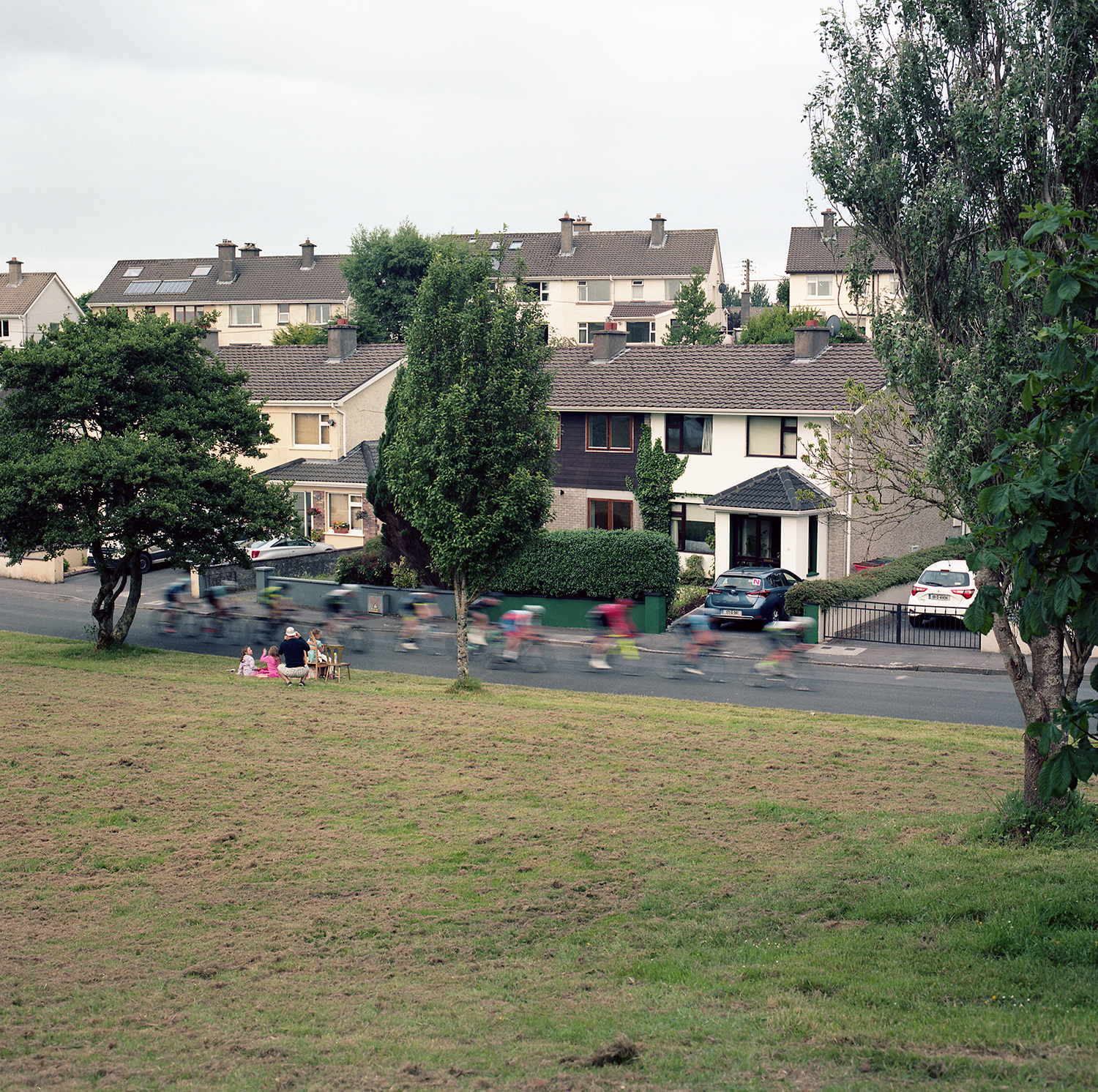
Crit Bike race, Highfield Park, Galway, June 2019

Mucky June weather and the bottom fallen out of the stretch in May but this, this Saturday evening in the little park hidden away in a west city estate, is aglow with generous light.

It throws muddy shadows from bikes as they swing round the circuit, on the flush summer grass, on the country flags creased by the odd puff of breeze.

Highfield Crit cyling photography, Donal Kelly

Race organised by Galway Bay Cycling Club with the support of the Highfield Park residents.

Posted on

Dispatches: throw another question on the fire

There’s an elephant in the room. Isn’t there always?. Hiding quietly behind a narrow strip of curtain folds. It’s this morning and I answer the phone to my Aunt and a minute later we’re arguing. Somebody mentioned politics. I don’t think the ‘green wave’ of last week’s election exists really except as a talking point for the returned status quo of FF and FG. Two arms of the one corpus. Nothing radical has happened. Oh dear. I’ve opened the lid and suddenly we are all going down a dodgy theme park slide.*

“They don’t live in the real world.” That’s what the woman in the cafe said the day after the voting. In small towns these are public venues. The smaller the town, the more public its venues? There, a theorem. Strike it down. She’s talking about the Greens of course. I want to ask her what ‘real’ world she refers to; the one we are choking and burning and carving up, if you listen to the people who count things for a living, or the one where lazy young folk are determined to hush with force anyone who speaks out against their lazy lookatme agenda, and some hoody is breaking into your house while you are on the phone to Joe Duffy about the councillor that should never have given that guy planning permission? How the hell are we to afford electric cars?

Now I’m back on the phone and the slide is picking up speed. There’s a vegan elephant in the room driving up demand for useless shite. Why am I suddenly mad? Why can I not soak it up and not react, let it accumulate as pure signal to be meta-versed about later on?

Well, what do you do about it then? You have a car, right? you eat meat, don’t you? You have to look at your own life first before telling others how to live theirs.

Ireland is only tiny; what we do has basically no effect. The elephant in the east is the real beast. Every village factoried out and a coal plant firing up every five minutes.

How do we get to work then? How are we expected to live?

Now I have a mushmash in my brain, a merging of oilsmoke into a pumping chimera: my parents, my aunt, the woman in the cafe, Mid-West and Galway Bay fm morning radio callers, an army of replies to Journal articles, and then the fog of fatalism- a scrawny black tomcat that shows up every so often and then is suddenly a full time pet that you’re going to have to neuter before he stinks out the place.

Well, how will we get to work if they ban cars, or tax the crap out of them? You commute yourself! Do you cycle to work every day? Ban farming? Where will people work? Are they your only ideas? Ban this, ban that, tax and more tax? It’s one thing to regulate landlords but what responsibilities do tenants have? They can wreck the place and just move out. How can you raise children on a vegan diet? It’s easy for those ‘influencers’ to jump on a fad and pay someone to do up a diet and afford everything.

Is it even work? What you do- work? What time do you get up at?

Farming in Ireland was always low-impact. Farmers actually care about the land. They’re more carbon efficient than those big countries: we should be making more beef, not less. We have high standards. Grass fed. Easy for people in cities to just ignore it and buy buy buy from their Tescos or Lidls, imported chicken wrapped in plastic. Good with avodacos or piled into lunchboxes for post-gym snacks (need that summer tone #bodygoals) A generation ago, there were no mountains of nappies tied inside plastic bags. People kept their own hens. The younger generation are buying all of this junk. Now they’re blaming us?

Why shouldn’t we build houses to live in? Where else are we supposed to live? Who gets to live in houses then? Rich people? How are they rich? Selling us the junk that we don’t need in the first place?

If you’re not happy with how people vote go out and set up your own party. If you want change go out and make it happen, otherwise you’re the same as everyone else anyway. Don’t be just here complaining about it.

Tax, tax, tax. They’ll tax the air we breathe. The greens will only go after people in the country with tax after tax and rule after rule. Remember the last time they were in power? People have short memories.

You’re a smart person- go and write about it; if you feel strongly about it, write about it, don’t just sit there. Write it out and get people to read it and get them to listen that way.

Isn’t it easy for you, for you to criticise, living at home of your parents; you don’t have to pay for kids, couldn’t afford to build a house anyway so it’s just sour grapes, classic case of begrudgery.

Is it even a real job? Is it in the real world? Are you in it?

I watch the chimera and elephant hanging out, sniffing, getting to know each other. The chimera goes behind the other curtain. Together they almost touch, blocking out 99.999% of sunlight from the window. Or was it a streetlight? Hardly the moon.

I pitched a tent on Black Head again, on Sunday night at 10pm after eating in Monks. Before that I got half lost following Google Maps to the Burren National Park. The 3G went awol for a bit and it jumped from 2 km away to 17 km away though I didn’t change roads. Ah fuck. Fuck you technology. But I saw a sign for Cahercommaun stone fort and walked up there and sat in the middle inside the 3 thirteen-hundred year old stone circles on the grass over the cliff edge with bees in the flowers. Nobody else around. I record it on my smartphone. Then I stopped at Parknabinnia wedge tomb and saw a broken “Beware of the Bull” sign behind the wall. Then swinging down towards Corofin and back up I actually made the National Park and walked a fair way though it was already late.

I pitched a tent on Black Head with the lights of Connemara twinkling across the bay, and I planned to get up real early- real as the real world where real people do get up on Monday mornings. But I slept fitfully in the bag and was slow to wake out of it. It rained on and off, and the sea just across the road was loud and a wind buffeted the flysheet. I took the whole tent down in record time though. A big fat navy cloud was rolling in from above the Aran islands. I got to the car just as heavy drops began to pour. Plink plink plonk.

I walked a section of cliffy shore then went on to Doolin for breakfast. Drove down and up and down and up. Where to park? Where to eat? The architecture is odd. It feels like it should be a quaint village around a cluster of squat old buildings but it has been such a roaring success it’s mostly a fragmented sprawl of bulky boomtime guesthouses and rent-me rent-me living with signposts everywhere. Where is its centre? Car parks with ‘customers only’ signs? A strip near a junction that has a hotel/bar/cafe in a strip? Some of the fat guesthouses are abandos, boombust victims, fenced off, unfinished. Here be raw spoils of progress and purity. We sacrifice one myth for another. We can stay and make a living but only by distorting things. Build up a tourist town around a mythical old village. And what pure history is buried in the ground anyways? Who wants to go back to Ireland in the fifties? Go away out of that.

I eat breakfast in the Doolin Cafe. I manage to avoid the full Irish but I know I need plenty of calories. Protein. Proteeeen. I go for salmon and eggs even though I don’t like the whole fish farm market.

The curtains shuffle: the chimera is recording me on a smartphone, livestreaming my salmon-eating hypocrisy, giggling. The elephant can’t be seen now for coal smoke but he seems to be growing bigger- swelling.

Take me back to Doolin then off up towards the Moher cliffs. I drive to the top first. A parking warden walks down to tell me I can’t leave the car there. I know I know. I saw the signs. I’m just leaving a bike locked to this post for a few hours. Grand grand grand. I give an Englishman who was over to surf in Lahinch a lift back down the hill. He’s glad to escape the shower- perfect timing. Finally I park again and start walking up towards the main event; three hundred and twenty vertical metres of cliff. There, there, for a while, I find a giddy rambling tune to follow, a path worn into but not dictatoring the shore, the sea roaring and breathing just below, right there, epic and rolling an infinite weave, texture and flow and scale. It ignores you; mucks with your mental map legend. I stop to take photographs and try to be less of me and more of open sensation.

I pass and then get passed by a couple of girls every so often as we stop at different spots. Stop go stop go. It rains and stops and rains and stops. Jacket on, jacket off. Jacket on, jacket off. Sweat, rain. At some stage we chat for a few minutes. The path eventually pitches up towards the high epicentre where the buses are all pulled up. Everyone is taking pictures of the edge or off the edge. I see me seeing other guys with tripods and them seeing me back and all of our gazes running into each other like the waves at the base of the cliffs. A couple is doing a full-on shoot. Looks like an American-style engagement thingy. I wonder what Lightroom colour grading they’ll use? What white balance and effects? Celebrate or denigrate? Every so often, on a year-to-year scale, someone plunges off these heights. Self inflicted or selfie inflicted. That a man may be free to choose. Why are we drawn to lofty heights? There are plaques in these places.

A harpist and a fiddler are playing by the main path from the bus park to the cliff edges. The tower is being repaired, cloaked with rattling scaffolding. I can’t hear the music or waves or rattle though; I’m in the warm busy visitor centre under the sloping glass, trying to let sweat and rain dry and get some calories in from expensive tea and muffin and crisps. The usual. Muffled piped music. “Here she comes again…”, Muffled conversation. The smell of acidic surface cleaner. Kills 99.999999% of all known germs dead. That and the muffin and crisp smell. “Please review us on TripAdvisor.” Unless you’re a crank. Oh fuck, I’m a crank. One said she would look me up on Instagram. I cycle down. Some wheeeeeeee, but there’s too much weight on my back- big heavy tripod and big heavy lock and big heavy camera all stuffed into or strapped to the backpack.

Later I look up the names of birds that you can see on Moher. There were thousands of them. It’s nesting season. I heard a woman at the edge ask “what kind of birds are they?” and after a pause her man answers with “They’re seagulls”. I have to look them up; I can never seem to get the names to stick. Guillemots with their white spectacles. Razorbills. Kittiwake gulls. Stomach acid-spitting flying milkbottle fulmars. Choughs though I think I only saw ravens. Maybe a peregrine falcon but I think I would have noticed those. Puffins! Rock Pipits. I could hear skylarks. I wonder how many eggs are down on those cliffs each year. Some of them are self cleaning. Cliff eggs are designed to not roll. Are all eggs like that? Maybe I’ve seen too many chicken eggs.

Now I’m back, to the swish of curtains and badly hid beasts and my hypocrisy and all those questions lined up, to defend and justify and establish boundaries and borders while my discomfortable tomcat of fatalism curls up round my head. More arguments wherever you look. Debate. Debait. About how being kind to refugees is an open invitation to millions more. About the little man being punished while the rich man soaks up sun. About insurance fraud and the degeneracy and moral poverty of today’s generations. About a politician herself falling off a swing, and having the sheer nerve to sue and later the further gall to go on morning radio and defend herself even after the internet was all up in a heap hounding out the details: the picture from the 10km a few days after, the music festival. Trial by mass media. Like and share. The joy of getting a kick in during a melee. Don’t tell me you don’t feel it sometimes? I suppose you’re a saint then? And what have you ever done to actually save the planet? And what difference did it actually make? You didn’t buy a plastic bottle or a tin of tuna? That’s it?

There’s plenty of space on the slide. It flows like sandpaper and broken glass. Got any interesting questions?

*My Aunt and parents are amazing people; this piece isn't fair to them; it is an attempt though to be honest to my own internals. Sometimes I feel like I have a committee of parodies running sessions in my brain.

Posted on

Dispatches: vote for slugs

[image: Corrib river bank near NUI Galway on Ektar 120 via Hasselblad at 80mm; I expect this area will be re-purposed as per the planning permisison notice on the path, to give way to more student housing and carpark, and a "Dedicated Biodiversity Enhancement Area". You'll be grand, Nature, relax; we just need to fire a bike lane through here. ]

A morning run can be better in theory than in practice. Well, every theory can be better than its practice, but yeah, morning runs. It’s already ‘too’ late when I start so I can’t faff along for 15km of continuous birdsong, so instead I decide to try a few vague rough-road 500m efforts. Slow down the peninsula and quicker back up. Less than pain but at least some pant. Repeat * 5. Flat out for the last. I struggle to rouse the legs and a stomach grumbles about breaking its night of fast.

On the first lap there are shiny black slugs in one spot near an expensive lakeview house built in a European money vernacular. They, the slugs, are down between the grass at the edge and the grass in the middle. I aim to remember to keep my feet away. Maybe it’s some reproduction ritual, snail chasing snail, franticness of nature slo-mo pace. I wonder about their chances and count the cars in houses in the short stretch as I run: 1 + 4 + 2. I can do this. Seven. Comings and goings. Holiday homes. They, the slugs, might be safe enough, snug as bugs, meandering along the deathy tyre-lane parts of road. Maybe they can eventually evolve to avoid roads. Or just not exist. Not existing is less of a solution though.

May is full gas gunning along now, hawthorns and their mayflowers already peaked, gulls, terns and geese squawking, squabbling, and wheeling round their Creeve nesting site, low clouds over bright lake, stubs of islands all green and morning mayfly boats out. First dates, couple goals, eggs eggs eggs, edge to edge leaf, insects being snaffled up on every surface- quivering web of spider, rising gulp of trout, jinking swoop of swallow. We don’t eat them ourselves much but perched up on the top of the food chain we are burning other links below, or paving over them with concrete or mounds of empty plastic packaging. Sorry mate, didn’t see you there.

Oh if I could get up earlier, chop an hour off, jolt out of bed like electric spark, have the grog immediately clear, then maybe maybe. The day might not have flown away because I went ahead with the run and then was too tired and hungry to be hungry for effort. The non-morning-person is condemned to forever chasing the remnants of risen days with lateriserguilt.

Election selection tomorrow. A strange combination of the most local authorities and the most global. Area councillors to hassle over planning permission and MEPs to send off to the grand EU experiment, whatever it is. I’ve never been to Brussels, have I? Creaky at the edges with the Brexit ship waiting to sail and yet stuck in the docks and having to take part in the election anyways. Barrage of Farage and May’s deal still on the dodgy record player. “Never could be any other way. Never could be any other way. Never could be any other way…” Backwards they say it sounds like a stiff upper lip doing a sermon about fighting on beaches.

My legs are still riddled with a medley of midge bites that I like to humblebrag about, or stumblebrag or lookatme-brag, fishing for likes or something. Or a social expression, something we are drawn to, driven to. Here, look at my fine injury and comment. They itch like a bitch and I scraped a few pieces of skin enough to scab. My willpower is too weak to resist. You would think that nature would let itches lose their effect after a few hours? Or maybe scratching the skin till it bleeds is actually the optimal solution. Maybe scratching is actually a social signal, that makes it hard to hide a dodgy condition from others?

Back on the morning run, which already seems like a long time ago, things don’t end well for the slugs. On interval 4, I hear the rattle of wheels on cattle-grid behind me, then the postman in his van passes. After, I can see one slug squashed into goo. Sorry, mate. And on the last effort, where I push the 500m down to 1:28, a gold Landcruiser is trying to reverse a trailer into the big Euronacular house (Christ, wouldn’t you love if it was yours?). All the slugs are gone. Ooh I should have stopped to pluck them up and drop them into the grass. Now they are all dead. May is murder.

Posted on

Song Attempt: Please Talk

Somebody is grafitting the walls down by the docks. The docks are deep, the docks are deep, the docks are deep to let the ships in and for… Somebody is writing “I’m not well Please talk” on the walls. See inside, inside and outside, is silence and noise. The noise and the silences of one into the silences and noise of the many as one. Whoever wrote it doesn’t even own it now, once it is on the walls.

Please talk, I’m not well enough to know how to say
But even if the words are mixed up they will stay
Hanging on to conversations, stations of the chain
Dangling on the edge of consciousness and its remains

Please talk I’m not well enough to begin the day
A million impulses hold me under their sway
Hanging on to loose connections, precious guessing games,
Their rules are deep shape shifting every time we play

I know I was born ready if only I could keep steady
Prop me up and push me on, we’ll go marching to cushy songs

Please talk I’m not well enough to express my fears,
And it seems impossible to change how this ship steers
Hanging on to definitions of the stuff I love
Why are we always somewhere else making some shit up?

Please talk I’m not well enough for another round
Let me lie here on this canvas losing pound for pound
Hanging on to normality see it all collapse
Ambivalence impending momentary lapse

I know I was born ready if only I could keep steady
Prop me up and push me on, we’ll go marching to cushy songs
To face into the wind inventing fables that might mend me gently
trace the lines that lead me here, harvest debt and borrowed ears.

Please talk I’m not well it’s just how these things work out
SO it goes and goes and ghosts who knock our lives about.

Posted on

Tiger Wake

The Celtic Tiger, stone dead.
Isn’t it awful, awful?
She wandered onto the M6
Somewhere near Kinnegad,
Into the brute smack
Of a Lidl truck going west.

The heft of headlines, snap rage.
Isn’t it a real disgrace?
Someone left the gate unlocked,
Installed cheap low fences,
Designed flimsy cages,
And fired the nightwatchman.

Question yet, our purity.
Isn’t it always the way?
Tigers belong in zoos,
Far from stony muck,
And farmers’ lambs,
And playgrounds on a Sunday.

Our latest brand, thinner beast.
Who in the name of God,
Would wrap in Pennys’ clothes,
Her medicine bones,
And swung by outraged friends,
Ebay them to Leitrim?

The Celtic Dream- an old ruin.
Isn’t it a shocking thing?
She turned up on site,
Hungry in cold bare feet,
Unable to tell postmortem muscle
From funeral meat.

Posted on

Photos: Galway Bay Cycling Paul Giblin Championship Race 2018

Sunday September 16th, 2018. Last race in the season for the club. Summer gone south with the swallows. I saw one, maybe the last, swooping out beyond the water tower.

Riders arrive in ones and twos. There’s hesitation: run it out and back like a normal league race? More riders arrive. Nope, stick with the plan. 60km+, out further to the Galway Plaza and back.

‘Plaza’ still feels alien to me. ‘See you at the Plaza’. Plazzza. Or ‘Applegreen’. Howdyalikethemapples? ‘Circle K’. Don’t get it. Don’t want to look it up. Things change. Things are always changing, underfoot or overhead or right through the middle.

The format is familiar. Club league race anticipation. The same faces might show up every Thursday but you can never know how it’ll work out. Bunch sprint or solo break? Nothing is written until it is.

Wind the legs up, fight for scraps of shelter, dig in and dig in again. If will and energy persist, get up the road. Lean into the landscape, ride into the pain. Count up the miles or count down the kilometres- whatever keeps the mind in its arrow. Dream of graveyed spuds or hot showers. Let a caught tune chase its tail round your noggin. Whatever keeps the body in the bid. Pedal pedal pedalpedalpedal pedaledaledaledaledaledal edal pedpedpedped edaledal pedal edaledaledal pedal pedal

Today the club races for itself, against itself, every rider together and every rider alone. Paul Giblin rode these roads, and rode them well. Rowed and road, powering across the landscape. He’s probably somewhere up ahead, in a break, pushing on. And so it should be.

Horseman, pedal on.

Galway Bay Paul Giblin Championship race 2018, cyling photography, donal kelly

Taken on the semi-functional 50D Canon. Few different lenses. Shutter button fires every so often, and the battery drains fast, and the sensor is dirty and the autofocus lazy. But it's not about the camera, mostly.

Posted on

Battleroad (song)

battleroad. song about dislocation and zerosum narratives. Or not.

Lyrics

On the battleroad, on the battleroad,
Whatever you were told, out on the battleroad.

You don’t fall, when you are dropped
Don’t know you’re moving, until the moving stops.
You’ve got your stories, your history, and your glue.
But can you stick it together, whatever’s coming through?

On the battleroad, on the battleroad,
Oh you can never fold, out on the battleroad.

Set it up, just to tear it down,
Strip it right back, to where you first belonged.
Your broken suitcase is floating in the waves-
Let the winners choose who they’re gonna save.

On the battleroad, on the battleroad,
Whatever you can hold, out on the battleroad.

Streets are paved with abandoned plans.
Midnight’s mute ghosts will come and take you by the hand
But you keep on moving, and you make no fuss,
They say we’re in this together: you’ve just gotta be one of us.

On the battleroad, on the battleroad,
Where no love is owed, out on the battleroad.

Where the word is sowed,
Where the weeds are sprayed
How will you know you’ve paid, all you owed, to the battleroad?

poor recording. Guitar is bleeding into the lyrics and I can't play it with subtlety that this kind of effort needs. Still, I haven't written much this year. Something's better than nothing?

Chords: D G for the chorus, C G for the verse.

Posted on

Bikes on film: GBCC Criterium, Highfield Park, June 2018

Galway Bay Cycling CLub (GBCC) Criterium racing, Highfield Park, Galway City, Saturday evening, June 9th, 2018.

Dry warm June. Tight clockwise circuit buried in one of Galway’s west side housing estates. Five right handers, two left handers, 2 speed bumps, one drag up, one drag down. Assorted bales of hay.

Galway Bay Cycling club, highfield park crit, film photography, donal kelly

All images Donal Kelly 2018. Cameras/film: Hasselblad 501C with 80mm lens, on Rollei Retro 80S and Portra 160. Olympus Mju-II compact (35mm lens) on Ilford XP2 and Rollei Superpan 200.

Posted on

Short Story: Birds of a Feather

Joe waited until he was home alone before opening the bag. He dropped it on the kitchen table over a touristy place mat and scattering of unopened envelopes. His sweaty fingers gripped the zipper and the canvas spilled apart into a loose yawn. Neatly wrapped bundles of cash clumped in a corner. Joe had never seen six thousand euro in cash before.

It seemed measly, frugal to the needy eye: no retort to the heavy null of a stripped bank account. But it was real. And realer still, when he carefully counted the six bundles one by one, taking off each elastic band, touching one to twenty fifties, leaning in close enough to smell them, studying their varied conditions: some fresh and new from an ATM, others worn with soft foldings from round trips through hand, wallet, pocket, till, safe, and bank.

In his mind Joe ticked off what each bundle could offset. A trip to the mechanic avoided since car test repairs. Visits to two old school friends who got him through Christmas. A call out to his brother’s neat gated bungalow. And the bank. Christ, the bank. He would soak up questioning glances; project calm normality. Just another banal lodgement on a quiet Tuesday afternoon.

“Five thousand. Cash. Yes, might as well get square up that overdraft while I’m here.”

Then the envelopes: bills, rent arrears, fees and charges, lapsed subscriptions, accumulated interest, all grown wild from drought. Their thirst swelled as his well dried, drop by drop to a pinched drip. CHecklist of upcoming necessities. A proper car seat for Maria. Untorn couch. Internet connection. Phone credit. Shoes. Cousin’s wedding. Haircut. Bank Holiday weekend.

One hundred and twenty scraps of painted paper. His friends would wonder. His brother would ask. Get a new job? Sell the car? Where from? Who from? Joe trod down on memories of the morning just passed. He’d waited for the first time as a customer in the hotel restaurant, until the Richard Murphy he had only ever messaged on Facebook flowed over like an old friend by happenstance, to sit for half a minute before darting off again. As though he hadn’t stopped at all, an in-flight refuelling high up in thin air, precariously perched in the stratosphere, lumbering fat bird sucking kerosene through a straw. He’d ignored the grey canvas bag left casually on the restaurant table until it seemed normal to be finished; normal as a regular on a daily pitstop.

Joe was a goose fat with corn on a field in France.

*********************************************************************************************************

Fifty then to fill up the car, or maybe fifty five to full, but Joe was loathe to break the notes. One down, one hundred nineteen held. But once inside, minor crisis. The strange fury of options, the power of having the the price of each in his pocket, the inflating of personhood from scavenging crow to keen hovering raptor; they conspired from pump to counter, to accessorize him with a basket of colourful packaging that he barely remembered picking.

“Cash. Yeah, 50 on pump 2. Sound. It is yeah, hopefully it’ll stay dry for the weekend.”

One hundred eighteen and a pocket of jingle. Wine for the dinner. Snacks for Maria. Ennobled emerger, he could glide from one end of the town to the other with the dignity of purchasing power. As the balloon inflated out into its mould, knots of narrowing frugality formed as a view, falling down and away. Eye contact and a firm handshake were restored to the world. From one end of Main Street to the bridge. One hundred seventeen. One hundred sixteen. One hundred fourteen. Ticking off burdens that had drained days to briarthorned gaps. The head up, opening of envelopes, and scornless listening of advertising resumed. One hundred twelve. And finally the bank, first refuser, great tut tutter and besuited charger of fees for nonpayments of fees. And having to fill out a lodgement slip with sweating fingers before the security guard pointed him to a machine instead and then a good minute trying to remember the card password.

“Enter amount to lodge.”

5… 0… 0… 0… backspace… backspace… backspace… backspace… 4… 0… 0… 0… ENTER

The machine didn’t mention the fine weather, just arrived, or muse about its chances of lasting. To the weekend? Beyond?

Joe was a flustered mallard landing in a canal in a strange city.

*********************************************************************************************************

He waited until Michella had left for her new evening class before abandoning couch and tv. He found Maria’s thick puddle suit hanging under the stairs. She blinked and happily made garbled word-shaped sounds as he put her into the sleek car seat. She kept up as they crossed the town and out to one of its appended estates. “Good girl,” he replied every so often to her babbled bubbles of sound.

Mike should be at home by now. And yes the car was outside, and yes he came to the door, and they both marvelled at Maria’s shooting growth and alertness, and how they should have a proper class reunion, and he didn’t stiffen up, much, when Joe put point to purpose and, wishing he was a million miles away under bare sun, asked if he could have the repayed money back again to tie himself over for this month’s rent.

“I think there’s work going down at the meat factory” offered Mike, but only after he had given Joe what cash he had, silently pocketed. “I know you’re doing a bit, but maybe you should ask down there? They’re always busy with the deli trade. And it’s not seasonal like hotel work.”

Joe thanked and thanked meaningfully and needed to leave. Swallow the medicine. Pain, weakness leaving the body. Mike stayed in the door.

“I was surprised you paid me back so quick last time. I mean… I was wondering. Did you get a loan?” Now he looked Joe right in the eye. ” It’s all the same to me Joe, I just want it to work out for you.”

Joe was stuck on the step, stuck stuck stuck, on a needle of knowing in a brute animal getting to tomorrow and tomorrow alone.

“I got a loan, yeah. But it’s… the interest you know? I thought I’d have more hours now. I might go down and ask at the factory alright.”

“Do, do. Steady hours, might do for a while until you get set up.”

He caught Joe’s averted gaze as it passed one more time.

“Listen, I don’t want to be a dick, but, well, I can’t tell you where I heard it, but, well, I did hear you might have borrowed from Murphy. I just wondered if there was anything to it?”

Maria would be getting restless in the car seat. Michella would finish soon. Needle in the hind. Mike had been the soundest of them.

“I was stuck Mike. The bank wouldn’t touch me. You know, the car broke down again and things have been really quiet.”

“I hear ya, I do. He’s a bad fish Joe, a bad fish. Have you had any hassle?”

Joe was a featherless, plucked chicken on a chute to hungry deli cleavers.

“He’s been calling. Leaving messages. Telling me stuff that he knows. About my family. About Michella. Maria even. I stopped answering. I’ve paid off most but there’s a lump left that won’t shrink. Got caught short a few times and he adds new interest.”

“Fuck, Joe, that’s a tough one. That’s a catch. He’s a bad fish, the fucker.”

Joe nodded.

“Listen, I better get going, I have to get her home.”

“Sound. Hang on a second though. That Murphy is a real prick. No good. I know a guy. Well, I know of a guy- might be able to help. Just in case- if it comes to it. There are people who can play him at his own game. You don’t need this shite.

Joe drove home with Maria falling asleep and a number for a guy who knows a guy saved on his phone. He would think about it tomorrow.

*********************************************************************************************************

“Outside the back door of Langans then. Eight. Ya better have it this time. Enough bullshit excuses. If ya want a charity go to the fucking church.”

“I’ll be there. Eight. Have it all this time.”

Joe stared at the phone and wiped his face. There was a steadiness now at least. He could make eight. The rest of it could look after itself.

Michella was changing Maria in the kitchen.

“Are you going out again?”

“Just for a few minutes. Do you need anything from the shop?”

“No; weren’t you down there an hour ago?”

“Yeah but I forgot to get petrol. I have to start early tomorrow.”

“Ok”

7:50. The car had a quarter tank and would last until Friday. Joe parked it off Main street, and walked along looking down at the disjointed pavement. His phone pinged again. New message.

“There now. Will wait. Say nothing to him.”

Head down, and it was dark and quiet, suspended in transition from open to shut. Joe was a vigilant hooded crow on a flickering street light. Langans. The back door down the side lane. Dim as a cellar. He trod on the instinct to survey the shapes of the shadows. What would be, would be. 8:02. He waited.

8:05. The pub back door opened. Murphy. Broad, leaning, shrugging. Purchasing power of embraced lawlessness. Games played in wraps of laneway shadows, banal as the pouring of pints or blinking of bank machines.

“Ya got it?”

“I got it.”

“About time. Come on then.”

Joe looked around, one hand going to pocket, eyes pleading.

Murphy closed in, burstling layers of threat, fist or steel somewhere in the dark.

“Gimmie a second, I got it, I got it.”

“Shut up to fuck and get it over with. You think I’m a fool?”

The first blow and Joe crumpled, electric needle of knowing and crude fuel of giving in, the world proving the charges he set it. The second blow and a scattering of senses.

“The fuck you playing at? I don’t need this shit.”

And then different shadows, peeling off from lane walls, and such a sudden rush of peeling, of forces multiplied, the embodiment and bloodyment of just reply, and two pairs of strong arms finding Murphy to buckle him, shadow throne to blood dripping down laneway drain, with Joe frozen against the other wall until barked at to scram.

He could hear them delivering their message – his message – to uselessly flapping Murphy, as he wished he was a million miles away under bald sun but was still-winded scrambling back towards the streetlights.

“That’s what ya get ya scum. Fuck off back to your hole. We know who you are. Fuck off out of town or you’ll leave in a hearse. Fuck off or you know what’ll happen. Fuck off. Fuck off. Fuck off.”

Joe was a startled snipe bursting from bog.

**************

“What took you? Did you get petrol?”

“huh? Um, no. Already closed. Just walked a bit”

“You don’t look well. Are you feeling sick again?”

“No, no, just needed some air. I’m ok now.”

“You don’t look ok.”

“I need a shower, that’s all. Shower and sleep. Long week.”

“Always a long week these days.”

And the shower, to wash the stink off, the grace of clean hot water rushing down, white from the soap, heat and steam around the hind of body beneath and the nozzled balloon within. A new bird, bald quarter ounce of chick in a spring hedge nest, aloft in the elbow crook of a woody limb, feeble and hungry. He could go down to the factory again with an open beak, to see about work for tomorrows.

The murk and shadow and stink drained down into the pipes. The prices of negative balances, the absence of scraps of painted papers, and their own vicious purchasing powers, could drain into the septic tank.

After the shower, and goodnights to sleeping Maria, Joe sat in the quiet, picking at microwaved shepards pie in front of the tv on the untorn couch.

The phone was charging in the kitchen, and when he went to get it, new message. Joe blinked.

“All sorted, that prick won’t bother you again. MB”

And another one. Newer. Same number.

“Balance was 3680. Let’s say 3500. SKip this month. Let me know if you need top up.”

Joe was a murmuration of starlings over a bank of winter river reeds.


Donal Kelly, 2018. The original idea from this came from reading an article about political terrorists (not sure if this word is right- loaded terms these) dealing out street justice to criminals, but also, running their own criminal operations. I had also been thinking about how money pressure constricts life down, and how getting out can be so difficult, and how those who cannot pay are condemned to pay fines and fees for not paying.

Posted on

St. Patrick’s Day Parade, Oughterard 2018

Toto pulling at the leash to gobble slices of white pan tossed along Main Street by a Bread-Exit delivery. A rowdy division of suffragettes clashing with a soldier. Sean Clancy’s MC mic getting scrambled with music from a raucous Rapunzel parody. A Men’s Shed rocket scattering smoke in the biting raw breeze. Numb thumbs struggling with camera buttons. Numb fingers playing tin whistles. Maybe the only warm kids are dressed as plump snowballs bobbing around a sharp toothed 15 foot tall Beast from the East. Starred and striped line dancers and tip toed Irish dancers, rugby players, vintage car drivers, historical reenactors, parkrunners, saints, sinners, and wall busting Mexicans, assemble. (and shiver).

St patricks Day, Connemara, Oughterard, Galway, Ireland, Donal Kelly Photography

Posted on

To Hanbury Gardens We Will Go

Mary, Mary, quite contrary,
How does your garden grow?
With silver bells, and cockle shells,
And pretty maids all in a row.

The car pulled up outside the entrance and three siblings stepped out into the hot sunshine. Sharp light glared off the glass door and bleached white the surrounding wall.

There was a woman and two men, one of whom paused at the car door.

“I guess I’ll summon it again for an hour?” he said.

The other man replied. “Or just wait till we’re ready?”

Jay, the man at the car, shrugged, put his phone back in a pocket, and watched the silver vehicle indicate and slide smoothly back out into the line of traffic.

Margo was already leading the way inside, pushing in the hot glass door.

“Come in out of this sun. You’ll cook out here.”

The entrance hall was large and the air cool and conditioned. A tall bright screen stood in the centre, in front of a pair of sturdy doors.

Philip, the second man, prodded the interface and it brightened, beeped lightly, and presented options.

“What do I pick? Ah, “Visit”.

Margo looked over his shoulder.

“Just search for the name. See- there- type it in, Argoss, Jane, yeah, now, yeah, that’s her. Now hit ‘Confirm'”

Philip pressed ‘Confirm’. There was a short pause, then one of the two sturdy doors swung open.

A young woman appeared, wearing a tailored dark suit and carrying a large tablet interface. She smiled in greeting.

“Welcome to Hanbury Healthcare! I’m Julie, Mrs Argoss’s care and lifestyle supervisor. I’m sure she’ll be delighted to see you!”

They stood and exchanged platitudes, pointing out the especially hot sun, and then the care supervisor led the three siblings down a series of clean, brightly lit hallways.

Jay sporadically coughed.

“You should get something for that,” said Margo.

“It’s nothing.”

They reached a corridor where one side was lined with large windows onto an enclosed leafy courtyard.

“Nice.” said Philip.

At the end of this corridor they stopped at an open room doorway on the right marked by number 274 etched in a metal plate. A sleek robotic care assistant (RCA) was just emerging with a smooth electric whirr. They stood aside to let it pass, and vaguely acknowledged its nodding head and beeps.

“Here we are” said the supervisor.

She turned to face the visitors.

“Now, you know, of course, that Jane is one of our older clients, and though she is very healthy she may not be 100% aware of her surroundings. So it’s important not to expect too much or to cause any undue stress.” She smiled. “I know she will really appreciate the visit.”

“Of course” replied Margo. “We understand.”

They were led into the broad bright room, where a big window opened out onto the same lush green garden courtyard.

“Hi Mrs Argoss, how are you today? You have visitors! Your three grandchildren!”

Mrs Argoss was sitting up in a large sophisticated bed. She was very small, had skin that was translucent, and her eyes seemed to focus on a distant point beyond the visitors. But she soon raised her head and smiled and nodded and they all smiled back and hesitated.

“Hi gran” said Margo. “You look so healthy!”

Mrs Argoss smiled and nodded and said “hello, hello” in a faraway voice.

The care assistant smiled and began to retreat out into the corridor.

“I’ll be back shortly; just press the buzzer if you need anything.”

The siblings gathered closer to the bed.

“How are you feeling gran?”

“It’s great to see you.”

“I hope they are treating you well.”

Mrs Argoss smiled and nodded and they strained to hear her little voice.

“Hello, hello,” she said. “I’m good, very good. It’s such a nice day. A lovely day.”

“Yes” said Margo. “It’s still very hot out, but they say it will begin to improve soon.”

“You have a beautiful view here.” said Philip.

“I do, I do, it’s such a nice view. And a nice day”

They stood and chatted, the three siblings asking questions in large tones with open smiles and giving Mrs Argoss ample time and strained ears to respond.

“Do you get to go outside gran?” asked Philip.

“I do! I do” she replied. “They take me out, and I get to see all the plants.” She was staring out the window. Leaves on dense shrubs bobbed in the light swirl of sheltered breeze and threw shifting shadows onto the grass and flowers.

“They used to let me pick herbs and even cook. But I don’t have the energy.” She looked back at the window again. Through the glass. Beyond the garden to some unfocusable plane.

Margo put her hand on the bed close to Mrs Argoss.

“Maybe you can do it again soon gran. Do you have everything you need here?”

“Yes, yes, everything. I have my music in the mornings and I just have to press a button for food, any time, and there are lots of things to do. There’s a button for everything. But Mrs Hart is gone. Where is Bob?”

She seemed to be trying to focus now on the faces of the grandchildren.

Margo looked at Philip, questioning. Philip shrugged.

“Bob?” asked Jay.

“Is he too busy to come? He’s always so busy.”

Philip leaned in front of Jay, smiling.

“Um, sure gran, he’s very busy.”

“I understand. It’s nice here. Look at this lunch menu.”

She turned the bed’s screen on its flexible arm with her thin tightly veined hand to show them a colourful list of dishes.

“Wow; looks great gran. So much choice.” said Philip.

“That’s much better than what I can get!” joked Margo.

Mrs Argoss’s voice was of a wren in a dense hedge at the end of a windy garden.

“and in the evenings they bring me to the hall and there’s music or video and we can talk.”

“Super. It sounds lovely.” said Margo.

“Do you have any pain now?” asked Philip.

“And sometimes the doctor comes himself and talks to me. And the nurse. No. No pain. No pain at all. Just no energy.”

She sat back in her bed. It made an instinctive whirr and readjusted itself to let her sink lower.

“Maybe your energy will come back soon.” said Margo. “It seems like a really good place here.”

The voice of Mrs Argoss faded further into a wisp of whisper.

“It’s much better, much better. Bob would like it.”

The siblings soon sat on the three comfy bedside chairs and looked out the window. With glances and gestures they let the conversation become wordless. They shouldn’t waste her energy. She needed to rest. Her bed was a very recent model. Everything was clean and up to date and comfortable.

After a while, and without sitting up or speaking, Mrs Argoss used a little control to turn on the main television screen screen opposite the bed. An episode of an old show resumed.

“Ohh, that’s an old one.” said Margo.

It was a brand of family drama that had long grown out of fashion. In one strand a young couple were arguing and the woman knew she was pregnant but hadn’t told her partner, and in another strand a businessman was confronting a sudden gambling problem while his son was making friends with the ‘bad crowd’ in his school.

As it finished the care supervisor returned.

“How is everyone doing? Would you like some coffee? Tea?”

“Maybe coffee” said Philip dozily.

“Certainly.”

The supervisor went to the bed and tapped a few buttons on a screen at its base. There was a whirr and the bed changed shape again, putting Mrs Argoss in a flatter sleep position, while the low buzz of an AC unit switched on somewhere.

“How is Mrs Argoss getting on? Is everything going well?”

“Yes yes, all fine” said Philip.

Philip stood up and walked to the supervisor. He carried a small briefcase and held it out.

“I brought some more things, some memories, and I was wondering if they could be added.”

“Oh, certainly, certainly. We appreciate any new content. Mrs Argoss has a very keen mind. She loves to go over photos and video.”

“I brought some books too, paper books, and a few magazines. And some printed photographs. Can you use those?”

“Of course, if the books are in the library we can add them. We can access a huge range of audio books too, with almost any accent. Perhaps we can scan some of the magazines and photos. Everything helps. At Hanbury we tune the experience to each individual. We use the latest algorithms.”

“Of course.”

By the window, Jay mumbled “At a cost”.

Margo glared at him. The care assistant smiled.

“I’ll go find a home for this new content.” she said. Here comes your tea and coffee now.”

An RCA appeared with a tray balanced easily on its main arm. Coffee, milk, sugar, cake. It nodded and beeped as the supervisor passed on her way out with the briefcase.

The three had coffee. Mrs Argoss stirred her frail body, then leaned forward and punched the screen that rose to meet her hand. The RCA left and came back almost immediately with another drink in a little plastic container, which it opened and left on her bed tray. The tray zoomed it up under her chest as the bed tilted to raise her torso and head. She smiled and sipped.

“Are you having coffee too gran?” asked Philip.

“Just tea for me. Just tea.”

“Looks healthy.”

They ate and drank in silence and looked out the window. The tv came on, starting another episode of the drama, then abruptly switched off. The RCA returned and adroitly collected mugs and saucers, then left.

“Is that the same one?” asked Margo.

Jay turned.

“The same what? The same robot?”

“Yeah. I was just wondering, if everyone gets their own.”

“I think they’re all connected. They’re all the same. It’s a network” said Philip. He stood and stretched, looked out the window, and sat down again.

The sun was dropping behind the tops of the buildings and walls that surrounded the tightly enclosed garden. Shadows deepened and darkened playfully across its growth. An elderly man was shuffling slowly from one of the far ends to the other, followed at a short distance by an RCA.

“How does so much grow here?” asked Margo.

After a pause, Philip roused.

“Water from pipes. Some kind of roof for when it gets really hot. Probably artificial lights because it is dark so early. Very expensive.”

“It looks so natural.”

“That’s the idea.”

“Such a lovely place.”

Jay looked unimpressed.

“Optimised to the last millimetre of potential, profit willing.” he muttered.

“Cynic”

“Realist.”

“This is the best place. Look how well she’s looked after.”

“And the most expensive and… protracting”

Philip interrupted.

“Isn’t the doctor supposed to call in?”

As if on cue, the doctor suddenly appeared. Middle aged, with a thoughtful, busy expression, a grey beard, and silver framed glasses, he knocked on the open door and walked in as the siblings stood up.

“Hello. I’m doctor Hazan. I’m Mrs Argoss’s health coordinating consultant. I just wanted to pop in to ask if you had any questions about the care.”

Philip responded first. “Well, she seems fine. How is her general health these days?”

The doctor smiled at Mrs Argoss, who seemed to be asleep.

Well, Mrs Argoss is in excellent health, considering her advanced age and her life experience. One doesn’t get to 119 without bumps and jolts. But she’s still physically strong, and mentally very lucid.”

He looked at Mrs Argoss, then down at a tablet interface he carried, then up again.

“We have her on a very advanced program of activities and diet. Daily exercise, mental stimulation, socialising, and the latest generation of life devices, all based on the best research. Shall I go through the details?”

Philip demurred “No, no, we have a good idea. Is she on a lot of meds?”

“Very little. Almost none in fact; just a general level of mild pain relief and some compounds to help her organs function at their best. I can provide a full list if you’d like?”

“No, no, there’s no need. We just wanted to visit and see how she was getting on.”

“Yes, yes, of course. I’m sure she really appreciates the visit.”

He looked up at Mrs Argoss again, then down at the screen in his hands, then back to the siblings.

“She’s in great form and we’re delighted to have her here at Hanbury. She’s lived a remarkable life, has seen so many changes.”

Margo spoke. “She’s been through so much. She deserves the best of care.”

“Absolutely. Here you can see she has access to full-time assistance, 24 hour. And as you know we take a comprehensive view of health, with a service based on her very own life experiences and history. All tailored to provide enjoyable and active late stage living.”

“Yes, yes. we brought some more content with us today.” said Philip.

“Excellent. It all helps. Our clients really enjoy connecting with their past.”

Mrs Argoss smiled at the doctor.

“Hello doctor.” she said feebly.

The doctor smiled back.

“You have visitors today, isn’t that nice?”

He went to the bed base screen and tapped it. The bed readjusted. The AC turned off. A blind slid down to cover a ray of sunlight that had burst through the window to draw patches of bright in the room.

Then he turned to the siblings again.

“So, would that be it all for now? Of course you can always contact me at any time. Day or night. And Hanbury will immediately let you know if there is any change. And you can all access the full suite of remote services, and schedule a video chat with your grandmother. Or any of her care supervisors.”

“Yes, that’s useful” said Philip.

There was a pause.

“Great, so is there anything else I can help you with?”

“No” said Margo. She smiled. “Unless you can fix the weather.”

The doctor laughed as he straightened up and turned towards the doorway.

“I wish I could! I really do!”

Before he left, Jay spoke up again from the window.

“Just one small thing. She mentioned a Bob. I don’t remember gran knowing a Bob… grandad, her husband, was Frank.”

The doctor stopped, pinching thumb and forefinger to his chin in a thoughtful expression.

Mrs Argoss seemed to be sleeping.

“Bob.” mused the doctor. “I can’t say I know of a connection. Of course, at this later stage, you know, experience of the world can become somewhat fractured, and memory can become, quite entangled with it. In fact some clients connect with memories deep in their past, right back into their childhood, better than the world outside. Mrs Argoss has lived a long and involved life.”

Jay said nothing.

“I don’t think it’s anything” said Margo. “She just got a bit confused when we all came in at once.”

“Well I know she is very happy to have you here.”

The sunlight from outside had all but faded. The entire complex, and beyond it the city, was in the shadow of early dusk. An electric light inside came on, and the window blind rolled itself up.

“Well” sad the doctor. “Excellent. I shall bid you adieu then, and will hopefully see you again very soon. You may need to see the accounts officer on your way out when you leave? Ms Kavish, the care assistant will show you the way. Ah, here she is.”

Ms Kavish, the care supervisor, had appeared at the doorway, smiling, holding the briefcase, emptied.

They nodded to each other as he passed her in the doorway. He almost collided with an RCA that was buzzing down the corridor, then turned and walked in the opposite direction.

“Ok” said Philip. “I guess we should go and review the account.”

Ms Kavish smiled. “Certainly, I can show you the way now, or can come back at any time if you want to wait a while. We will serve supper soon if you would like some.”

“No, no,” said Margo. “we should leave gran in peace now. She seems tired.”

Mrs Argoss seemed to be fully asleep though the TV screen was back on.

They went back over to the bed. The supervisor used the screen to readjust the bed, turn the TV off, and the AC on.

“We’re going to go now gran.”

Mrs Argoss opened her eyes dimly but said nothing.

“You tell us if you need anything ok gran?”

She opened her eyes wider but looked confused.

Then she smiled.

“We’ll see you again soon ok?”

She smiled.

They left with the nurse, back through the halls and veering off into a suite of offices to meet the accounts manager. The policy and contract would need to be reviewed for the upcoming year.

“Will I summon the car now?” asked Jay.

By the time they finished, back in room 274, Mrs Argoss was already having supper. An RCA had brought her chosen fresh dish and the bed had shifted to leave her sitting up to eat it. The TV screen showed a series of seated exercises, and she squeezed her toes in time to the routine.

The door opened and Dr Hazan appeared.

“Hello doc.” she said softly between chews.

“Hello again” said the doctor. “Sorry to bother you so soon already. I just need to check something quick”

He tapped the screen at the bed base. Then he took out his phone, tapped it off the bed base screen, and held it to his ear and looked out the window into the dark patch of garden.

“Hello”

“3”

“Hi, could I get the care supervisor for patient 2874.”

“Ok, I’ll wait.”

Music played. He turned to look at Mrs Argoss and smiled.

“The waiting game” he said.

The music stopped.

“Hi, yes, Dr Hazan. Yes, patient 2874.”

“Room 274”

“No, room 274.”

“I know. That’s why I’m calling.”

“I don’t know” He held the phone down.

“Mrs Argoss?” he said.

“Mrs Argoss?”

There was no reply. She seemed fast asleep. The bed had adjusted down. The doctor went back to his phone

“She’s asleep. We’ll have to order an ID test.”

“Definitely 274. Yes, I’ll wait”.

Music played.There was a long pause. An RCA came into the room and the doctor glared at it. It turned and left.

The music stopped. Phone to ear.

“Yes?”

A long pause.

“Oh.”

He looked at the bed.

“I see. Ok. Thanks.”

The doctor put his phone in his pocket and looked at the deeply sleeping woman for a long time before leaving.

—————————————————————————————————————

Written in long tail of winter, 2018. I've been thinking about OPTIMISATION, and how aspects of human life might be treated in a time of even more pervasive technology, with wealth intact (for some) though perhaps not other things. I imagine wildness in narrow serviced pockets and something lurking below the normalcy, maybe political, or historical, maybe unintentional, maybe technological; something where optimisation and the narratives of life and the consciousness of being clash.