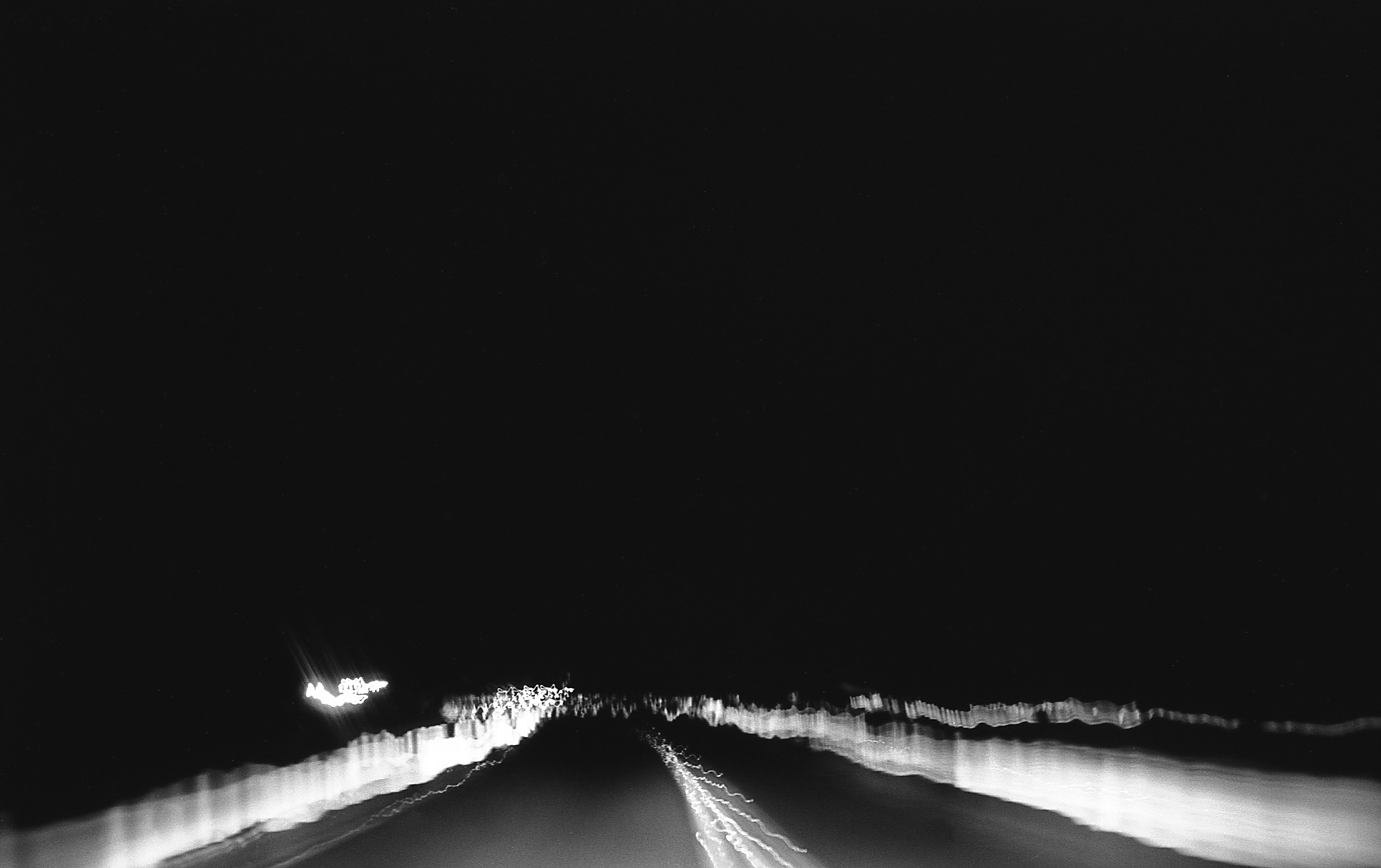
One day, one camera, one roll of film. Point it at yourself. Try to make it an eye in the sky, a documenter of who you are and where you are and what’s going on one randomly selected day. Dig deeper than a cascade of dislocated snapshots, and use the constraints and width of a full roll of film to frame a day in some way.
Here it comes, there it goes. The Christmas break, with its long buildup and heavily marketed stature, has already left the building before it seemed to even arrive.
The rains barely paused for breath, though the good winds provided enough breath for all. Under the twinklings of dangling lights blowing in the breezing rain, ’tis the season’ bells barely tinkled before being bundled back into boxes until the next rendition.
We had the lights barely untangled. Plans to untangle the spent year in my brain and my brain to untangle for the year to come fogged up like a stubborn windscreen. Through that foggy glass things seemed no clearer than before. Clarity maybe comes from commitment to some version of events or other.
2015 might be the year of obsessive notification-checking, or the year of film photography, or a year of solidifying yesterness, or less or more of all these things if considering.
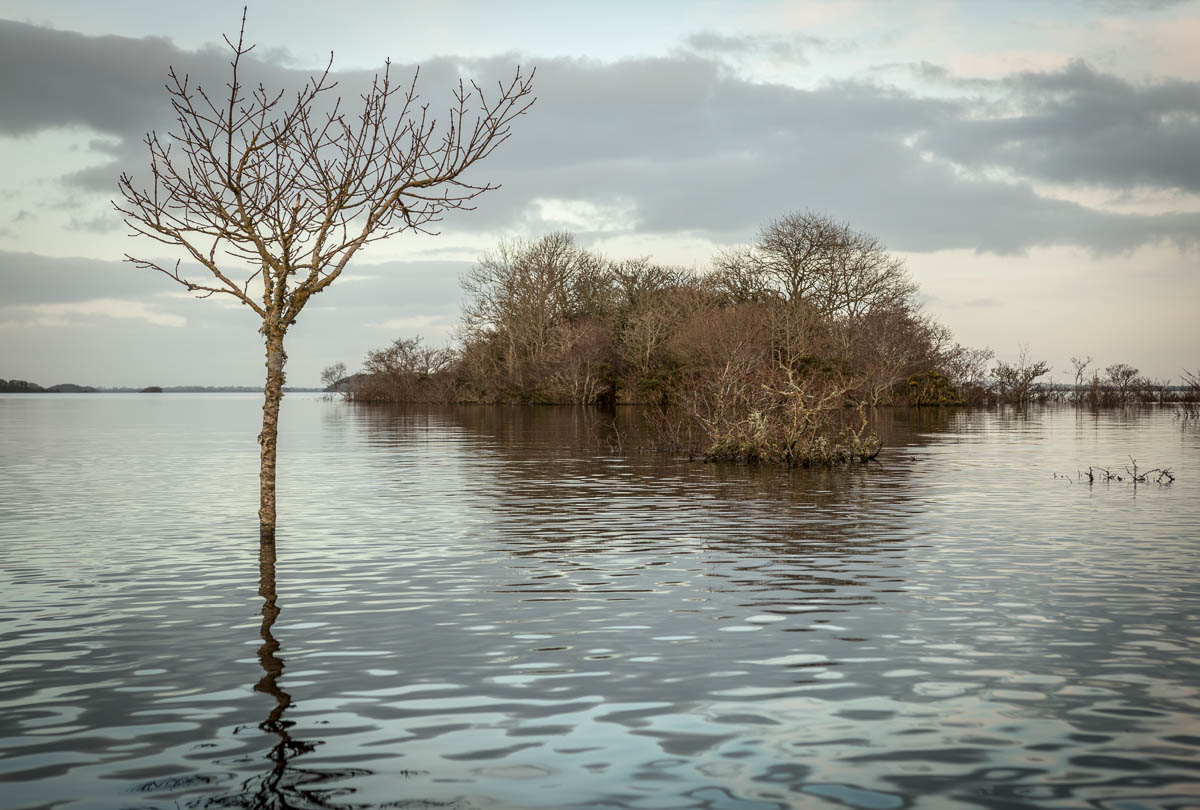
The water levels have broken records, with the shoreline exploring new curves along many a distant acre of field and shrub.
Indoors, in the bubble of days with names, family, television, turkey, and people in every room, time just whips away the last week of the year.
On the only calm clear day I was free, I took a borrowed Kayak to the high waters of the Corrib, with nary another floating human in sight, and rowed two blisters worth from Baurisheen to the head of the Owenriff and up past the boathouse and under the bridge at Eighterard and eventually all the way home in the darkening.
It is a world of
birds disturbed,
hulls upturned,
limbs of leafless tress sketched into the face of the river
To get under the bridge I had to fling myself forward then let my back fall flat onto the kayak hull, and still the bottom of the bridge concrete almost touched my nose. I failed the first time and wondered how safe the idea was with such a rush of water and nobody around and three grand of water-speckled camera gear between my knees, but I tried again.
It is a world of
current and flow,
never the same when you come back,
even if you never go.
In any case, not far after I got tired of battling the strengthening current that tore down in the narrower sections, and I flipped the little plastic boat around. Now it tears back down on the swell.
It happened before, though the levels this time are higher. In 2006, for the first time in the history of a family home built almost a century before, winter waters reached the doors and spilled into the kitchen.
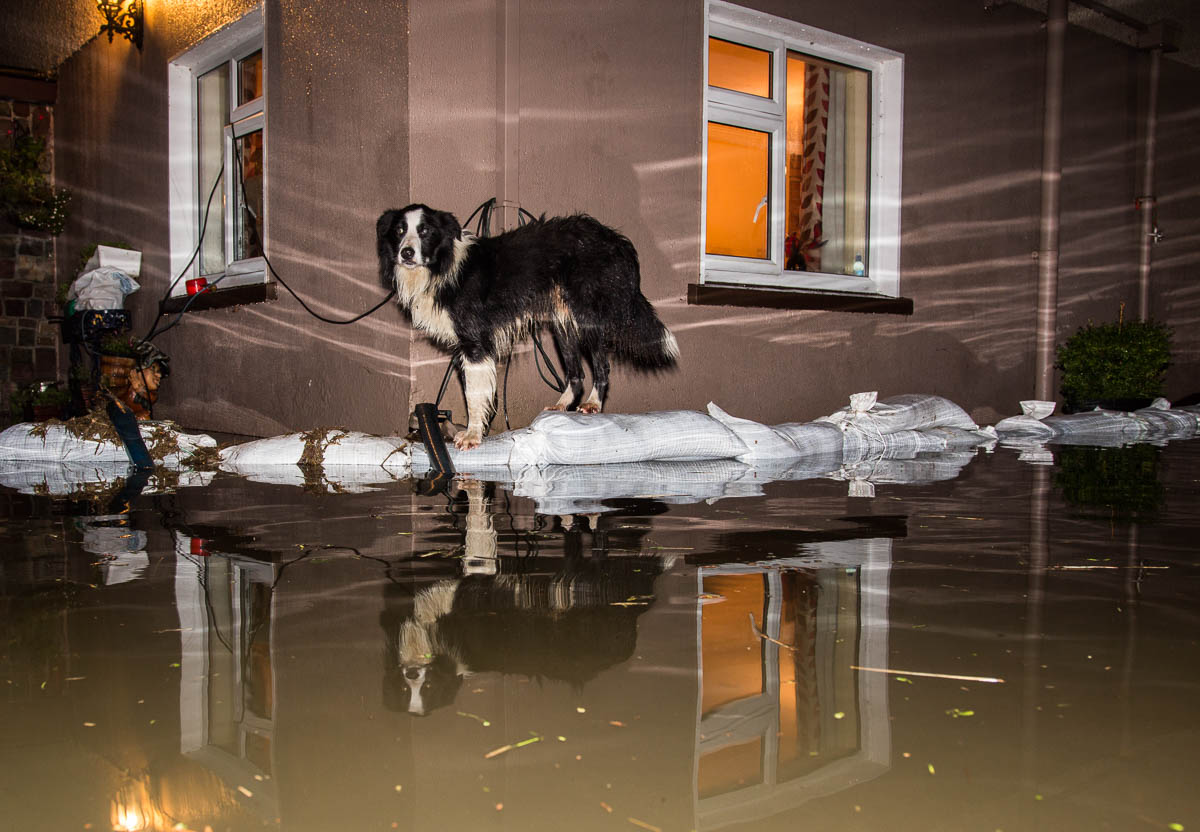
Nine years later, after another close scare in 2009, there are four inches of water from wall to wall on the ground floor of the Connolly’s home. Despite the sandbags, the pumps, and the efforts of the local council workers and incredible neighbours, the waters have risen and risen, creeping patiently across the fields, nudging out onto the road, lapping against the stone walls, inching up the drive. There is none of the sudden drama of a swollen river breaking its banks, no ferocious roar, just the slap and slosh of a lake materializing and the farmland descending to its bottom.
It happened before, and it made some papers then, but nothing practical was done. A few meetings of promises made and then nothing. It might be the lack of drainage, as the water in these areas of porous limestone can take its time to get to the rivers and seas, and follow underground paths and build up in low-lying fields. It might be global warming and the unpredictable weather conditions it exposes Ireland to. Rainfall is more concentrated and monsoony, and as in many areas in the last week, the network of rivers and lakes have problems handling it. In any case, the Connollys were left on their own in 2006 to repair, renovate, and carry on living in their warm welcoming farmhouse, all the while wondering if it would happen again. It has. Most frustrating for the family was how what they had been told was a newscycle’s worth of noise, with no actual policy or provision for what to do in the case of a re-occurrence.
There’s up to seven feet of water along the little road after it passes the Connolly’s entrance. During the week, a woman accidentally drove into the depths of it and had to be rescued by the fire service, after Jimmy heard her tired yells when he went to check on cows. She had been in the water for an hour, and was confused and freezing in the pitch winter dark and heavy cold quiet water.
By the weekend the battle to keep the water out of the house was lost. Just a few millimetres first, in the living room, then a small flow into the kitchen, then more and more. The house’s old foundations are no match for the water’s ability to find its way in. The wooden floors begin to swell. Wooden Doors refuse to close. A smell of dampness begins to rise. Soon it becomes a sharp unsettling odour, almost as unsettling as having to wear high waterproof boots indoors, and hearing the constant slosh and drip of water moving. Pumps were brought in but merely postponed and delayed the steady accumulation. It’s elemental and unstoppable.
Outside, the driveway is under three feet in spots. Just getting to the end of it is a complicated manoeuvre of wellies, waterproof layers, and a choice of boat, kayak, full-length waders, or a swim. The tractor is refusing to start since it ventured too deep into the murk. The cows are mooing loudly from the shed as the water discovers them too. Sileage, turf, hay, are caught and soaked. Grass, plastic pots, lumps of wood, and random landlubber memorabilia float idly by as though on some adventure. Apples, too; one of the old apple trees has collapsed, its roots released by the softened garden. Alfie, the generally water-loving sheepdog, runs up and down along the banks of sandbags, water on both sides. The cats are hiding on roofs and the tops of walls. One of them has set up residence somewhere in an upstairs bedroom, appearing every so often on the bottom steps of the damp stairs to look at the mess below before retreating.
Indoors, a plastic rubbish bin has managed to float from the kitchen to the living room. The stove there is burning away the briquettes that arrived by boat, just a couple of inches above the surface, and in the corner a TV is showing the latest X Factor finale. She’s singing a cover of Bob Dylan’s Forever Young, but does it not seem so very staged and overly designed? A coffee table on top of two sandbags and loaded with mugs of fresh tea tilts oddly to one side. It seems like the deck of a leaking ship, slowly listing, in a still sea. Hard questions are being asked. Do we stay or leave? Where will the cows go? How long can we stick it out? Where will we go? Is it another ‘once-off’, a once-in-a-century flooding event (9 years after the last one), or a recurring winter nightmare?
(These cows were moved shortly after this photo was taken)Setting up a drone to get an arial view of the rising levels100m ahead the water is up to seven feet deep
The idea of the work getting it all back to normality again, with Christmas two weeks away (sorry soggy Christmas decorations have been moved to high shelves) is best avoided for now, while life is still splash slosh splash slosh. Best to focus on the most urgent of questions. How many pairs of dry socks have we left? Eileen remarks how getting up in the morning has become so difficult; putting on knee high boots upstairs and coming down listening for that slosh while wondering how much it has come up.
The night is calm and the stillness of a midnight lake settles in. At least the lights are still going. Hopefully the switches won’t trip before the morning.
All photos and words Donal Kelly, all December 13th, 2015, Roundfort, Mayo.
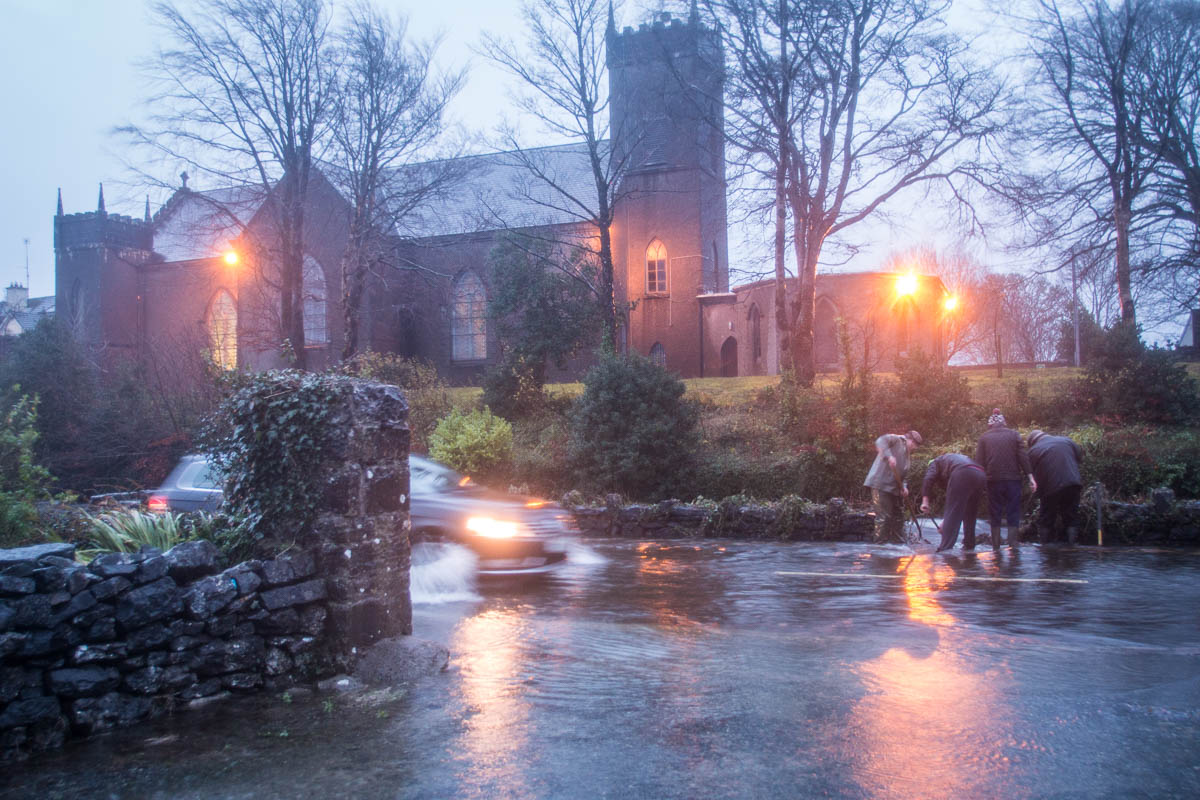
Storm Desmond is still battering its way across Ireland and the U.K., having already dumped a month’s worth of rain in some areas. The local radio stations along the west coast have become live feeds of lists of blocked roads, lights out, flooded houses. Rivers have been filled to breaking points and beyond. The Owenriff in Oughterard is no exception, and is currently hurtling down to the rising lake in a white torrent.
Local men worked on breaking gaps in the wall along the road to let the water on the road exit back into the river. House owners peered anxiously at the rising levels from behind sandbagged doors, as the wind still whipped rain every which way.
Lough Corrib looking rough, wouldn’t be a great day on the dapRoads not the best for driving, or walking evenReverse!
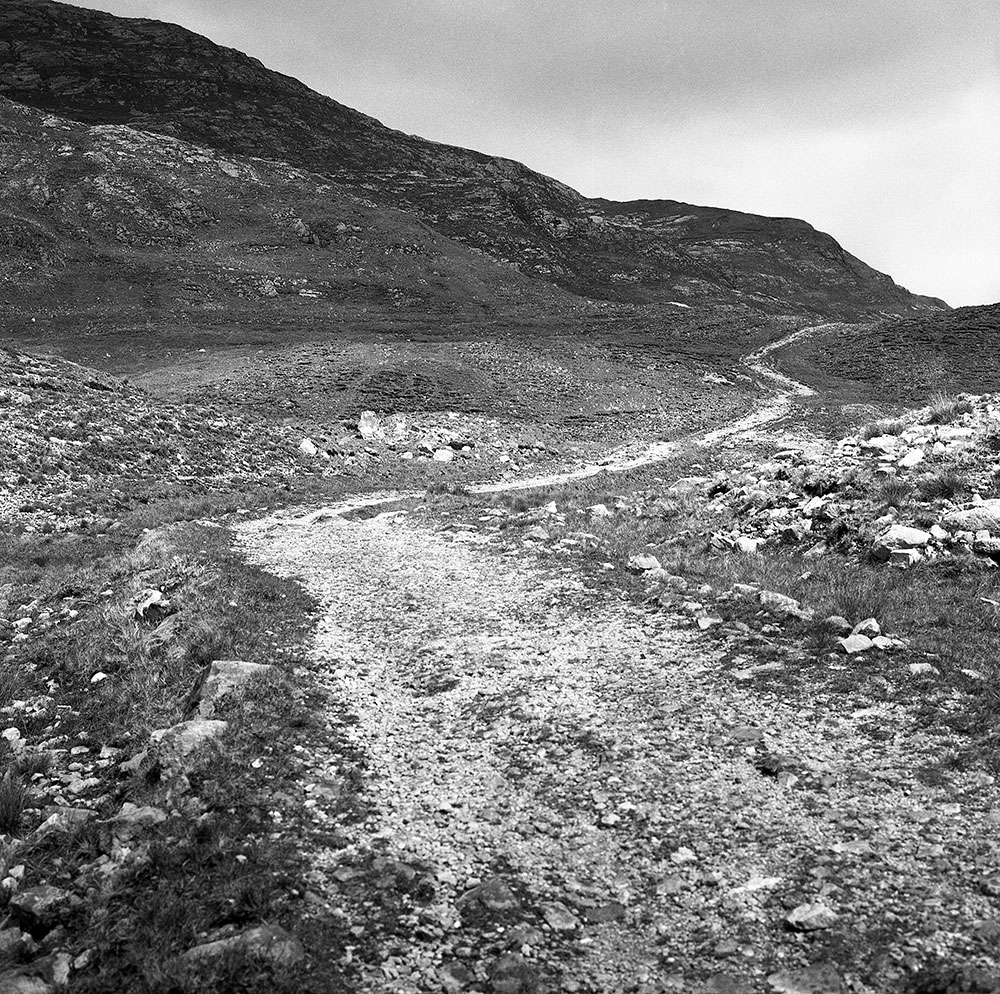
According to legend, St. Patrick blessed Connemara from a well at the top of the pass, and slept there (“Leaba Padraic”=”Patrick’s bed”), though to my limited knowledge there was stuff going on there before that too. There is now a little chapel next to the well and mounds of stones marking the stations of the cross. It is a remote rocky outpost where winds seem to gather, and stone in so many forms fill up to the changeable sky.
On Máméan
On Mountains of Máméan stone
Mounds of stones
lead up to the chapel on the Pass of the Birds
Wearied by the winds that funnel through the reeks
by ‘leaba Padraic’
We follow the pilgrim path scratched up the slope,
A journey distilled, to resonate like a lone string,
With all the other journeys,
Tracing the same strewn line,
That never seems to change
Until it is suddenly gone forever.
Names of the dead are scratched on scraps of slate
Scattered on the alter dug into the rock
And left to mark the passings by those who pass
Tracing a path back to the pagans
To a well’s water as deep as the will to drink
In sacred places.
And most of us,
When we reach a summit
Add another stone to the stones
That mark the summit,
Of the mountains
And the Gods or the absence of Gods
That the mountains themselves
Are scratchings of.
On the Pass of the Birds
The grand scheme of things,
Is momentarily reduced
To one foot in front of the other
On a winding path of white shards
Where we lean into the Mámean wind.
Photos were taken on a Hasselblad 553 ELX, and a Canon AE-1 Program (first and last images) Ilford Delta 100 film, developed using Rodinol (1+25). There were, unfortunately some streaks on the film after developing. This is the way of film I suppose.