Posted on

Short Story: The Promotion

The Promotion

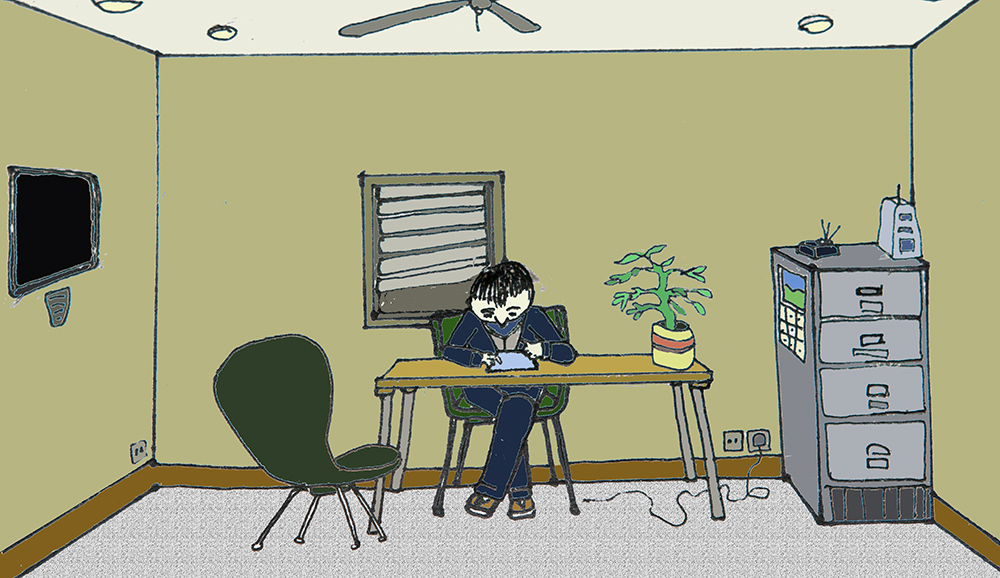
Interview room 341 is very small and dark, like a segment cut from a corridor. Harry notices the odd ratio of wall to door to window as he automatically moves towards the one empty chair. An inspector sits opposite behind a small desk, staring down at a screen. He’s thin, suited, with short hair starting to grey, and legs crossed with the raised foot absently tapping air.

He doesn’t seem to notice Harry standing there awkwardly. Just swipes and stares. Harry sits. Now the inspector looks up.

“Ah, Mr Thomas?”

“Yes. Yes?”

“Sorry to keep you waiting. It is nice to meet you.”

“Um, yes, it’s nice to meet you, too.”

The inspector smiles, showing his top teeth.

“I hope you got here without any trouble.”

“Yes, it was fine.”

“Well. I’m glad you could make the appointment. We’re very sorry about the delay. You know how things are right now.”

He waits.

“That’s ok.”

“Good, good. I’m sure you understand. It’s beyond our control. And of course doing things properly takes some time.”

He waits again. Smiles. Teeth.

“Yes, I suppose it does.”

“It won’t take long now though. Not long at all. We have gone through your work in detail. Everything in the feed, and everything in the archive. A considerable portfolio.”

He holds the screen up.

“This is your account, right?”

Harry looks at the old feed; its thumbnail images, shared edgy articles, and cringeworthy contributions from an old virtual self. It has been scrolled down to some point in the past, maybe five years ago, or more? There’s a photo of his brother with arms folded, standing outside under trees. Harry remembers it. 35mm Kodak film in a Canon FD camera, on a 50mm lens, just after the house was finished.

“Yes, that looks like my account.”

“Excellent. Yes. It is. We have gone through it in close detail. Thoroughly. Quite a body of work. Substantial.”

He waits. Smiles. Teeth.

“Thanks.”

The inspector turns the screen round. Tap, swipe, tap, tap. He holds it up again.

“And this, this is also yours? From the archive.”

Harry looks. A gallery of much older photos. A red van outside a bungalow on a drumlin hill. A long exposure of waves hitting a dark-rocked coast. A blurred horse running on an island. A boy in woods holding his hand in front of his face. A reflection of a row of white houses in a puddle.

“They are yours?”

“Yes, yes, they’re mine. from before. I haven’t seen them in…”

“Yes, well, here they are. Alive and kicking. Very consistent.”

He puts the screen down on the desk next to a sorry plastic plant.

“Well, we have gone through everything in detail, great detail, and we feel we have a good measure, a very good understanding, of your work. A very broad output indeed. Landscapes mainly, wouldn’t you agree? A degree of escapism? Some Longing? Classic straight composition, with the odd effort, off-piste, as they say.”

Harry’s eyes roll around the very small room.

The inspector waits.

“I guess, I’m drawn to landscape, somewhat.” He shifts in the chair.

“Yes, yes. Landscape is a fine subject. A fine way to spend a day off, out in the open air, recording the conditions, the light, the weather. The change and the unchanging.”

Harry shifts uncomfortably again.

“And of course, some street work here. Black and white in the main. Very, I suppose, un-intrsuive. Unintrsive street scenes, with little eye contact. Some reflections, windows, skies, observations. Perhaps a sense of, disconnect? Certainly a measure of observation and complexity. But a distance nonetheless. Very interesting. The curse of the observer, in the street, of the street, but always feeling outside, perhaps?”

“I suppose.”

Another long pause. Harry looks up at a fan cutting its loop overhead. Snipsnipsnipsnip…

The inspector nods and stares, his finger still flicking across the screen. He angles it so Harry can’t see what he sees. Pale blue light strikes his steady inspector face, and into his steady inspector eyes.

Eventually he puts it down again, and turns to face Harry, folding his hands carefully after thoughtfully brushing dust from the corners of the desk.

“So, this is good. I think we can come to a very clear understanding.”

“I hope so.”

“Certainly. Certainly. You see, your work is excellent, very good, very broad. Curious. Introspective. Persistent. And very consistent. Perhaps trying at times to, er, find a, find a foothold. A voice. What do you think?”

“Well, I guess, I mean, it’s… hard to say. I’ve put a lot of… It’s not really something I’ve…”

“Not to worry. Not to worry. Of course overthinking can disrupt the intuitive quest. Art is an, active form of contemplation, and expression shouldn’t be, pigeon-holed. Never tied down, strictly, fully. In any case, I’m sure it has been a valuable process, very educational. And an interesting, active hobby. We must always strive to see, to see better, no?”

“Sure. Yes.”

“Yes, We have to be, be in the world, and, take it for what it is, with us, in it, in the, flow, exactly. We have to let the world flow by us. Through us. Let it settle, percolate, integrate. Exactly. You have explored and I’m sure have learned a great deal about this human condition of ours.”

He rubs dust off the desk again, and glances at a clock that hangs on the wall behind Harry. Smiles. Teeth.

“Now, I’m glad we agree. You have learned and experienced and explored. A valuable process. You know, people like you are very important, vital even.”

Harry tries to stretch his body out of its slouch. The plastic chair seems designed to push it into a collapsed hunch. The tiny room is warm but he shivers. The daylight that had striped between the narrow grey blinds is gone.

The inspector puts his hands together in another practiced gesture.

“Of course, it is vital too, essential, to help people find their right, role. Their best calling. Vital to all of us. Otherwise, so much, so much potential, goes wasted. A great inefficiency.”

Harry stops fighting the slouch.

“I’m sure you have studied the greats. The giants of the art. Bresson, Capa, Adams. Man Ray. Atget. Aarbus. Koudelka. Steichen. Mann. Strand. Kenna. So many, so many. So true to their art. Art in every direction. We must never forget to study them, learn from them. Try to see as they saw. Don’t you think?”

“I suppose.”

“Yes, of course we do. And at the same time we must also struggle, struggle to find our own path. Sometimes we fall naturally into it, but of course, we can be helped. can we not? We have to embrace our path with integrity.”

“I guess.”

“As sure as we are sitting here. As sure as the sun still rises. We must help each other, for the sake of all of us. Not in a theoretical way. In real ways. Concrete ways. We must keep our purpose clear and our hearts open. Would you say that you are open, Harry?”

Harry lets his eyes float again, from those clean careful hands with close cut nails, to the looping fan, to the grey blinds.

“I, I.. maybe.”

“It is a fact. It is obvious from your work. You are an open, inquisitive individual. With so much to offer. I am sure you can see the opportunity, and that is all it takes, to see it, to see the path ahead.”

The inspector seems to count a preset number of seconds of pause, looking intently at Harry, then thoughtfully at his desk and office and the upturned screen and the clock, as though they have suddenly just appeared and are arranged just right.

“So. Time has no mercy. I am sure you are eager to get moving. It is great to find agreement. I am sure you can have many new experiences, good, great experiences. There is always time” As he speaks he pulls the screen back across with one finger, without looking at it. Then he does look, and it lights up again with the same blue, and he touches and taps.

“Now, here we are. Harry Samuel Thomas. One Seven Six Zero Seven Six Five Nine Two. This is you.”

“That’s me.”

“Of course. Now. Let’s just quickly… (tap tap tap).. and (tap tap tap) ”

He leans over the screen on the desk, but Harry can still see.. another gallery of his photographs. Numbers and dates. His memories. On one side he can see a star rating and underneath it some comments.

Two and a half stars out of five.

The inspector stares for a long moment then tap-tap-taps again.

Now a big button appears saying “Confirm Cleanse”

He looks at the screen.

“No point in looking backwards Harry. We must learn from the masters, pull together, find our optimal path. We must let our lives be our content.”

Harry watches the inspector’s quick fingers tap “Confirm Cleanse”. The screen flashes. A new view: “Confirm content cleanse. All feed content will be removed. Save feed content to archive? Remove all archive material?”

The inspector de-selects “Save feed content to archive”, and selects “Remove all archive material”. He taps “CONFIRM”.

“Identification required. Level Four. Department of Culture and Data Provisioning.”

“Ah, of course.”

He turns the screen to Harry.

“Can you put your thumbs here. Both thumbs? On the circles.”

Harry presses his thumbs onto circles marked L and R.

“Identification confirmed. Processing request.”

A loading bar appears.

“Removing feed content. 3%”

Harry can hear the fan and his own breathing. He tries to remember the places he has been. Fragments. A windswept day out on the coast. Deep grass, hollow-pocked under tripping feet. A windy afternoon and the sun blasting between clouds. Crawling on his belly to the edge and holding the camera over it.

The ocean bellowing below sheer cliffs. Seagulls squealing. The huge mass of the sea stack over the waves. Lines of white froth and bullets of specular glint. Clear horizon and sea sound and sea smell from one edge to the other.

“100%. Source material removed.”

“Removing archive material. 1%”

Or, another time and place, getting out of the subway at night, during winter in a cold city, and turning to look down at steps running back to the station. A man hurrying down, and suddenly jumping the last few steps. Too many to be practical. A flourish, not meant to be seen. Just for the heck of it.

A long time ago now.

“100%. Archive material removed. Procedure complete.”

The inspector smiles broadly and leans forward.

“That is it. That’s great. Nothing to it. Now we can move forward. Onwards and upwards, to new adventures.”

He continues to tap.

“And the requisition unit will call to your home this very day, for the equipment recycle order.”

He turns the screen off.

“Now, good news. We have a great position lined up for you. Perfect. A brand new opening. Right next to your home. A fine promotion. With a highly reputable content subcontractor- Merko Kontent.”

Harry feels far away, and being far away and empty, finds he is now able to meet the inspector’s gaze. It doesn’t waver. It holds his eyes and drinks them in and deletes whatever they are saying, unflinching, unreflective, steady.

“You will be straight into the images department. None of the ground floor work. A proper contract.”

It is easier to look at the blinds, and the lines of darkness where the lines of light had been.

**************************

Office six eight four, floor three, Merko Kontent Building Seven, Department of Content and File Administration. Eight minutes of brisk walking from the outside door of the apartment block.

A lady in a blue suit with a name tag shows Harry to his desk. His name and number are displayed on a large flat display. She points out the bathroom, the coffee and vending machines, and the smaller second screen to the left of the other. On this, a red clock showing “09:00:00”

“Just put your thumbs here.”

Harry puts his two thumbs against the L and R circles on the big display. It immediately lights up. Text appears.

“Assignment 3707124. Content Agent: 176076592. Session: 1186503. Time allocated: 24:28:00. Time accumulated. 00:00:00. Session length: 09:00:00. Press screen to begin.”

There you are”, the lady says. “Just follow the screen. Easy peasy. A basic session to get you started. It automatically stops when you leave your chair.”

She starts to walk away then pauses.

“Oh, and your work will be monitored of course, I mean, especially, for the first few days at least. It’s just protocol. Press the Support button under the clock screen for tech support. But you shouldn’t need it.”

She hurries off. Harry watches her disappear into a maze of separating dividers and then he glances up at the camera overhead. Then at the screen. It waits.

“Press screen to begin.”

He presses the screen.

“Assignment type: Image Allocation. ID 3707124. Session: 1186503”

“Assignment content: Private Feed Images”

“Assignment target cluster segment: Pornography”

“Press screen to continue.”

The only sound is a low background hum, and possibly faraway traffic, and something like flowing water. Overhead pipes?

He presses the screen.

“Instructions overview: Choose Yes if image is of a graphic or pornographic nature. Otherwise choose No. Press screen to continue.”

Harry presses the screen.

The clock on the left suddenly starts counting down.

“8:59:59”

“8:59:58”

On the main display: an image of a windswept sea, probably taken from a boat. Two buttons. YES and NO.

Harry touches NO.

A new image. A truck being unloaded outside a warehouse in the rain.

NO

A group of people in a room, looking at the camera and smiling.

NO

Two young naked women in a kitchen with their hands raised to their faces in ‘owl eyes’ shapes.

YES

***********************************************

When the clock reaches zero, Harry realises he hasn’t eaten, or moved from his station for a full nine hours. The light has stayed exactly the same throughout. The sounds too, bar an odd shuffle of passing feet followed by clunks from a vending machine or whirring from the coffee machine. The big screen is blank. The small one reads “00:00:00”. Now it too fades into black. Harry’s phone vibrates in his pocket. He takes it out. New message.

He takes the stairs down and goes through door, door, gate, to get to the street. It’s dark and not yet busy. An eight minute walk home. He has finished early.

After four minutes, Harry reaches an intersection and stops. His stomach is rumbling. He stands there for two full light changes, watching other workers going home, and cars driving through. He sees lights switch off in the opposite block, and others switch on. He sees a woman walk by with a little girl wearing a dress and eating an ice cream. Instead of going straight on towards the tiny apartment, he turns left, and walks faster.

Eventually, he reaches a bridge and crosses, looking down into the dark river below. Now he is in the old part of the city, where warrens of streets thrown on streets mingle and twist. Old unprofitable shops hang stubbornly onto corners like barnacles.

Harry stops at a dirty lit window with red and black lettering overhead. “Darcy’s. Buy and Sell. Technology specialist. Classic items.” He looks around before pushing the door in.

A bell tinkles. An old man leans over a glass counter at the end of the dark narrow space, working with a little pliers over something disassembled. The centre and sides are lined with shelves and cases. Harry makes a slow line around the outside towards a display of antique cameras. Dented metal SLRs, a couple of worn rangefinders, and a random mix of lenses, bags, and coloured filters. He picks things up, twists knobs, presses shutters.

The old man stops his work and stares.

Harry picks up a small SLR.

“How much for this body and lens?”

The man peers through his thick glasses.

“Mmmmm, that’s not a common model, that one. In good nick too. Serviced it myself. And no digital footprin… mmmmm…. 50 pounds for both.”

“Do you have any film for it?”

“Mmmm, film? I’ll check.”

The keeper disappears into the back, and Harry waits, listening to the sounds of cabinet doors opening and closing and muttered swearing.

The old man returns with a small cardboard box filled with rolls of old film.

“Expired of course. But I had them in the fridge.”

“Fine.”

He picks up a loose roll and holds it up to his face.

“You know, I don’t think you can get these developed anywhere anymore.”

“I know.”

“Oh, well, 3 pounds a roll, as they are.”

Harry picks up and puts down some of the rolls. He looks around the empty shop again then pulls out a battered wallet. Carefully wrapped inside an old receipt are two 50 pound notes.

“Will that do? For the lot?”

“Yep, that’ll do. I’ll find a bag.”

Harry hands him the cash and turns to the door. Back outside, the street is quiet. The streetlights that work throw cones of muddy orange along its narrow curve. Harry fumbles with a roll of the expired film and eventually loads it. He stares at the row of houses, the lights, and the blackness of the sky that they fade into.

He wipes the viewfinder and lens with his sleeve then holds the camera up to his eye. Fragments from the nine hours of “Assignment Section: Pornography” begin to dislodge. He tries to see only what is in the viewfinder.

Click.

THE END

All photos, drawings, and text by Donal Kelly. Please let me know if you liked it. If you hated it, that's ok. I can accept this. But no need to let me know. I find it really hard to get anyone to actually read my efforts, and I can't read it properly myself because it's too familiar. Maybe if I spend a year or two forgetting.

I had an idea to write a story about a committee or judge deciding whether or not to delete an artist's entire life's work. Not that I am such a thing. But, just like that: one click of a button. DELETE.

I was struggling to have much belief in my own work (still am) and this is one of the genre of malevolent fantasies that my mind sometimes spins. A committee made up of the type of commenter from websites, who say "I dunno, I think it's just shit". Once I started, I began to imagine what the world might look like for this to happen, or what else might happen afterwards, or even the room where it might happen. Just a few loose sketches. Hints and allegations.

Then I decided to draw an actual sketch. Of the little interview room. Who knows why. Then I felt I had to add lots more, for closure, and then I lost a whole pile of time. Hours and hours. Gobble gobble gobble. And I still think, it probably, should be, you know, deleted.

Posted on

Short Story: A Fairy Gust

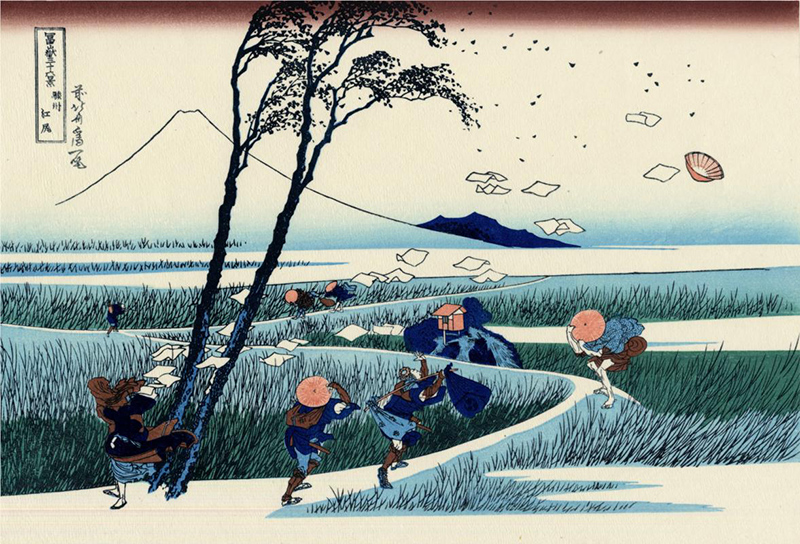
Hokusai: Ejiri in the Suruga Province

***page title image: Ejiri in the Province of Suruga, by Katsushika Hokusai (1832)***

“A fairy gust,” said the mother to herself in the kitchen.

It had come flung from the Atlantic, down through the low mountains and into the narrow valley, lifting the galvanized tin roof clean off the shed and toppling two of the old ash trees in the top field. Three pieces of TV aerial were stabbed stuck in the mossy front lawn and the telegraph poles at the boundary wall corners were both kinked over at the base with the black rubber-covered wires flapping loose.

“Ah for fuck sake,” said the son, lying on his bed after the sudden rush of snap and crash. His Internet signal had disappeared. The window had swung open and a plastic bag, leaves, and twigs had blown into the room. He rolled off the unmade midday duvet and slumped to the kitchen swearing at the damage. No Internet, no phone, the shed roof dumped in the front hedge, and the dog howling away madly at nothing.

“A fairy gust,” said the mother to the son, standing between the fridge and the sink with a mystical nod towards the window. She began to put on a pair of old boots, and went outside without tying the laces.

The son fired on a pair of runners, and followed her out. She was trying to quiet the dog.

“Two of the ash trees are down” she said to him. “And the aerial’s gone off the roof. Look at the tiles!”

“I know, I know. I can see them. There’s no phone. The shed roof is off.”

The mother pulled a broken tile off an upturned flower pot.

“My geraniums! That was some gust!” she said.

“You’ll have to go down to Paddy Fitz and see if he can come up.”

“Yeah, yeah, whatever. Jeez.”

“For fucks sake,” said the son, as he pushed away the wheelbarrow that had been blown up against the side of the van. Its handle had run a long white scrape along the red finish. The van had cost him a fortune. He started the diesel engine without waiting for the coil to heat up and it grumbled into a fit of smoke-sluggy coughing. Fairy fucking wind. He drove around the tilting poles and off down the neck of the valley. He could see more trees down along the side of the hill. It wasn’t even windy.

The second gust arrived after the son had turned on to the main road, and was driving in third up the rising shoulder of the valley. It caught the red van square and off it went, laterally, almost holding grip then suddenly breaking free sideways and flipping over the low bank and down into the bog, rolling onto its roof and back onto its wheels in the soft ground.

“Another one!” said Paddy Fitz to himself, on the other side of the valley shoulder, looking at where the corner of the shed had been separated from the wooden frame by the second gust and stacked turf had fallen in a pile beneath.

He went in to tell the wife.

“Damned if I ever saw one like that before. And the oak tree down on the wall!”

She hadn’t seen the likes of it either, but out on the islands she had heard a few stories,and she kept still a store of omens and signs, pishrógs and bad cesses and rules, like going out the same door you went in. The aerial was gone from the roof, and one of the bedroom window panes had been shattered by a tree branch. Paddy stared at the mobile.

“No signal at all.”

“The mast might be down.”

“They should never have put the damn thing up there anyway.”

“Well, they’ll have to fix it. I’d better call the ESB.”

“Call with what?”

“Oh, right, of course. Well, can you go down to the town to see if they have reception there? They can’t leave it like this”

“For fucks sake,” said the son, as he struggled to pull his sinking feet through the bog and back up to the road. His nose was swollen and his neck was vibrating with pain and he felt like he had done a full cycle in a tumble drier. The van was fucked, its roof crumpled in and the chassis buckled. And still no reception. And it was totally calm again, too. All along the road up the hill, poles had been plucked and scattered like rushes by the stalk. He walked with a worsening limp, stepping around debris, until he got as far as the old Garvey house. He went up and knocked at the door.

“Hallo!” he cried.

“Hallo! Mrs Garvey? Are you in?”

The mother was out picking up scattered wood and pots when the third gust grabbed her whole and fired her as far as the rhododendron bush. Pulling herself out of the dense stalks and purple flowers, she looked darkly up at the sky, a line of blood snaking down her wrist. The cleaning could wait. She headed for the house, limping. Today was not the day for fixing.

The son was standing on the cement path outside Garvey’s with the cup of tea in his hand when the third gust whooshed down the valley. He had gone out when he saw Paddy Fitz’s van coming down the hill, slowly negotiating the downed wires. The house behind him took the bulk of the weight with a dull thumpy whack, but he still fell forward into the grass. Mrs Garvey screamed from somewhere inside, and when he stood up, he could see Fitz’s van, upside down, wheels spinning. A shower of roof tiles, a chimney pot, branches, fencing, feed bags, and all kinds of branch and leaf, were scattered across the garden, and the beech tree at the back of the house was leaning over with two heavy branches hanging by the bark.

The son limped down to Paddy Fitz’s van, no more than fifty metres from his own, and helped him out from the upside down passenger side door.

“That was some gust!” said Paddy, coughing. “Never seen anything like it! Took me clean off the road!”

“Come on up to the house”, the son said, and between the two of them they made it out of the soggy bog and up to Garvey’s. Mrs Garvey was in the kitchen, looking out at the jumbled mess.

“The electricity is gone now too.” she said. “You’ll have to wait here a while.”

Paddy Fitz spent a few minutes quietly checking his bruises and rubbing his twisted ankle.

“Never seen anything like it Mrs Garvey!”

“Maybe it’s a sign?” she said, after a long pause.

“A sign of what? ” said the son.

“A fairy gust!” said Paddy Fitz. “Sudden burst of wind in off the sea. They get them out on the islands.”

“And not one, but three!” said Mrs Garvey. “Could be a sign. We should stay put. It’s not a day for going out.”

She went to clean the dust from the old stove and put down a fire to boil some water.

The three of them settled in at the kitchen table. Outside, it was calm and quiet. No radio, no TV, no phones, no cars on the road, no birds singing. Not even a rustle from a fallen leaf. A general deep stillness fell around them and they stopped talking.

The son stared into his hot milkless tea. As gradual as the sipped emptying of the mug, he stopped reaching to check his phone reception, and let the pain in his neck and nose and joints flow like his blood throughout until it seemed to merge with the quiet and they all become a background hum. He stopped seeing the crumpled van roof and bits of broken tile and aerial stuck in the mossy lawn. In his foreground, all tendrils of his attention craned out and came together in a narrowing coil, like a sensor for the faintest hint of the next sudden gust. Yet it remained solidly quiet and resolutely still, until a lone thrush began to slowly pitch up again outside the window.

The son didn’t believe in signs or omens, prophecies or fate, or even the future per se beyond the continuous consumption of the present. But in this strangely locked, loaded, cocked heavy calm, a tide of fidget and lie-ins seemed to roll back: a low tide drawing out the sea to expose a fresh strip of naked shore. He swirled the last gulp’s worth of tea in the mug and broke the long silence.

“I’m off for the city come September,” he said.

Paddy Fitz looked up as though awoken. “Oh! Well sure there isn’t much out here lad.”

“Yeah, yeah, I need a change.”

“Good lad. Do you have a job lined up?”

“No, nope, but I’ll figure something out!”

“You will” said Paddy Fitz. “You will.” He had forgotten about his ankle and put both palms flat on the pine tabletop.

“I’m going to head over to see my brother in England myself”

“The brother in London? Larry?” pitched in Mrs Garvey.

“That’s the one.”

“Never been over at all. Long in the tooth now but… I’ll bring over herself and Tommy. We can stay for a month- I can sell that heifer. sure we’ve never been further away than Galway.”

Mrs Garvey leaned in. In the distance, perhaps, or perhaps not, a fourth fairy gust was being conjured up above the ocean to be flung inland, and chunnelled down a narrow valley where a thin reedy river cut through bog that pitched up into the ancient Maamturks. She could feel with calm clarity, the weight of bodied silence around the wooden table that had raised two generations but was creaky now with more meals of memory than food.

“I’m selling the house.” she said.

“Oh?”

“Selling the house, and I’m going to get one of those nice little apartments in the town.”

“Isn’t your young one down in the town?”

“She is.”

“Well, sure she’ll be glad for that.”

“She, she might. Some family can take over this old place and to hell with the lot of us fighting over a patch of grass and an old building.”

“That’s if it isn’t all blown down today Mrs Garvey!” said the son.

“And us with it lad!” added Paddy Fitz.

The three of them settled back into their waiting for the next gust, having breached impasses deep below the chuckling of the wind.

Donal Kelly ----- written June 2017

Posted on

Short Story: NO TRESPASSING

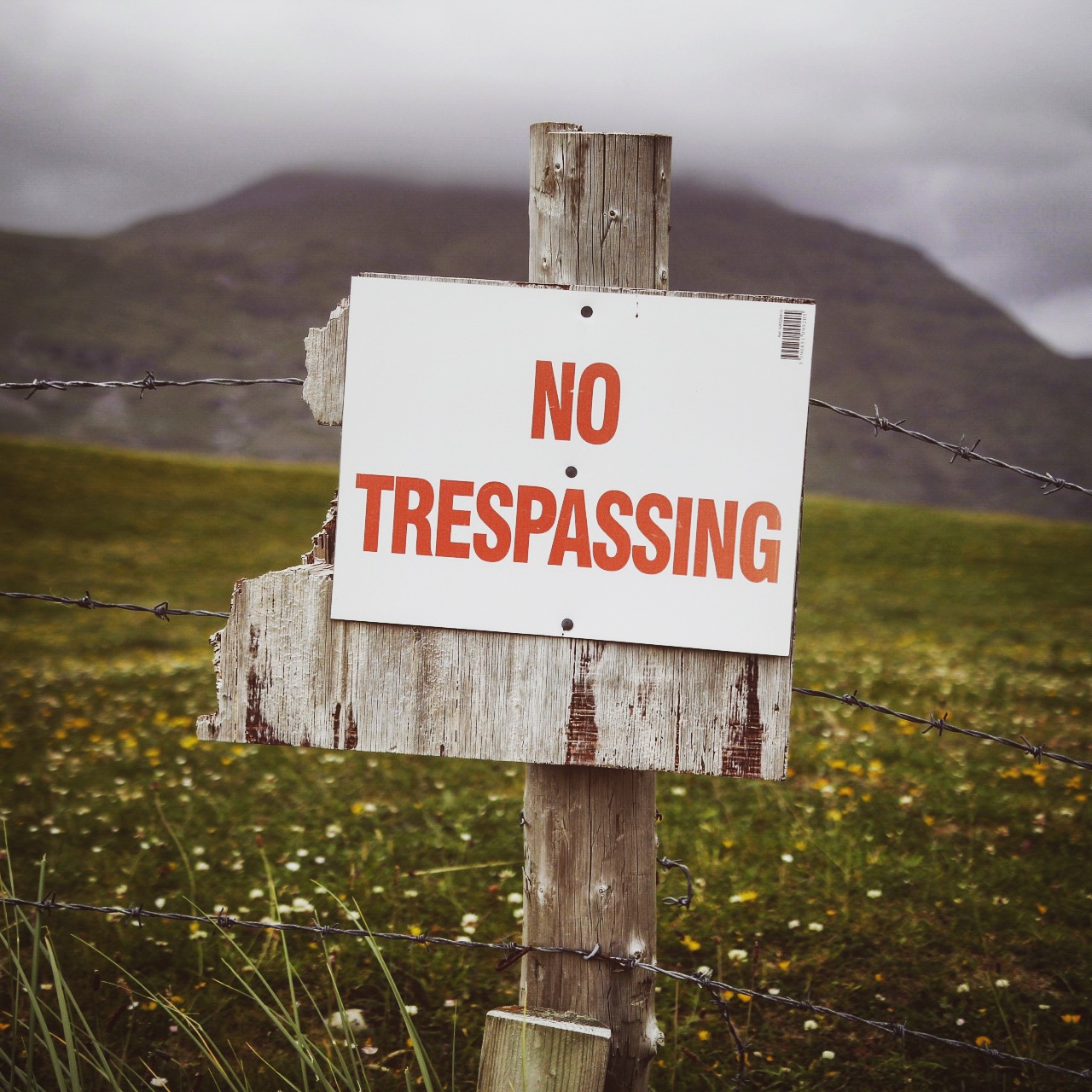
No Trespassing Sign

When I lived out in the village near the mountains I would go hiking by the swift river, over the soft bogs, and up the rocky slopes, weather and work permitting.

I got to know the most popular routes and the ways onto and off them, and some of these ways on and off crossed over farmland or old rights-of-way.

On one Sunday morning during a cool June, I pulled on my toughest boots, slung a bag with a bottle of water and my camera over my shoulder, and headed out towards the hills, along a disheveled narrow boreen between fields where cows patiently clipped the summer grass.

When I reached the end of the road, the little offshooting path that I normally then switched to was blocked off by a web of wire and bailing twine, with a sign hung between the strands, bobbing in the breeze, saying “KEEP OUT!” in big red letters. A little further back, a sturdier sign on a post sunk in the bank had printed on it, “NO TRESPASSING.” I stood for a long unsure moment watching the leaves rustle and the signs twitch and twittering swallows pitch and swoon on the June breezes. “KEEP OUT!” “NO TRESPASSING.” They seemed so loud in the hushed conversation of birds and breeze.

There was no clear way round the barriers. A barbed-wire fence now ran along the bank. I could climb over, or hop the wall on the other side and try to push through the tangles of briars there, or walk back down the road I had come up and figure out a new route for the day. I was annoyed, as I had invited friends from the city to visit the next weekend and had intended to follow that same route, the most scenic and interesting I had yet found.

Walking back down the boreen, kicking an odd stone chipping from a long-forgotten repair effort, I passed an old man – I’m sure I had seen him before – going in the other direction.

“Nice day,” I hailed, and when he nodded and smiled, added, “The old path up there has been blocked off, just in case you are headed that way.”

“Yep,” he replid. “That path’s on old Mack Murphy’s land… he’s a cranky devil, doesn’t like anybody crossing his patch, says they throw rubbish, and leave the gates open, and scare his cattle… so he has it all fenced off now… though I always thought there was a right-of-way up there…”

He walked on, and I started again, too. Not far after, another man was standing on the side of the road leaning against a post and hammering in some new fencing where a section had rusted away into the air.

“Grand old day,” he called out as his sheepdog came down to sniff my legs. “Lovely, ” I replied, “though the path up there is blocked off so I have to find another place to ramble for today.”

“Ah, sure that can’t be helped,” he said as he straightened up. “Old Mack Murphy lives up there, and there’s a brood of rare corncrakes nesting on his land… didn’t he fence it off to protect the little fellas…” He chuckled and shook his head in bewilderment. “An odd fish, isn’t he? But some bird protection crowd came out a few weeks back…old Mack’s a softie… such a fuss over a few little birds that nobody even sees”

I hailed a goodbye as I scratched the dog behind his black ears, and was off again, a little lighter of foot.

In the pub on the edge of the village I pulled up one of the outside chairs, ordered a pint of plain, and sat back to watch the world go by, or at least the clouds amble over the hills, my aims for a healthy Sunday wander put on hold. In any case, being outdoors in any capacity felt healthier, delusion be damned.

The waitress came out with the pint and placed it carefully on the small table.

“Nice day for it,” she said, with a smile at my slouched frame and my feet hoisted up against another chair. “Ah”, I laughed back, ” I was planning a good old walk but the path was blocked off, but so it goes…”

“Oh, ” she replied. “You must mean Mack Murphy’s place… I heard his nephew is trying to claim some of the land – it was the old family plot – and he had it closed off. They’ve gotten the solicitors into it now… sad really… it’s a lovely place… used to go up that way as a kid.”

I stared into the pint. Another man who had paused after coming out behind the waitress turned and spoke. “I wouldn’t believe that Marian,” he said. “Wasn’t there a suspected case of TB in Mack’s herd? The department of agriculture crowd were out two weeks ago and shut it all off… nobody is allowed near the farm at all now. It wasn’t even confirmed yet…. such a fuss over it!”

I stared into the half-empty glass, thoroughly confused, and more than a little irritated. How could they all go round with a different story each? I took it into my head just then to go out there, to ask him myself, as all those versions of events would annoy me for days. If I could hear it from the horse’s mouth I could forget the hearsay.

I finished the pint, said my thanks, and started up the same little narrow road again. Nothing much had changed, all was green and rustled, the blades of grass in the fields leaned under the wind as the shadows of clouds sailed over them in darker shades.

As usual, my mind continued to trundle along ahead and imagine the encounter, and the more I thought, the slower I walked.

If Old Mack had blocked the path off because he was sick of trespassers using it to get to the hills, then he wouldn’t be too happy with me showing up. In fact, he’d probably just make up some tale to send me away; far quicker than confronting me, a righteous sample of his aggrievers. Or he might tell me there are rare birds building rare nests, or even a case of cursed TB, just to make me go away in peace.

Then again, if there are indeed rare birds, he won’t want too many people trooping through, and he might tell me that it’s private property and that too many folk have gone in, snooping around, littering. And If he really is in a dispute with his nephew he would surely be too proud to tell me that, and if there really is a case of TB he will hardly tell me either. In fact, no matter what he tells me, if he tells me anything, I will be no better off.

I stopped waking altogether. I wasn’t in a position, right then, to get at the actual truth, whatever it was. No matter what any of them said, there might be another reason with its own opinion and logic, and meanwhile the signs would remain, KEEP OUT and NO TRESPASSING, the only concrete facts of the matter, probably put up late in a night with no witness. It seemed that truth might be a transient juxtaposition of perspectives and propositions, with no unmoving frame of reference to be had, unless it could be founded on some unshakeable version of events… even if I had been there , had helped write the signs, and even had erected them myself with one purpose, what’s to stop there being another version outside my awareness?

In any case, I had gone far enough. I turned on my heel once again, on my narrow peninsula of jaded public road between an ocean of fenced-off earth. I would have to live with the signs and wait and see what they signified.

On my way back down again, I met a group of three, decked out in hiking gear, coming against me. I hailed them a greeting about the great weather and told them that the way ahead was freshly blocked. Of course, they inquired if I knew why.

A devil of an urge came over me. “I think some dogs chased the owner’s sheep, killed a few too, and he fenced it all off, ” I told them, and kept walking, maddened at myself but enjoying it all the same, my impulsive fabrication. They kept walking on anyway; they’d see for themselves soon and make up their own minds.

Written June 2015, Dublin/Galway, my first stab at a short in a while.

Posted on

Driver in Shock after Hit & Run Horror

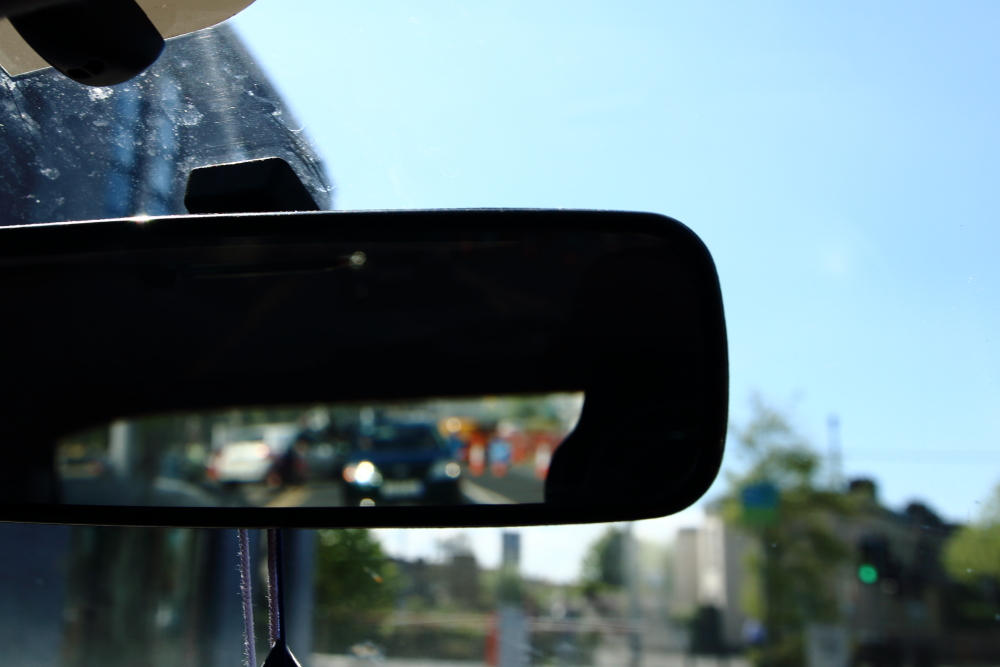
rear view mirror

A driver in South Dublin was still in shock today following a narrow escape with a speeding bicycle.

While returning from work yesterday evening, Mr. David Gilroy was involved in a collision with an unmarked bicycle, which caused severe upset and further lateness to an already delayed schedule.

Witnesses to the event reported a bicycle with flashing lights suddenly moving onto the road from a junction before continuing in a straight line close to the curb for a few hundred metres at high speeds of up to 30kph. As it carried on past an entrance to a popular local shopping centre, it ploughed straight into the side of Mr Gilroy’s silver 1,740 Kg BMW.

Mr Gilroy, who was turning left into the shopping centre to pick up some Merlot wine and cheese crackers, while reading iPhone 6 Plus reviews on his iPhone 6 Plus, was dismayed by the incident. “I’m still in shock, really” he reported. “There’s a scratch running all the way along the passenger door and a head-sized dent too. The whole panel will have to be replaced, and I have a wedding to go to on Friday.”

Meanwhile, the cyclist involved had already fled the scene in an emergency ambulance that happened to be passing.

“He didn’t even look me in the eye,” expressed Mr. Gilroy. “One minute he slams straight into me, then he leaves without even a word.”

Regular passer-by, Jamie Keys, described the scene as shocking. “Those cyclists think they own the road. That car was just driving along, minding its own business, when bang! It could have been any one of us. How can anything that dangerous be allowed on these busy roads?” Mr Keys illustrated the lethal nature of bicycles by holding up a piece of sharp-toothed steel from the scattered bits that remained on the roadside.

Another distressed driver, Mrs. Fidelma Greaney, agreed. “They have no right to bully us drivers; every day I have to swerve out to narrowly avoid them, and now most of them are decked out in horrible lights and gaudy yellow jackets. How can I get anywhere at all if I have to keep looking up to notice them and braking to stop them from ramming my bonnet? Do they not realize there is a real person inside the car? Somebody’s son, or daughter, or friend, or some poor worker just trying to get to the office on time?”

The cyclist involved declined to comment, though he is expected to possibly be out of intensive care by Monday week, possibly.

(filed under satire)

Bike Crash

Posted on

Very Short Story: The Mistake

rear view mirror

The Mistake (a very short story)

Wasn’t like the daydreams at all. They chased me up Taylor’s street and left down St. Kilda’s Avenue and over the grassy wall into Finny Park where the trees were just beginning to leaf and for a change nobody was walking a dog. I had my heavy work shoes on and had to drop my hipbanging Macbook-holding bag and it was too soon since I ate. In my daydream I would happen to have my sleek running shoes on and would toy with my pursuers, leading them on a merry urban dance, always a step ahead and in control through the winding streets. How could it be captured best? A helicopter view perhaps, a wide angle shot from above, tracking while zooming slowly as it overtakes me, panning, with me always in the frame, and rising thumping music to thicken the drama. Me, the narrow lanes, and the two dark demented chasers. But in the real-life here-and-now what-the-hell-is-happening pursuit I couldn’t quite catch my breath, and my gammy knee buckled in with every stride, and my jeans chafed, and when they caught me they hauled me to the ground and after a good breathless kicking dragged me back onto the street and into an arriving old green Nissan Primera that then sped off.

It wasn’t like the nightmares either. There was too much rushing detail and no time for foreboding and too many clear bouts of sudden pain as I took the punches and my head flapped back and forward. It was hot in the car and I was sandwiched between the two chasers. I tried to yell and managed to swear and shout out “what do you want?” but I was winded and my jaw felt like it had just been borrowed from someone else and I had to speak through a newly brokentoothed gap.

It was hard to tell the two apart. Brothers maybe, with red uneven faces and close eyes and short cropped hair. Left had an old scar over an eyebrow and more stubble. Right had a cotton shirt. Old? Hard to tell. They looked vaguely familiar. The twentysomething woman driving looked familiar too. She kept glancing back in the rear-view as she drove us jerkily north out of the city towards the coast.

“Whaddaywant? Whaddefuck?” I tried, bloodily said, bloodily ignored.

A few blows later, left said something.

“You’re gonna pay!”

Right added.
“The judge can’t protect you now!”

The twentysomething woman looked back. Approvingly. That was nightmarey for sure. Sudden unexpected malevolence, deep disturbing grip. But no waking, no waking, and stabbing pains in my cheeks and chin and abdomen.

“What? What judge? What are ye talking about? Let me go!! Wrong person! Wrong person! Stop the fucking car!”

So it wasn’t quite a nightmare then, or one of the idle stories that could often waft across my brain on a whisper of wind. A “first-rate fantasist,” Divilly had called me once. I was dribbling and it was hard to think and panic surged and I shivered but I was held down and we had left the city and nobody had noticed. Nobody noticed at all, through three sets of lights and a roundabout and along the prom in a line of traffic. I tried to send my focus deep down into the nail of the small toe on my right foot. But we did not evolve the ability to ignore panic and pain. It is too useful. I could only slump under the weight and the blows went away.

A least when we pulled up with a sliding jolt at the end of the dark drive down the tiny grassy road near the sea there was some alignment, some control. As I might have imagined it: I pushed hard against right after they pulled me from the car, then swivelled on my heel to get my arm up with force and my fist into left’s stubbled jaw. His mouth clicked nicely and his head pitched back and my hand burst into pain and I was already expressing my knee with vigour into right’s cottonshirted stomach. Then I was running and over a stone wall and into a lumpy field of Atlantic edging bog.

But but but, the wrong shoes, the wrong pants, overfed on office lunches and submerged in sticky pain, my foot caught the soggy lip of a brown bank and the rest of me followed forward in a collapsing arc, down into the boggy ground where the weight of three crushing bodies soon arrived on my back. Water in my mouth, no air, no air.

“Don’t fucking move” said left, who was now on my right. A kick, or a punch. Nobody around for miles.

“He let you walk.”

“Let’s see how far you get now!”

Right was to my left now, as I pulled myself up enough to gasp air with the bogwater. He had a long lump of wood in his hands. The woman was behind him. Crying. The wooden lump was raised. A seagull patrolled the salty sea breeze above it. I could see the field stretch down and give way to black craggy rock and mutely glinting surf and in the distance the karst cliffs of Clare with the lights of Kinvara beginning to twinkle.

“Wait!” I yelled. “No!!” “This is a mistake!” “Don’t do something stupid! You’ll be locked up for life! You have the wrong person! Check my wallet!” “It’s a mistake!”

“This is for what you did.” he said.

“To Emily” she said.

“For Emily” he said.

I shouldn’t have killed Emily.

*************************Donal Kelly, May 2014

This is based on a recent news story about assailants getting minor community service sentences for being involved in an assault where a man was killed, and a strange experience driving to work one day last month where it seemed that a man in the car behind was being punched by two others. It got mixed up of course in some ideas about a possibly unreliable narrator and the violence of justice and the collision of fantasy and reality and the hills of Clare in their stony western march on the far side of Galway bay in early summer.

Posted on

Very Short Story: Abiogenesis

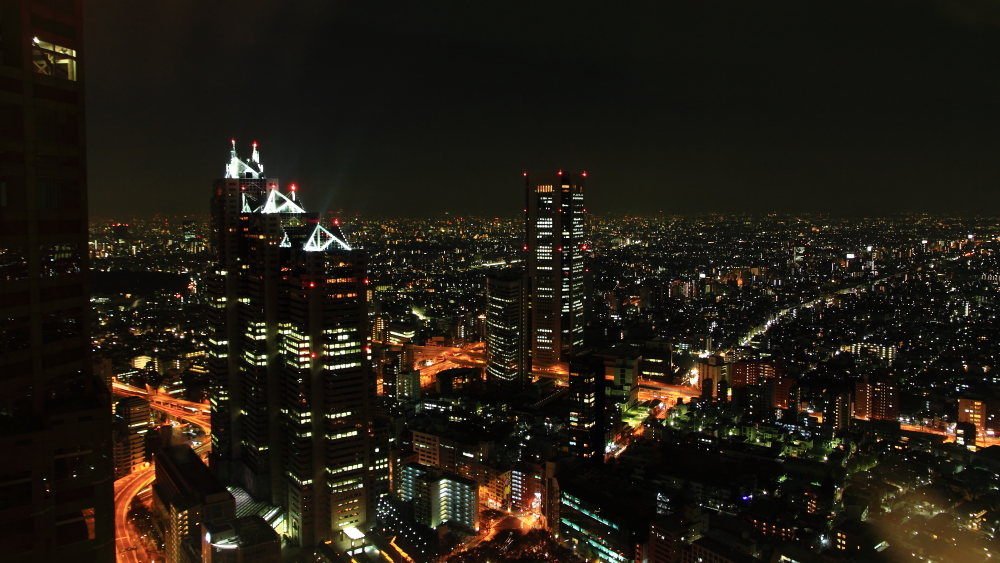
Tokyo 2011

Dr Malthus and Dr Richards were very excited about something. They leaned over each other to get a better look at the microscope.

The film crew, squashed along the other side of the capsule, paid them no attention. They had already broken through several ceilings of boredom. At first, the jerking motion of the T79ix2 STEP (Spatio-Temporal Exploratory Platform) as it plane-shifted (setting an official new record) then bounced around in the dense unpredictable Archean environments had been novel; intense. Now, the distinguished director Lans Henrig and his two cameramen languished with no clue as to whether they were still circling the thermal vents or bobbing higher up in the toxic clouds.

Kissner, head cameraman for the Reality Infotainment channel, shoved his weight further up against an uncomfortable pile of scientific utensils. There was no light, no doors or windows, all of the external cameras had been broken off, batteries had been severely rationed for use with experiments, the incessant Brownian motion plagued his stomach, and they already had hours and hours of footage of the enthusiastic scientists.

The T79ix2 was designed as a single-use, return trip-disposable vehicle. The passengers were sealed inside with only a tiny supply hatch operated by a cumbersome series of authorization protocols to let anything out or in, until they returned to 2142 where the outer shell could be carved off by a giant laser. There, then, billions of years later, the panel from the temporal consistency review panel would analyse every inch of surface and the petabytes of diagnostic information. Scientists would pore over the data with their supercomputers, and the editing team would struggle to create a dramatic story from the limited footage.

Lans Henrig, whose reputation had been made by the earlier Secrets of Time series of docu-drama shows, and then damaged by the temporal consistency interferences caused by the shooting of season three, had invested much of his personal fortune into the Dawn of Life production. He ran his hands through his greying hair and wondered how they could possibly get something compelling: two weeks of searching had yet to reveal any life. It looked like they had gone back too far, or to the wrong part of the Earth, or were using the wrong gear. The scientists had already seemingly invalidated many of the standard theories and were speculating wildly about alternatives. Dr Malthus defiantly stuck to the theory of a coincidental alignment of the right mixture of, among others, ammonium phosphate, formaldehyde, and ammonium molybdate. Dr Richards was adamant that an organic seed was needed given the conditions; some fragment of self replication to kick off the show.

Since the 2021 disaster in 2139, all chrononauts were supplied with fast-acting mood stabilizers. Kissner, given to unhelpful thoughts about a certain mop of blonde hair being playfully flicked over a shoulder in dappled sunlight, pulled a vial from his belt pouch and swallowed the blue liquid. Right then, Dr. Argins emerged from the supply chamber where she had been confined for over a week.

GCS, General Chrono Sickness, was not yet fully understood in 2142, though some medication had been developed. Its symptoms varied hugely, though Dr. Argins displayed clearly common ones such as pounding headaches and confusion. It affected up to 20% of chrononauts, and was more severe with larger distances. Kissner, sinking into an induced balmy calm, was able to look up and notice and say

“Feeling any better?”

Dr Argins, with her mouth and both eyes half open, seemed to be struggling to focus.

“Worse?” She said.

The capsule shook suddenly and Dr Malthus dropped the sample he had been holding. Lans Henrig, for want of something better to do, aimed his portable camera at Dr. Argins.

“I thought you were not supposed to come out?” he said.

Dr Argins, who had forgotten to take her mood stabilizing pills for the past four days, tried harder to focus.

“Too hot!” she said.

“It can’t be too hot,” said Lars Henrig. “It’s always exactly 20.5 degrees inside the capsule.”

“Too hot!” repeated Dr Argins. She squinted, then pointed back at the supply chamber. “Wet!”

Kissner went to the supply chamber entrance and peering in said, peacefully, “The supply hatch is open.”

The capsule rocked again as it hit a swirling current. Kissner was calmly tipped forwards into the supply chamber. There was a sucking noise followed by some clanking, then several alarms went off at once.

Donal Kelly, February 2014, for the 6th class of the GTI Creative Writing class. The idea with this week's work was to put yourself in a historical event. I had a few different ideas but was forced to pick by Time, and wrote this quickly on the Tuesday of the class (it had been floating in my head for a few days). The idea was for time travellers from the future to go back a few billion years to observe the exact moments when life emerged. Then, of course, they accidentally affect the event itself. I didn't want to worry too much about the logics of time travel, but at the same time, I wanted it to a be an important factor- just one I didn't have to explain exactly.