Posted on

Short Story: Birds of a Feather

Joe waited until he was home alone before opening the bag. He dropped it on the kitchen table over a touristy place mat and scattering of unopened envelopes. His sweaty fingers gripped the zipper and the canvas spilled apart into a loose yawn. Neatly wrapped bundles of cash clumped in a corner. Joe had never seen six thousand euro in cash before.

It seemed measly, frugal to the needy eye: no retort to the heavy null of a stripped bank account. But it was real. And realer still, when he carefully counted the six bundles one by one, taking off each elastic band, touching one to twenty fifties, leaning in close enough to smell them, studying their varied conditions: some fresh and new from an ATM, others worn with soft foldings from round trips through hand, wallet, pocket, till, safe, and bank.

In his mind Joe ticked off what each bundle could offset. A trip to the mechanic avoided since car test repairs. Visits to two old school friends who got him through Christmas. A call out to his brother’s neat gated bungalow. And the bank. Christ, the bank. He would soak up questioning glances; project calm normality. Just another banal lodgement on a quiet Tuesday afternoon.

“Five thousand. Cash. Yes, might as well get square up that overdraft while I’m here.”

Then the envelopes: bills, rent arrears, fees and charges, lapsed subscriptions, accumulated interest, all grown wild from drought. Their thirst swelled as his well dried, drop by drop to a pinched drip. CHecklist of upcoming necessities. A proper car seat for Maria. Untorn couch. Internet connection. Phone credit. Shoes. Cousin’s wedding. Haircut. Bank Holiday weekend.

One hundred and twenty scraps of painted paper. His friends would wonder. His brother would ask. Get a new job? Sell the car? Where from? Who from? Joe trod down on memories of the morning just passed. He’d waited for the first time as a customer in the hotel restaurant, until the Richard Murphy he had only ever messaged on Facebook flowed over like an old friend by happenstance, to sit for half a minute before darting off again. As though he hadn’t stopped at all, an in-flight refuelling high up in thin air, precariously perched in the stratosphere, lumbering fat bird sucking kerosene through a straw. He’d ignored the grey canvas bag left casually on the restaurant table until it seemed normal to be finished; normal as a regular on a daily pitstop.

Joe was a goose fat with corn on a field in France.

*********************************************************************************************************

Fifty then to fill up the car, or maybe fifty five to full, but Joe was loathe to break the notes. One down, one hundred nineteen held. But once inside, minor crisis. The strange fury of options, the power of having the the price of each in his pocket, the inflating of personhood from scavenging crow to keen hovering raptor; they conspired from pump to counter, to accessorize him with a basket of colourful packaging that he barely remembered picking.

“Cash. Yeah, 50 on pump 2. Sound. It is yeah, hopefully it’ll stay dry for the weekend.”

One hundred eighteen and a pocket of jingle. Wine for the dinner. Snacks for Maria. Ennobled emerger, he could glide from one end of the town to the other with the dignity of purchasing power. As the balloon inflated out into its mould, knots of narrowing frugality formed as a view, falling down and away. Eye contact and a firm handshake were restored to the world. From one end of Main Street to the bridge. One hundred seventeen. One hundred sixteen. One hundred fourteen. Ticking off burdens that had drained days to briarthorned gaps. The head up, opening of envelopes, and scornless listening of advertising resumed. One hundred twelve. And finally the bank, first refuser, great tut tutter and besuited charger of fees for nonpayments of fees. And having to fill out a lodgement slip with sweating fingers before the security guard pointed him to a machine instead and then a good minute trying to remember the card password.

“Enter amount to lodge.”

5… 0… 0… 0… backspace… backspace… backspace… backspace… 4… 0… 0… 0… ENTER

The machine didn’t mention the fine weather, just arrived, or muse about its chances of lasting. To the weekend? Beyond?

Joe was a flustered mallard landing in a canal in a strange city.

*********************************************************************************************************

He waited until Michella had left for her new evening class before abandoning couch and tv. He found Maria’s thick puddle suit hanging under the stairs. She blinked and happily made garbled word-shaped sounds as he put her into the sleek car seat. She kept up as they crossed the town and out to one of its appended estates. “Good girl,” he replied every so often to her babbled bubbles of sound.

Mike should be at home by now. And yes the car was outside, and yes he came to the door, and they both marvelled at Maria’s shooting growth and alertness, and how they should have a proper class reunion, and he didn’t stiffen up, much, when Joe put point to purpose and, wishing he was a million miles away under bare sun, asked if he could have the repayed money back again to tie himself over for this month’s rent.

“I think there’s work going down at the meat factory” offered Mike, but only after he had given Joe what cash he had, silently pocketed. “I know you’re doing a bit, but maybe you should ask down there? They’re always busy with the deli trade. And it’s not seasonal like hotel work.”

Joe thanked and thanked meaningfully and needed to leave. Swallow the medicine. Pain, weakness leaving the body. Mike stayed in the door.

“I was surprised you paid me back so quick last time. I mean… I was wondering. Did you get a loan?” Now he looked Joe right in the eye. ” It’s all the same to me Joe, I just want it to work out for you.”

Joe was stuck on the step, stuck stuck stuck, on a needle of knowing in a brute animal getting to tomorrow and tomorrow alone.

“I got a loan, yeah. But it’s… the interest you know? I thought I’d have more hours now. I might go down and ask at the factory alright.”

“Do, do. Steady hours, might do for a while until you get set up.”

He caught Joe’s averted gaze as it passed one more time.

“Listen, I don’t want to be a dick, but, well, I can’t tell you where I heard it, but, well, I did hear you might have borrowed from Murphy. I just wondered if there was anything to it?”

Maria would be getting restless in the car seat. Michella would finish soon. Needle in the hind. Mike had been the soundest of them.

“I was stuck Mike. The bank wouldn’t touch me. You know, the car broke down again and things have been really quiet.”

“I hear ya, I do. He’s a bad fish Joe, a bad fish. Have you had any hassle?”

Joe was a featherless, plucked chicken on a chute to hungry deli cleavers.

“He’s been calling. Leaving messages. Telling me stuff that he knows. About my family. About Michella. Maria even. I stopped answering. I’ve paid off most but there’s a lump left that won’t shrink. Got caught short a few times and he adds new interest.”

“Fuck, Joe, that’s a tough one. That’s a catch. He’s a bad fish, the fucker.”

Joe nodded.

“Listen, I better get going, I have to get her home.”

“Sound. Hang on a second though. That Murphy is a real prick. No good. I know a guy. Well, I know of a guy- might be able to help. Just in case- if it comes to it. There are people who can play him at his own game. You don’t need this shite.

Joe drove home with Maria falling asleep and a number for a guy who knows a guy saved on his phone. He would think about it tomorrow.

*********************************************************************************************************

“Outside the back door of Langans then. Eight. Ya better have it this time. Enough bullshit excuses. If ya want a charity go to the fucking church.”

“I’ll be there. Eight. Have it all this time.”

Joe stared at the phone and wiped his face. There was a steadiness now at least. He could make eight. The rest of it could look after itself.

Michella was changing Maria in the kitchen.

“Are you going out again?”

“Just for a few minutes. Do you need anything from the shop?”

“No; weren’t you down there an hour ago?”

“Yeah but I forgot to get petrol. I have to start early tomorrow.”

“Ok”

7:50. The car had a quarter tank and would last until Friday. Joe parked it off Main street, and walked along looking down at the disjointed pavement. His phone pinged again. New message.

“There now. Will wait. Say nothing to him.”

Head down, and it was dark and quiet, suspended in transition from open to shut. Joe was a vigilant hooded crow on a flickering street light. Langans. The back door down the side lane. Dim as a cellar. He trod on the instinct to survey the shapes of the shadows. What would be, would be. 8:02. He waited.

8:05. The pub back door opened. Murphy. Broad, leaning, shrugging. Purchasing power of embraced lawlessness. Games played in wraps of laneway shadows, banal as the pouring of pints or blinking of bank machines.

“Ya got it?”

“I got it.”

“About time. Come on then.”

Joe looked around, one hand going to pocket, eyes pleading.

Murphy closed in, burstling layers of threat, fist or steel somewhere in the dark.

“Gimmie a second, I got it, I got it.”

“Shut up to fuck and get it over with. You think I’m a fool?”

The first blow and Joe crumpled, electric needle of knowing and crude fuel of giving in, the world proving the charges he set it. The second blow and a scattering of senses.

“The fuck you playing at? I don’t need this shit.”

And then different shadows, peeling off from lane walls, and such a sudden rush of peeling, of forces multiplied, the embodiment and bloodyment of just reply, and two pairs of strong arms finding Murphy to buckle him, shadow throne to blood dripping down laneway drain, with Joe frozen against the other wall until barked at to scram.

He could hear them delivering their message – his message – to uselessly flapping Murphy, as he wished he was a million miles away under bald sun but was still-winded scrambling back towards the streetlights.

“That’s what ya get ya scum. Fuck off back to your hole. We know who you are. Fuck off out of town or you’ll leave in a hearse. Fuck off or you know what’ll happen. Fuck off. Fuck off. Fuck off.”

Joe was a startled snipe bursting from bog.

**************

“What took you? Did you get petrol?”

“huh? Um, no. Already closed. Just walked a bit”

“You don’t look well. Are you feeling sick again?”

“No, no, just needed some air. I’m ok now.”

“You don’t look ok.”

“I need a shower, that’s all. Shower and sleep. Long week.”

“Always a long week these days.”

And the shower, to wash the stink off, the grace of clean hot water rushing down, white from the soap, heat and steam around the hind of body beneath and the nozzled balloon within. A new bird, bald quarter ounce of chick in a spring hedge nest, aloft in the elbow crook of a woody limb, feeble and hungry. He could go down to the factory again with an open beak, to see about work for tomorrows.

The murk and shadow and stink drained down into the pipes. The prices of negative balances, the absence of scraps of painted papers, and their own vicious purchasing powers, could drain into the septic tank.

After the shower, and goodnights to sleeping Maria, Joe sat in the quiet, picking at microwaved shepards pie in front of the tv on the untorn couch.

The phone was charging in the kitchen, and when he went to get it, new message. Joe blinked.

“All sorted, that prick won’t bother you again. MB”

And another one. Newer. Same number.

“Balance was 3680. Let’s say 3500. SKip this month. Let me know if you need top up.”

Joe was a murmuration of starlings over a bank of winter river reeds.


Donal Kelly, 2018. The original idea from this came from reading an article about political terrorists (not sure if this word is right- loaded terms these) dealing out street justice to criminals, but also, running their own criminal operations. I had also been thinking about how money pressure constricts life down, and how getting out can be so difficult, and how those who cannot pay are condemned to pay fines and fees for not paying.

Posted on

To Hanbury Gardens We Will Go

Mary, Mary, quite contrary,
How does your garden grow?
With silver bells, and cockle shells,
And pretty maids all in a row.

The car pulled up outside the entrance and three siblings stepped out into the hot sunshine. Sharp light glared off the glass door and bleached white the surrounding wall.

There was a woman and two men, one of whom paused at the car door.

“I guess I’ll summon it again for an hour?” he said.

The other man replied. “Or just wait till we’re ready?”

Jay, the man at the car, shrugged, put his phone back in a pocket, and watched the silver vehicle indicate and slide smoothly back out into the line of traffic.

Margo was already leading the way inside, pushing in the hot glass door.

“Come in out of this sun. You’ll cook out here.”

The entrance hall was large and the air cool and conditioned. A tall bright screen stood in the centre, in front of a pair of sturdy doors.

Philip, the second man, prodded the interface and it brightened, beeped lightly, and presented options.

“What do I pick? Ah, “Visit”.

Margo looked over his shoulder.

“Just search for the name. See- there- type it in, Argoss, Jane, yeah, now, yeah, that’s her. Now hit ‘Confirm'”

Philip pressed ‘Confirm’. There was a short pause, then one of the two sturdy doors swung open.

A young woman appeared, wearing a tailored dark suit and carrying a large tablet interface. She smiled in greeting.

“Welcome to Hanbury Healthcare! I’m Julie, Mrs Argoss’s care and lifestyle supervisor. I’m sure she’ll be delighted to see you!”

They stood and exchanged platitudes, pointing out the especially hot sun, and then the care supervisor led the three siblings down a series of clean, brightly lit hallways.

Jay sporadically coughed.

“You should get something for that,” said Margo.

“It’s nothing.”

They reached a corridor where one side was lined with large windows onto an enclosed leafy courtyard.

“Nice.” said Philip.

At the end of this corridor they stopped at an open room doorway on the right marked by number 274 etched in a metal plate. A sleek robotic care assistant (RCA) was just emerging with a smooth electric whirr. They stood aside to let it pass, and vaguely acknowledged its nodding head and beeps.

“Here we are” said the supervisor.

She turned to face the visitors.

“Now, you know, of course, that Jane is one of our older clients, and though she is very healthy she may not be 100% aware of her surroundings. So it’s important not to expect too much or to cause any undue stress.” She smiled. “I know she will really appreciate the visit.”

“Of course” replied Margo. “We understand.”

They were led into the broad bright room, where a big window opened out onto the same lush green garden courtyard.

“Hi Mrs Argoss, how are you today? You have visitors! Your three grandchildren!”

Mrs Argoss was sitting up in a large sophisticated bed. She was very small, had skin that was translucent, and her eyes seemed to focus on a distant point beyond the visitors. But she soon raised her head and smiled and nodded and they all smiled back and hesitated.

“Hi gran” said Margo. “You look so healthy!”

Mrs Argoss smiled and nodded and said “hello, hello” in a faraway voice.

The care assistant smiled and began to retreat out into the corridor.

“I’ll be back shortly; just press the buzzer if you need anything.”

The siblings gathered closer to the bed.

“How are you feeling gran?”

“It’s great to see you.”

“I hope they are treating you well.”

Mrs Argoss smiled and nodded and they strained to hear her little voice.

“Hello, hello,” she said. “I’m good, very good. It’s such a nice day. A lovely day.”

“Yes” said Margo. “It’s still very hot out, but they say it will begin to improve soon.”

“You have a beautiful view here.” said Philip.

“I do, I do, it’s such a nice view. And a nice day”

They stood and chatted, the three siblings asking questions in large tones with open smiles and giving Mrs Argoss ample time and strained ears to respond.

“Do you get to go outside gran?” asked Philip.

“I do! I do” she replied. “They take me out, and I get to see all the plants.” She was staring out the window. Leaves on dense shrubs bobbed in the light swirl of sheltered breeze and threw shifting shadows onto the grass and flowers.

“They used to let me pick herbs and even cook. But I don’t have the energy.” She looked back at the window again. Through the glass. Beyond the garden to some unfocusable plane.

Margo put her hand on the bed close to Mrs Argoss.

“Maybe you can do it again soon gran. Do you have everything you need here?”

“Yes, yes, everything. I have my music in the mornings and I just have to press a button for food, any time, and there are lots of things to do. There’s a button for everything. But Mrs Hart is gone. Where is Bob?”

She seemed to be trying to focus now on the faces of the grandchildren.

Margo looked at Philip, questioning. Philip shrugged.

“Bob?” asked Jay.

“Is he too busy to come? He’s always so busy.”

Philip leaned in front of Jay, smiling.

“Um, sure gran, he’s very busy.”

“I understand. It’s nice here. Look at this lunch menu.”

She turned the bed’s screen on its flexible arm with her thin tightly veined hand to show them a colourful list of dishes.

“Wow; looks great gran. So much choice.” said Philip.

“That’s much better than what I can get!” joked Margo.

Mrs Argoss’s voice was of a wren in a dense hedge at the end of a windy garden.

“and in the evenings they bring me to the hall and there’s music or video and we can talk.”

“Super. It sounds lovely.” said Margo.

“Do you have any pain now?” asked Philip.

“And sometimes the doctor comes himself and talks to me. And the nurse. No. No pain. No pain at all. Just no energy.”

She sat back in her bed. It made an instinctive whirr and readjusted itself to let her sink lower.

“Maybe your energy will come back soon.” said Margo. “It seems like a really good place here.”

The voice of Mrs Argoss faded further into a wisp of whisper.

“It’s much better, much better. Bob would like it.”

The siblings soon sat on the three comfy bedside chairs and looked out the window. With glances and gestures they let the conversation become wordless. They shouldn’t waste her energy. She needed to rest. Her bed was a very recent model. Everything was clean and up to date and comfortable.

After a while, and without sitting up or speaking, Mrs Argoss used a little control to turn on the main television screen screen opposite the bed. An episode of an old show resumed.

“Ohh, that’s an old one.” said Margo.

It was a brand of family drama that had long grown out of fashion. In one strand a young couple were arguing and the woman knew she was pregnant but hadn’t told her partner, and in another strand a businessman was confronting a sudden gambling problem while his son was making friends with the ‘bad crowd’ in his school.

As it finished the care supervisor returned.

“How is everyone doing? Would you like some coffee? Tea?”

“Maybe coffee” said Philip dozily.

“Certainly.”

The supervisor went to the bed and tapped a few buttons on a screen at its base. There was a whirr and the bed changed shape again, putting Mrs Argoss in a flatter sleep position, while the low buzz of an AC unit switched on somewhere.

“How is Mrs Argoss getting on? Is everything going well?”

“Yes yes, all fine” said Philip.

Philip stood up and walked to the supervisor. He carried a small briefcase and held it out.

“I brought some more things, some memories, and I was wondering if they could be added.”

“Oh, certainly, certainly. We appreciate any new content. Mrs Argoss has a very keen mind. She loves to go over photos and video.”

“I brought some books too, paper books, and a few magazines. And some printed photographs. Can you use those?”

“Of course, if the books are in the library we can add them. We can access a huge range of audio books too, with almost any accent. Perhaps we can scan some of the magazines and photos. Everything helps. At Hanbury we tune the experience to each individual. We use the latest algorithms.”

“Of course.”

By the window, Jay mumbled “At a cost”.

Margo glared at him. The care assistant smiled.

“I’ll go find a home for this new content.” she said. Here comes your tea and coffee now.”

An RCA appeared with a tray balanced easily on its main arm. Coffee, milk, sugar, cake. It nodded and beeped as the supervisor passed on her way out with the briefcase.

The three had coffee. Mrs Argoss stirred her frail body, then leaned forward and punched the screen that rose to meet her hand. The RCA left and came back almost immediately with another drink in a little plastic container, which it opened and left on her bed tray. The tray zoomed it up under her chest as the bed tilted to raise her torso and head. She smiled and sipped.

“Are you having coffee too gran?” asked Philip.

“Just tea for me. Just tea.”

“Looks healthy.”

They ate and drank in silence and looked out the window. The tv came on, starting another episode of the drama, then abruptly switched off. The RCA returned and adroitly collected mugs and saucers, then left.

“Is that the same one?” asked Margo.

Jay turned.

“The same what? The same robot?”

“Yeah. I was just wondering, if everyone gets their own.”

“I think they’re all connected. They’re all the same. It’s a network” said Philip. He stood and stretched, looked out the window, and sat down again.

The sun was dropping behind the tops of the buildings and walls that surrounded the tightly enclosed garden. Shadows deepened and darkened playfully across its growth. An elderly man was shuffling slowly from one of the far ends to the other, followed at a short distance by an RCA.

“How does so much grow here?” asked Margo.

After a pause, Philip roused.

“Water from pipes. Some kind of roof for when it gets really hot. Probably artificial lights because it is dark so early. Very expensive.”

“It looks so natural.”

“That’s the idea.”

“Such a lovely place.”

Jay looked unimpressed.

“Optimised to the last millimetre of potential, profit willing.” he muttered.

“Cynic”

“Realist.”

“This is the best place. Look how well she’s looked after.”

“And the most expensive and… protracting”

Philip interrupted.

“Isn’t the doctor supposed to call in?”

As if on cue, the doctor suddenly appeared. Middle aged, with a thoughtful, busy expression, a grey beard, and silver framed glasses, he knocked on the open door and walked in as the siblings stood up.

“Hello. I’m doctor Hazan. I’m Mrs Argoss’s health coordinating consultant. I just wanted to pop in to ask if you had any questions about the care.”

Philip responded first. “Well, she seems fine. How is her general health these days?”

The doctor smiled at Mrs Argoss, who seemed to be asleep.

Well, Mrs Argoss is in excellent health, considering her advanced age and her life experience. One doesn’t get to 119 without bumps and jolts. But she’s still physically strong, and mentally very lucid.”

He looked at Mrs Argoss, then down at a tablet interface he carried, then up again.

“We have her on a very advanced program of activities and diet. Daily exercise, mental stimulation, socialising, and the latest generation of life devices, all based on the best research. Shall I go through the details?”

Philip demurred “No, no, we have a good idea. Is she on a lot of meds?”

“Very little. Almost none in fact; just a general level of mild pain relief and some compounds to help her organs function at their best. I can provide a full list if you’d like?”

“No, no, there’s no need. We just wanted to visit and see how she was getting on.”

“Yes, yes, of course. I’m sure she really appreciates the visit.”

He looked up at Mrs Argoss again, then down at the screen in his hands, then back to the siblings.

“She’s in great form and we’re delighted to have her here at Hanbury. She’s lived a remarkable life, has seen so many changes.”

Margo spoke. “She’s been through so much. She deserves the best of care.”

“Absolutely. Here you can see she has access to full-time assistance, 24 hour. And as you know we take a comprehensive view of health, with a service based on her very own life experiences and history. All tailored to provide enjoyable and active late stage living.”

“Yes, yes. we brought some more content with us today.” said Philip.

“Excellent. It all helps. Our clients really enjoy connecting with their past.”

Mrs Argoss smiled at the doctor.

“Hello doctor.” she said feebly.

The doctor smiled back.

“You have visitors today, isn’t that nice?”

He went to the bed base screen and tapped it. The bed readjusted. The AC turned off. A blind slid down to cover a ray of sunlight that had burst through the window to draw patches of bright in the room.

Then he turned to the siblings again.

“So, would that be it all for now? Of course you can always contact me at any time. Day or night. And Hanbury will immediately let you know if there is any change. And you can all access the full suite of remote services, and schedule a video chat with your grandmother. Or any of her care supervisors.”

“Yes, that’s useful” said Philip.

There was a pause.

“Great, so is there anything else I can help you with?”

“No” said Margo. She smiled. “Unless you can fix the weather.”

The doctor laughed as he straightened up and turned towards the doorway.

“I wish I could! I really do!”

Before he left, Jay spoke up again from the window.

“Just one small thing. She mentioned a Bob. I don’t remember gran knowing a Bob… grandad, her husband, was Frank.”

The doctor stopped, pinching thumb and forefinger to his chin in a thoughtful expression.

Mrs Argoss seemed to be sleeping.

“Bob.” mused the doctor. “I can’t say I know of a connection. Of course, at this later stage, you know, experience of the world can become somewhat fractured, and memory can become, quite entangled with it. In fact some clients connect with memories deep in their past, right back into their childhood, better than the world outside. Mrs Argoss has lived a long and involved life.”

Jay said nothing.

“I don’t think it’s anything” said Margo. “She just got a bit confused when we all came in at once.”

“Well I know she is very happy to have you here.”

The sunlight from outside had all but faded. The entire complex, and beyond it the city, was in the shadow of early dusk. An electric light inside came on, and the window blind rolled itself up.

“Well” sad the doctor. “Excellent. I shall bid you adieu then, and will hopefully see you again very soon. You may need to see the accounts officer on your way out when you leave? Ms Kavish, the care assistant will show you the way. Ah, here she is.”

Ms Kavish, the care supervisor, had appeared at the doorway, smiling, holding the briefcase, emptied.

They nodded to each other as he passed her in the doorway. He almost collided with an RCA that was buzzing down the corridor, then turned and walked in the opposite direction.

“Ok” said Philip. “I guess we should go and review the account.”

Ms Kavish smiled. “Certainly, I can show you the way now, or can come back at any time if you want to wait a while. We will serve supper soon if you would like some.”

“No, no,” said Margo. “we should leave gran in peace now. She seems tired.”

Mrs Argoss seemed to be fully asleep though the TV screen was back on.

They went back over to the bed. The supervisor used the screen to readjust the bed, turn the TV off, and the AC on.

“We’re going to go now gran.”

Mrs Argoss opened her eyes dimly but said nothing.

“You tell us if you need anything ok gran?”

She opened her eyes wider but looked confused.

Then she smiled.

“We’ll see you again soon ok?”

She smiled.

They left with the nurse, back through the halls and veering off into a suite of offices to meet the accounts manager. The policy and contract would need to be reviewed for the upcoming year.

“Will I summon the car now?” asked Jay.

By the time they finished, back in room 274, Mrs Argoss was already having supper. An RCA had brought her chosen fresh dish and the bed had shifted to leave her sitting up to eat it. The TV screen showed a series of seated exercises, and she squeezed her toes in time to the routine.

The door opened and Dr Hazan appeared.

“Hello doc.” she said softly between chews.

“Hello again” said the doctor. “Sorry to bother you so soon already. I just need to check something quick”

He tapped the screen at the bed base. Then he took out his phone, tapped it off the bed base screen, and held it to his ear and looked out the window into the dark patch of garden.

“Hello”

“3”

“Hi, could I get the care supervisor for patient 2874.”

“Ok, I’ll wait.”

Music played. He turned to look at Mrs Argoss and smiled.

“The waiting game” he said.

The music stopped.

“Hi, yes, Dr Hazan. Yes, patient 2874.”

“Room 274”

“No, room 274.”

“I know. That’s why I’m calling.”

“I don’t know” He held the phone down.

“Mrs Argoss?” he said.

“Mrs Argoss?”

There was no reply. She seemed fast asleep. The bed had adjusted down. The doctor went back to his phone

“She’s asleep. We’ll have to order an ID test.”

“Definitely 274. Yes, I’ll wait”.

Music played.There was a long pause. An RCA came into the room and the doctor glared at it. It turned and left.

The music stopped. Phone to ear.

“Yes?”

A long pause.

“Oh.”

He looked at the bed.

“I see. Ok. Thanks.”

The doctor put his phone in his pocket and looked at the deeply sleeping woman for a long time before leaving.

—————————————————————————————————————

Written in long tail of winter, 2018. I've been thinking about OPTIMISATION, and how aspects of human life might be treated in a time of even more pervasive technology, with wealth intact (for some) though perhaps not other things. I imagine wildness in narrow serviced pockets and something lurking below the normalcy, maybe political, or historical, maybe unintentional, maybe technological; something where optimisation and the narratives of life and the consciousness of being clash.

Posted on

Short Story: Swim Swim

701-9 Test 3028. 2017-12-15. 16:22.

Click. swing. Light up. Foodbody? Grabbody. Grabbody smell.

Grab grab. Grab grab go. Up up. Smell loud. Body loud. Away away. Over. Grab grab. Down. Ear loud. Down.

Splash splash. Grab go. Grabbody smell. Swim swim. Swim swim. Light loud. Sound sound. Swim swim. Whir.

No panic no panic. Swim swim. Foot good. See shape. Go shape. Same same. Swim swim.

No panic no panic. Swim swim. Feet ok. Belly ok. Heat ok. Ok ok.

Otherbody? No otherbody. See see. Grabbody up. Up up. Spin around. No. Swim swim.

Foot scrape. Up up? No foot. Swim swim. Foot scrape. Up? No. Swim swim.

Foot ok. Belly ok. Heat ok. No panic.

Foot scrape. Swim swim. Round. Grabbody smell. Grabbody go. Swim swim.

Round swim. Foot scrape swim. Swim swim. Grabbody swim. Heat ok. Swim swim.

Foot scrape. No foot. Swim swim. No foot. Swim foot. Heat ok. Swim foot.

Swim swim. Round swim. Grabbody see. Away swim. Away away.

Belly ok. Heat no. Up up. Foot scrape. Foot loud. Foot stop? Swim swim.

Foot stop? Swim swim. Foot scrape. No foot. Loud loud. Away away.

Swim swim. No foot. Loud foot. See shape. Same same. Go go. Swim swim.

Swim foot. Loud loud. Swim swim. Loud loud. Swim. Belly loud. Swim swim.

Foot loud. Swim. Belly loud . Swim. No otherbody. Swim. No otherbody smell loud. Swim swim.

Why no foot? Swim. Foot loud. Heat loud. Loud loud. Stop stop? Swim swim.

Foot swim loud swim. Foot swim loud swim. Scrape swim loud swim foot swim swim loud swim see swim loud loud.

No otherbody swim why? Swim loud swim belly swim scrape swim scrape swim scrape swim foot loud swim belly swim loud swim loud loud swim stop stop? Loud loud loud.

Stop swim? stop swim? same same swim no otherbody swim no swim no swim why swim Grabbody smell swim why no otherbody swim no smell swim no smell loud.

Swim no smell no otherbody smell foot lost belly loud foot loud no otherbody smell loud no smell loud stop stop swim swim stop swim.

Stop swim stop swim stop stop swim stop swim stop swim swim.

No otherbody smell stop no why swim stop swim stop stop swim stop.

swim stop stop swim stop swim swim stop stop swim stop stop swim stop swim stop stop swim swim swim stop swim stop stop stop stop swim stop stop swim.

No otherbody stop stop stop stop stop stop stop stop stop.

Foot stop scrape stop belly stop no otherbody smell stop grabbody stop see stop swim stop grab stop smell stop away stop.

stop stopstop.

stop.

701-14 Test 3029. 2017-12-15. 16:46.

Click loud. Foodbody foodbody. Grab grab Grabbody. Smell loud. Up up. Grab grab. Smell loud. Down.

Grab grab stop. See grabbody. Food? Food smell. Gobble gobble. Smell smell. New smell. Food smell grabbody smell new smell. No panic. New smell.

Grab grab. Up up. Grabbody smell. Foodbody smell. Down.

Splash splash. Swim swim. Grab gone. Ear loud. Air loud. Up up.

Swim swim. No panic. Swim swim. Up up.

Heat ok. Body ok. Ok ok. Ok ok. Foot ok. Ok ok. Swim foot. Belly ok. New smell.

Swim swim. Light. New smell. Swim swim. Foot swim. See shape. Swim shape. Grabbody foodbody.

Foot scrape. no foot. Swim swim. Foot scrape. No foot. Swim swim. Foot scrape. No foot. Swim swim. Round swim.

No foot. Foot swim. No smell. New smell. No foot. Swim swim. Ear loud.

See shape foot scrape no foot foot scrape round round no smell new smell.

No panic ok ok. Foot ok. Belly ok. No panic see shape. No smell no panic new smell.

See grabbody.. Foodbody. Swim swim. Swim first. No foot. Scrape scrape. Ear loud.

ROund round. Swim swim. grabbody. No grabbody. Grabbody. No grabbody., Scrape swim scrape swim.

Swim swim. No panic. Heat ok. Foot ok. Air ok. Heat ok. Air ok. Belly ok. Swim swim.

Light loud. New smell. Grabbody gone. See shape. Same same. Swim swim.

See shape. Swim swim. Grabbody. New smell. Round round. Foodbody? grabbody. Swim swim.

Swim shape. Round scrape swim loud ear loud swim shape round scrape swim swim.

Light loud ear loud no panic ok ok.

Air ok. Belly ok. Heat ok. See shape. New smell.

Swim swim. Round swim. New smell swim. Foot ok swim. No foot swim.

No foot swim. Air up swim. Swim first swim. Ok ok swim.

Swim swim. Scrape swim. Round swim. See swim. Ear loud swim. Belly ok swim.

Round swim. Ear loud swim. Light swim. Food swim? No food swim. Swim first swim.

New smell swim. Grabbody away swim. Grabbody food swim? Foodbody grab swim?

Light loud swim. No foot swim. No foot no foot swim. Swim swim.

Swim. Ear loud new smell swim.

No food swim. Belly ok swim. Air ok swim. Swim swim swim.

No panic swim. Foot scrape no foot round round swim.

Grabbody swim No grabbody swim. Foot scrape no foot swim.

No panic swim. New smell old smell swim.

Old smell swim. Ear loud old smell swim.

Light round scrape old smell air up swim.

No scrape swim scrape swim. scrape.

Air up swim. Foot loud swim.

Foot loud. Swim swim.

Oldmsell swim. Foot loud swim.

Swim swim. No panic swim.

Earloud nofood Grabbody gone oldsmell swim.

Swim smell oldsmell swim. Foot loud swim. Belly ok swim.

Body ok swim. Foot loud swim. No panic swim.

Foot scrape round scrape round swim.

Grabbody gone foot scrape no foot body loud foot loud ear loud swim.

Swim swim.

Foot loud.

Swim swim.

No foot.

Swim swim.

Oldsmell footloud no foot earloud.

Swim swim.

Round swim.

Air loud. Swim.

Foot loud air loud.

Swim swim.

Air loud foot loud body loud heat loud swim swim swim.

Swim swim swim.

Swim.

Round foot Grabbody foodgone no panic swim food loud air loud ear foot swim loud oldsmell new smell.

Swim swim.

Swim loud.

Loud loud.

Swim swim.

Loud loud.

Foor loud airloud swim.

Swim swim.

Stop?

Stop.

************************************************************************

“Remarkable.”

Avril plucked the soggy limp mouse from the clear plexiglass cylinder.

“Just remarkable.”

Denis turned from the computer on the other workstation.

“What’s that?” he asked.

“This new one. The Impco batch. The 621. 3 micrograms. 12 minutes.”

He spun his chair to face Avril.

“12 minutes. Really? Did you do a marker test”

“6 minutes.”

“Wow. That’s great. That’s the first jump from the new batch.”

“Yeah, I was losing my mind running all of these.”

“Has to be done. Where the funding goes, we follow.”

“Yeah but what they call experimental, I call random. But this 621 one. Different level.”

“12 minutes is great.”

“Finally, yeah it’s… oh”

“Oh?” Denis pushed his office chair so that it rolled across the lab.

“I think it’s dead.”

“Oh.”

“That’s a pity.”

“Yeah…. But 12 minutes. Try it again?”

“Of course. Can you grab me another?”

“Sure. Which ones are ready?”

“Any of the 701 ones. Just let me mark this up”

Avril carried 701-14 as its soft fur dried in the warmth within the grip of her gloves. She carefully wrapped its tiny limp body in a sheet of light tissue, then put it into a sealable plastic bag, and walked down to end of the lab to leave it in the disposal freezer.

THE END

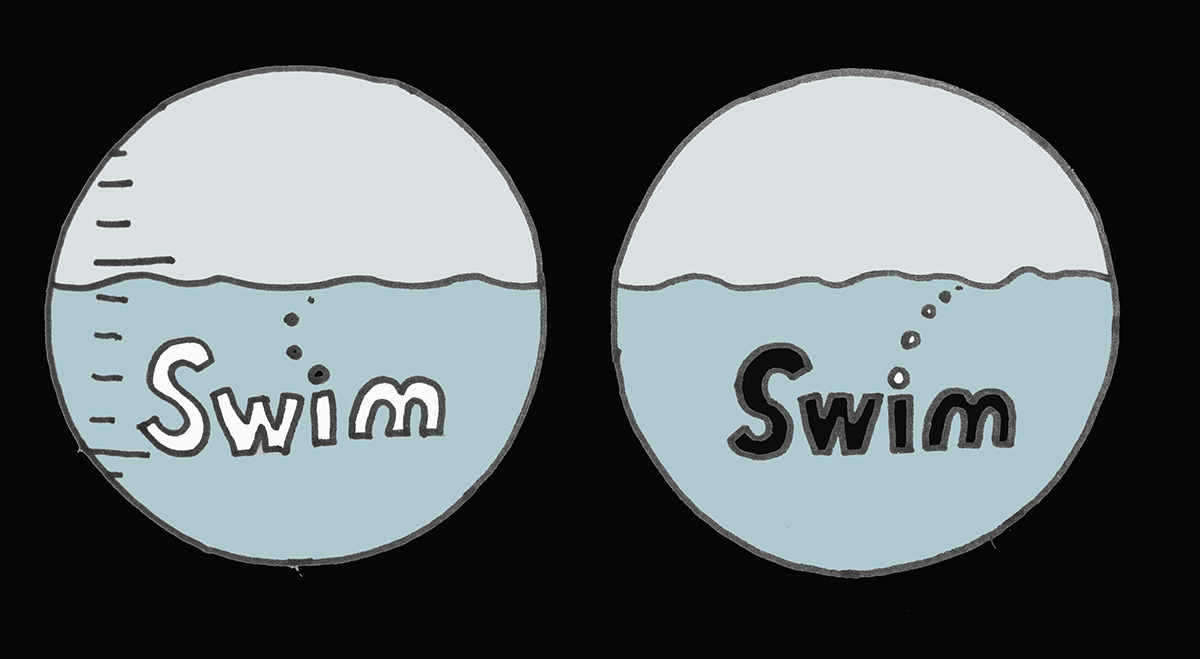
The forced Mouse Swim Test, or Behavioural Despair test, is a test used for some drugs such as antidepressants. A rodent, normally a mouse, is forced to swim in a cylinder from which it cannot escape. The time that the mouse spends not trying to get out, and just keeps its head above water, is the key metric. At this stage, the mouse has given up trying to get out. It doesn't drown, not normally anyhow, as because mice are so small and light, and given their shape and the air in their lungs, they can basically float - at least in a lab environment.

You can watch, if you like, a swim test example on the youtub here: https://www.youtube.com/watch?v=9s3o5UFThyo

I wanted to try imagine what a mouse's mental experience might feel like, during the test, transposed into more human language.

Then I wanted to jump out to the lab, and a team of scientists running tests ad infinitum, with a parallel to what the mice go through, maybe.

Posted on

Short story: Crow Riders

Gusto was only back for the weekend. I met him on Friday afternoon and again in a pub on Saturday.

It was December and there was a cold snap, with snow on the hills and scattered along the edges of roads. People marvelled about how one field was pure white and the next one wasn’t.

Galway city was dressed in Christmas lights and brightly decorated window displays that shone out against the early nights.

Gusto was already there, and it turned out his uncle had come too. Two uncles in fact, and a cousin: they had all come over from London. It was Gusto’s first trip back since he left but he seemed the same, engaging, and projecting easy confidence. An extrovert with introverting aspirations, he could sell ice to Eskimos but was a creature of habit. I on the other hand would routinely fail to make even the simplest of phone calls, but would seek to wander down streets I had never been.

They were round a table in the back of the gastropub and one uncle was telling stories. Gusto had told me that he was a businessman who part-owned a chain of restaurants.

I pulled up a stool as the uncle described a wealthy businessman friend of his.

“It’s not about the money. Not at that level. It’s about the deal then, it’s about making that deal- that’s the motivation, not the money.”

To me, it had been a long year. Yet at the same time it seemed like each season was a cloth pulled quick from under dishes – a party trick. Except the trick never works, not in my rendition. The dishes fall and shatter, and only the table remains, smug and bare, every time. Oh dear. I was in, what I call, a trough. A trough, or the trough? Hard to say.

“Brian’s a programmer,” Gusto was telling his uncle. “But he’s taking a break.” “But he could get a job anywhere.” I could see a move-to-London vibe rising.

“Ah I’ll figure it out soon. Did ye order food?”

“I thought that there was a lot of IT work in Ireland. Maybe it’s all in Dublin?”

“Oh, but right now he’s writing jokes. Tell us one of your jokes B”

I hadn’t been writing jokes, not exactly, but I’d been thinking a lot about where jokes come from, and how people can suddenly come up with them at all. Take a joke like “Why did the fish blush? Because the sea-weed” and apply the format to something else.

“Oh, I’m not really writing jokes” I said. “I’m just watching a lot of standup on YouTube. I like to think about how jokes work, like, how they mess with your expectations of language or life.”

“But you wrote some no?”

“Well, I guess, but they’re dumb”

“Go on. Try one.”

“Ok so. Why did the mountain worship the sky?”

“Why”

“Because it rained

Groans from around the table.

“Why was the mechanic afraid to order the parts?”

Silence.

“They were wheel nuts.

“Maybe stick to the day job,” laughed one of the uncles.

The stories resumed. Gusto’s uncle began telling us about some Saudi businessmen.

“So they’re opening this massive new building, you know, the Burj Kalifa. And they plan a huge fireworks display. And one of the investors, he sees this big apartment block, 22 floors, that has the only clear view, to the side where the fireworks will be. So he buys it, the whole block. And he gets a designer, a brand, like Gucci, or, you know, Louis Vuitton, to kit out each floor. Each brand kits out one floor. And that’s just to watch the fireworks for the opening. 22 floors.”

I was thinking that Galway now seemed tiny, squashed, bounded on the poor coast by wild sea and back roads that cracked across the middle as they sunk into bog, all under unfolding layers of bad weather.

The pub was quiet. It was still early. Christmas parties would stream in later on, and Christmas jumper drinking sessions. The menus had changed, and the waitress told us there was new management. She’d been there since I had worked nearby the year before.

Stories continued. I didn’t have much to offer.

“So, Brian, what else have you been up to lately?”

“Um, well, I’ve been busy, but, I’m not sure at what, exactly. Stuff. You know, not much structure.”

I tried to think of something to add. I remembered something that happened the day before at home.

“I had an interesting experience yesterday” I tried.

“Yeah? What happened?”

A space opened up just then.

“Very little, I mean, nothing dramatic, but I thought it was interesting”

The space was still there.

“Well, I was indoors for the morning, for a few hours at the computer, and it was cold, and I needed a break. You know, I was feeling a bit crap.”

Maybe too much, but I didn’t tell them about the trough, or how deep or steep or strange it could be.

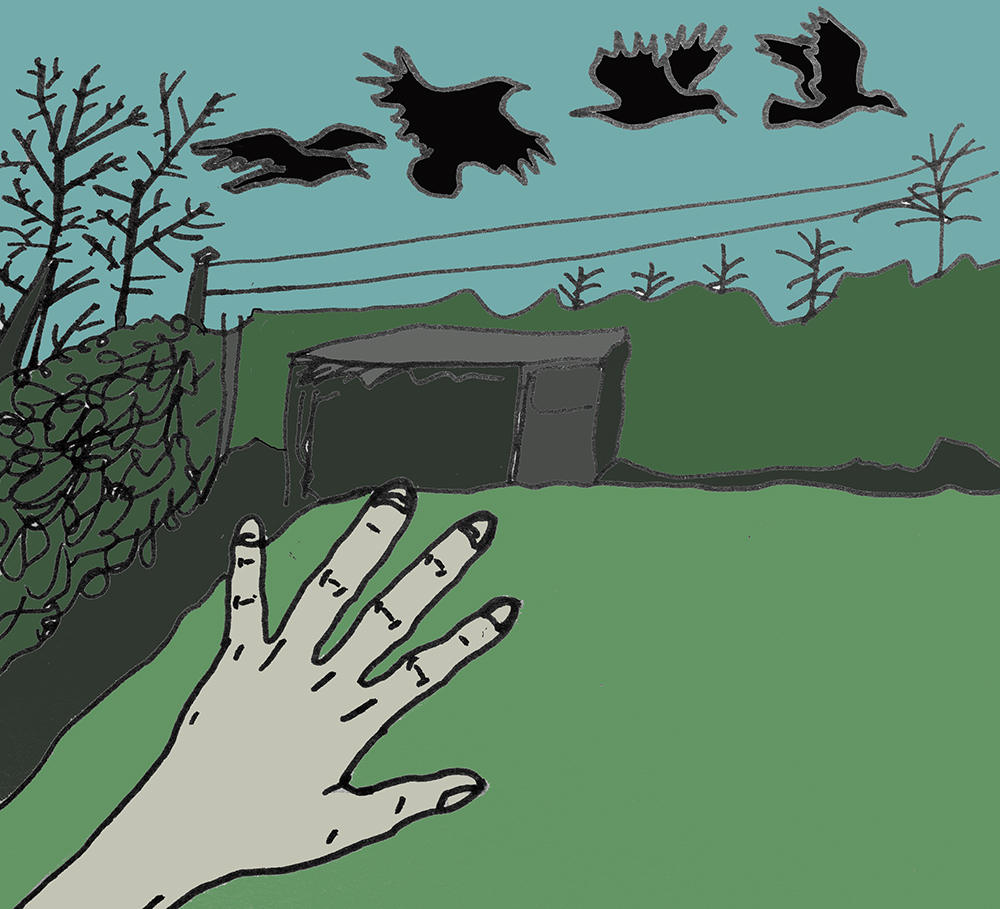
“So I just went outside and walked a lap around the house to get some air, just before it got too dark to see. And as I walked round the back, a bunch of crows came flying over, over the trees and the back garden.”

They must have wondered where I’m going. A scattering of crows? Where was I going?

“And I just throw my hand up at them, like I’m throwing something.”

It didn’t seem like much of a story now. They were looking and I soldiered on.

“And the crows react. They suddenly spread out, then back in, but it’s so, seamless. It’s like they move before I do, or at the same time, and it makes me realise how, connected everything is, like it’s not not that this happens then this happens, but that everything is happening at once, and it all moves along as, as one.”

Silence.

“Sounds like you’re a buddhist now” says Gusto, smiling. “Zen.”

“What happened then?” asks the cousin.

“Oh, nothing,” I said. “I mean, the crows are already gone. They fly over the garden and the trees and come back in close together, like nothing happened. It just made me feel better, all of a sudden. Like I’d been plugged back in. Nothing dramatic.”

Now I wondered why the hell that moment came to me when I ransacked my brain. It always throws up random stuff.

The conversation bubbled on. The chatty uncle told us about high interest rates in Iran, and how princes in Dubai will spend $500,000 to get a number 1 plate to make their gold-tinted supercar stand out (because you can’t actually buy a car that will stand out no matter what you spend), and how burgers are more expensive in Galway than London, and how a multi-millionaire he knows will still work with a labourer shovelling or cleaning sometimes, or spend hours haggling to get things like toilet paper for a few pennies less.

“It’s not about the money. It’s about a way to live.”

“Maybe it’s like a backstage rider for a band” I tried. “Like Van Halen only wanting brown M&Ms so that they could check if the promoters actually read the contract. Like, its strategic really. Even if you don’t understand- some things are supposed to make no sense.”

I ordered dessert and ate dessert and the pub slowly filled and loudened. There was a decision to move to the city centre. Suddenly everyone began to stand.

When I went to the bar to pay, Gusto and his uncle began to happily argue about who should get the bill. Gusto eventually paid, and paid for all of us. I’d taken my wallet out and stood uselessly behind him, defenseless.

“Come to London, man. You can get a job there easy.”

THE END


Written by Donal Kelly, December 2017.

The crows thing happened last week, or maybe the week before. It stuck in my sieve-brain, though it only lasted a few seconds. Nothing dramatic.

The stories about rich Saudi princes were indeed told, in a pub, but in a slightly different setting. I don't know if they are true or not.

I did make up those jokes, probably while driving, but they surely already exist.

Posted on

Short Story: A Fairy Gust

Hokusai: Ejiri in the Suruga Province

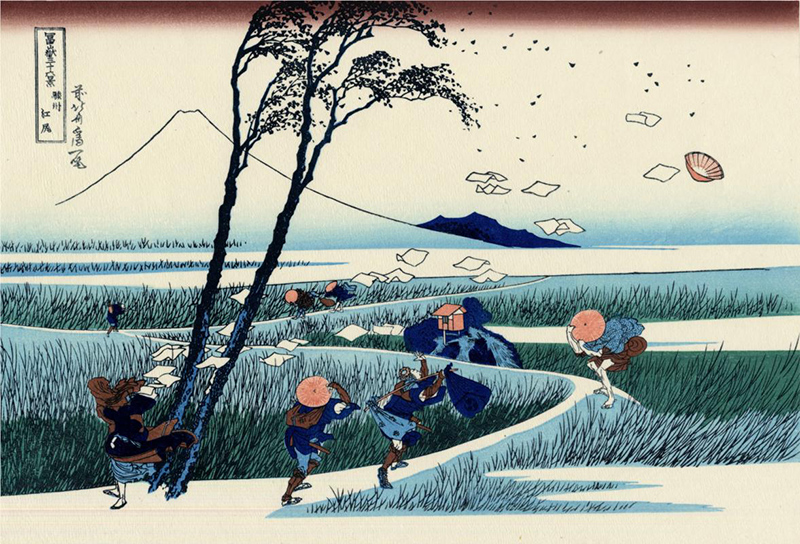
***page title image: Ejiri in the Province of Suruga, by Katsushika Hokusai (1832)***

“A fairy gust,” said the mother to herself in the kitchen.

It had come flung from the Atlantic, down through the low mountains and into the narrow valley, lifting the galvanized tin roof clean off the shed and toppling two of the old ash trees in the top field. Three pieces of TV aerial were stabbed stuck in the mossy front lawn and the telegraph poles at the boundary wall corners were both kinked over at the base with the black rubber-covered wires flapping loose.

“Ah for fuck sake,” said the son, lying on his bed after the sudden rush of snap and crash. His Internet signal had disappeared. The window had swung open and a plastic bag, leaves, and twigs had blown into the room. He rolled off the unmade midday duvet and slumped to the kitchen swearing at the damage. No Internet, no phone, the shed roof dumped in the front hedge, and the dog howling away madly at nothing.

“A fairy gust,” said the mother to the son, standing between the fridge and the sink with a mystical nod towards the window. She began to put on a pair of old boots, and went outside without tying the laces.

The son fired on a pair of runners, and followed her out. She was trying to quiet the dog.

“Two of the ash trees are down” she said to him. “And the aerial’s gone off the roof. Look at the tiles!”

“I know, I know. I can see them. There’s no phone. The shed roof is off.”

The mother pulled a broken tile off an upturned flower pot.

“My geraniums! That was some gust!” she said.

“You’ll have to go down to Paddy Fitz and see if he can come up.”

“Yeah, yeah, whatever. Jeez.”

“For fucks sake,” said the son, as he pushed away the wheelbarrow that had been blown up against the side of the van. Its handle had run a long white scrape along the red finish. The van had cost him a fortune. He started the diesel engine without waiting for the coil to heat up and it grumbled into a fit of smoke-sluggy coughing. Fairy fucking wind. He drove around the tilting poles and off down the neck of the valley. He could see more trees down along the side of the hill. It wasn’t even windy.

The second gust arrived after the son had turned on to the main road, and was driving in third up the rising shoulder of the valley. It caught the red van square and off it went, laterally, almost holding grip then suddenly breaking free sideways and flipping over the low bank and down into the bog, rolling onto its roof and back onto its wheels in the soft ground.

“Another one!” said Paddy Fitz to himself, on the other side of the valley shoulder, looking at where the corner of the shed had been separated from the wooden frame by the second gust and stacked turf had fallen in a pile beneath.

He went in to tell the wife.

“Damned if I ever saw one like that before. And the oak tree down on the wall!”

She hadn’t seen the likes of it either, but out on the islands she had heard a few stories,and she kept still a store of omens and signs, pishrógs and bad cesses and rules, like going out the same door you went in. The aerial was gone from the roof, and one of the bedroom window panes had been shattered by a tree branch. Paddy stared at the mobile.

“No signal at all.”

“The mast might be down.”

“They should never have put the damn thing up there anyway.”

“Well, they’ll have to fix it. I’d better call the ESB.”

“Call with what?”

“Oh, right, of course. Well, can you go down to the town to see if they have reception there? They can’t leave it like this”

“For fucks sake,” said the son, as he struggled to pull his sinking feet through the bog and back up to the road. His nose was swollen and his neck was vibrating with pain and he felt like he had done a full cycle in a tumble drier. The van was fucked, its roof crumpled in and the chassis buckled. And still no reception. And it was totally calm again, too. All along the road up the hill, poles had been plucked and scattered like rushes by the stalk. He walked with a worsening limp, stepping around debris, until he got as far as the old Garvey house. He went up and knocked at the door.

“Hallo!” he cried.

“Hallo! Mrs Garvey? Are you in?”

The mother was out picking up scattered wood and pots when the third gust grabbed her whole and fired her as far as the rhododendron bush. Pulling herself out of the dense stalks and purple flowers, she looked darkly up at the sky, a line of blood snaking down her wrist. The cleaning could wait. She headed for the house, limping. Today was not the day for fixing.

The son was standing on the cement path outside Garvey’s with the cup of tea in his hand when the third gust whooshed down the valley. He had gone out when he saw Paddy Fitz’s van coming down the hill, slowly negotiating the downed wires. The house behind him took the bulk of the weight with a dull thumpy whack, but he still fell forward into the grass. Mrs Garvey screamed from somewhere inside, and when he stood up, he could see Fitz’s van, upside down, wheels spinning. A shower of roof tiles, a chimney pot, branches, fencing, feed bags, and all kinds of branch and leaf, were scattered across the garden, and the beech tree at the back of the house was leaning over with two heavy branches hanging by the bark.

The son limped down to Paddy Fitz’s van, no more than fifty metres from his own, and helped him out from the upside down passenger side door.

“That was some gust!” said Paddy, coughing. “Never seen anything like it! Took me clean off the road!”

“Come on up to the house”, the son said, and between the two of them they made it out of the soggy bog and up to Garvey’s. Mrs Garvey was in the kitchen, looking out at the jumbled mess.

“The electricity is gone now too.” she said. “You’ll have to wait here a while.”

Paddy Fitz spent a few minutes quietly checking his bruises and rubbing his twisted ankle.

“Never seen anything like it Mrs Garvey!”

“Maybe it’s a sign?” she said, after a long pause.

“A sign of what? ” said the son.

“A fairy gust!” said Paddy Fitz. “Sudden burst of wind in off the sea. They get them out on the islands.”

“And not one, but three!” said Mrs Garvey. “Could be a sign. We should stay put. It’s not a day for going out.”

She went to clean the dust from the old stove and put down a fire to boil some water.

The three of them settled in at the kitchen table. Outside, it was calm and quiet. No radio, no TV, no phones, no cars on the road, no birds singing. Not even a rustle from a fallen leaf. A general deep stillness fell around them and they stopped talking.

The son stared into his hot milkless tea. As gradual as the sipped emptying of the mug, he stopped reaching to check his phone reception, and let the pain in his neck and nose and joints flow like his blood throughout until it seemed to merge with the quiet and they all become a background hum. He stopped seeing the crumpled van roof and bits of broken tile and aerial stuck in the mossy lawn. In his foreground, all tendrils of his attention craned out and came together in a narrowing coil, like a sensor for the faintest hint of the next sudden gust. Yet it remained solidly quiet and resolutely still, until a lone thrush began to slowly pitch up again outside the window.

The son didn’t believe in signs or omens, prophecies or fate, or even the future per se beyond the continuous consumption of the present. But in this strangely locked, loaded, cocked heavy calm, a tide of fidget and lie-ins seemed to roll back: a low tide drawing out the sea to expose a fresh strip of naked shore. He swirled the last gulp’s worth of tea in the mug and broke the long silence.

“I’m off for the city come September,” he said.

Paddy Fitz looked up as though awoken. “Oh! Well sure there isn’t much out here lad.”

“Yeah, yeah, I need a change.”

“Good lad. Do you have a job lined up?”

“No, nope, but I’ll figure something out!”

“You will” said Paddy Fitz. “You will.” He had forgotten about his ankle and put both palms flat on the pine tabletop.

“I’m going to head over to see my brother in England myself”

“The brother in London? Larry?” pitched in Mrs Garvey.

“That’s the one.”

“Never been over at all. Long in the tooth now but… I’ll bring over herself and Tommy. We can stay for a month- I can sell that heifer. sure we’ve never been further away than Galway.”

Mrs Garvey leaned in. In the distance, perhaps, or perhaps not, a fourth fairy gust was being conjured up above the ocean to be flung inland, and chunnelled down a narrow valley where a thin reedy river cut through bog that pitched up into the ancient Maamturks. She could feel with calm clarity, the weight of bodied silence around the wooden table that had raised two generations but was creaky now with more meals of memory than food.

“I’m selling the house.” she said.

“Oh?”

“Selling the house, and I’m going to get one of those nice little apartments in the town.”

“Isn’t your young one down in the town?”

“She is.”

“Well, sure she’ll be glad for that.”

“She, she might. Some family can take over this old place and to hell with the lot of us fighting over a patch of grass and an old building.”

“That’s if it isn’t all blown down today Mrs Garvey!” said the son.

“And us with it lad!” added Paddy Fitz.

The three of them settled back into their waiting for the next gust, having breached impasses deep below the chuckling of the wind.

Donal Kelly ----- written June 2017

Posted on

Driver in Shock after Hit & Run Horror

rear view mirror

A driver in South Dublin was still in shock today following a narrow escape with a speeding bicycle.

While returning from work yesterday evening, Mr. David Gilroy was involved in a collision with an unmarked bicycle, which caused severe upset and further lateness to an already delayed schedule.

Witnesses to the event reported a bicycle with flashing lights suddenly moving onto the road from a junction before continuing in a straight line close to the curb for a few hundred metres at high speeds of up to 30kph. As it carried on past an entrance to a popular local shopping centre, it ploughed straight into the side of Mr Gilroy’s silver 1,740 Kg BMW.

Mr Gilroy, who was turning left into the shopping centre to pick up some Merlot wine and cheese crackers, while reading iPhone 6 Plus reviews on his iPhone 6 Plus, was dismayed by the incident. “I’m still in shock, really” he reported. “There’s a scratch running all the way along the passenger door and a head-sized dent too. The whole panel will have to be replaced, and I have a wedding to go to on Friday.”

Meanwhile, the cyclist involved had already fled the scene in an emergency ambulance that happened to be passing.

“He didn’t even look me in the eye,” expressed Mr. Gilroy. “One minute he slams straight into me, then he leaves without even a word.”

Regular passer-by, Jamie Keys, described the scene as shocking. “Those cyclists think they own the road. That car was just driving along, minding its own business, when bang! It could have been any one of us. How can anything that dangerous be allowed on these busy roads?” Mr Keys illustrated the lethal nature of bicycles by holding up a piece of sharp-toothed steel from the scattered bits that remained on the roadside.

Another distressed driver, Mrs. Fidelma Greaney, agreed. “They have no right to bully us drivers; every day I have to swerve out to narrowly avoid them, and now most of them are decked out in horrible lights and gaudy yellow jackets. How can I get anywhere at all if I have to keep looking up to notice them and braking to stop them from ramming my bonnet? Do they not realize there is a real person inside the car? Somebody’s son, or daughter, or friend, or some poor worker just trying to get to the office on time?”

The cyclist involved declined to comment, though he is expected to possibly be out of intensive care by Monday week, possibly.

(filed under satire)

Bike Crash

Posted on

Story: Mitchell and the long way round

My hands shook. I couldn’t stop them. The magazine slipped from my fingers. I squatted and searched for it in the mud. Rain pinged off my helmet. Sporadic volleys of gunfire zinged through the greasy drops. We were supposed to be winging it through the bullets to take back the hill. It wasn’t going well. I couldn’t see any of the others, and everything was soaked and coated in thick wet oozing mud. I slipped again, and tried to dig my fingers deep into the soggy soil, but I kept sliding down the bank. Guns poking over the brow of the hill began to snap at my accelerating tumble. I heard two bullets, three, bite into the earth before I pitched forward into a sudden gully where a stream flowed noisily. That’s where I met Mitchell, who introduced himself by hauling me out of the water and pushing me up against the steep gully wall where we were invisible from above.

I can remember it pretty well, unless it’s true about memories being sensitive to fabrication; maybe I added details along the way. I’m sure he was unimpressed by the antics from the top of the ridge. I never did find out how he even ended up in the army. “They won’t follow you down that way,” he observed, while I was panting like a hot dog and rubbing dollops of mud from my face and eye sockets. “They’ll come down around the other side of the hill to cut off the road in a few minutes.” he added. He seemed crazily calm, taking in the situation and idly kicking the side of the gully with his boot. Looking back, it might have been more sensible to obey orders and head back up into the mud, but instead I followed Mitchell in a madcap sprint across some battered fields to the ruins of a farmhouse where we smoked his cigarettes and looked back from behind smashed walls as the soldiers came down round the other side of the hill and cut off the road.

In truth, I am following him still, even so long since that first ridiculous summer in Europe. We were stranded from our own army and dodging the others, lost in chaotic midnight flights from shelled cities, or caught under the bombs of an allied air raid, or holed up in a desolate country estate for two weeks until a squad of vagrant German soldiers showed up. I still don’t know where he learned to speak German. They just wanted to be done with it all. He wanted to go all the way East to Königsberg, I think to see where Kant had lived. Mitchell reckoned he could have made a good thinker, but I figured he couldn’t sit still for long enough to wait for his ideas settle. Back then, we survived from day to day, separate from the fighting, living off scraps, while Mitchell took it all in and seemed to know without thinking when it was time to slowly walk away, or when it was time to run full tilt towards the nearest shelter. I learned the different shades of calm that concealed his energy. “Most of us, we are derailed by the smallest of reasons,” was the kind of thing he would say. At the time I was suffering from the worst kind of fatalism, convinced that by the time the dust had settled there would be nothing normal left to go back to. “It’ll end.” He said. “It’ll end and it’ll seem like someone else’s lunatic dream. What value in losing your head?”

Anyway, what you were asking about, Paris. By the time we got there we had morphed into reporters. Well, he was the reporter and I was the photographer, and we had already published a bunch of reports in the Daily Press, mostly about bombing runs that had destroyed some beautiful towns. We were trying to find a way home, but we ended up in… Sorry, that’s another story. Paris, well Paris was in lockdown and we were holed up in Rue Damremont in an apartment above a bakery that had been bought by a distant relative of mine in the twenties.

Donal Kelly, January 2014

Written for class no. 3 of the Creative Writing Class in GTI. The homework was to use a 'fio' character to introduce another. I wanted to begin with an action scene, which began in a generic war scene and quickly became somewhere in Europe in WWII. AMazing how the thirst for details requires you to become more specific. As you try to provide solidity and realism, you need to add solid real details. Or so I found. I tried to use short sentences for action, as it all happens so fast and there is no time to think. In a dramatic moment we jump from perception to perception quickly trying to make sense of everything. Maybe it could be reduced further into sparse verbing? Think. Get up. Walk. Window open? Use door. Wake up!

Posted on

Short Story: Patients

After washing my hands with warm water I squirt disinfectant gel on them from the plastic dispenser that hangs on the wall, and stand looking in the mirror while I rub them dry. Looking older? Surely, but it’s so hard to notice, day by day changes, cell by dying cell. Show me a photograph of me from ten years ago and I will jolt with recognition and sadness. Older we go into the unknown, over and older again.

There’s a lot of that here. A mighty sum of accumulated years. I wonder what the average age of the patients is, as I push the bathroom door open with my foot, proud of not touching the handles. My elbows open doors; my feet lift unknown toilet lids.

Simon is sitting where he had been, in the thick green chair next to the bed. He looks noticeably older too. His face is paler; I guess this place adds a few years. He is holding the clipboard that had been hanging at the end of the metal-framed bed, and he is looking at the rise and fall of the numbers on the colour-coded chart.

The old lady in the bed to the right looks up and smiles through her spacious glasses. She is still working on the word-search puzzle. she’s up to page seventy-five now, though she told me she skipped sections when she got bored of them. Earlier I watched her draw surprisingly neat faces on the inside of the cover of the puzzle book then scratch them out. Rosie, the nurses call her, and they all seem to know her name: a friendly name for a friendly face. She talked to me about the kids that sometimes trespass onto her back garden in Athenry to get to the river bank and follow it through the town. She’s like a gentle river herself when she starts chatting, flowing from one topic to the next with an easy but constant rhythm: her son, her neighbours, the tea, the weather, and the changes.

Simon looks worried. I want to tell him that his worrying creases are becoming part of his default face, but it’s the wrong time. He doesn’t appreciate those comments. I don’t believe in Botox but sometimes I try to make my face fully expressionless, even if only for a few minutes. Anyway, I know what he will say. “I have a lot on my plate these days.” I know him well enough to predict full sentences, so they often go unsaid, though I still find it hard to sit still through the longer silences, and my mind keeps proposing phrases or sighs or meaningful long breaths to punctuate the gaps. “Ah well,” I will say, then maybe “It could be worse,” and perhaps I will make the effort of envisioning a potbellied child with flies around its head in a sweltering bone-ash dry desert a thousand miles from a welcoming door, even though I know I shouldn’t do that as it makes me feel too remote. In any case I will invariably fade away with “what can you do?” or “hard to know” or “I dunno”. “I don’t know… don’t know… know… no.” My utterances tend to taper into pregnant pauses that stretch out and taper, maybe like the universe expanding and losing its will to move.

A doctor strides by with stethoscope hanging from his neck. I’ve always been jealous of people who exude calm and stability, whose words seem to be infused with extra gravity, and whose conversation seems loaded with ballast. Even when completely wrong, theirs seems to be the path to follow. I tell Simon that people like this live in action, and not ideas, and that the consistency of their course matters less than what they are currently setting out to believe. Or at least I try to convey the idea, between all of the ahs and ams and inhaling: it’s a wonder we can even speak at all.
Simon smiles and the young worry-lines are redrawn into friendlier folds for a moment. Then he coughs a few times and they come back. He wants to know why the blood pressure is so low, and why the zigzag heart rate measures look like they were scribbled in by a shivering kid.

There’s a TV strung up on the wall behind me. I’m sitting at the outside end of the bed facing Rosie. Simon is watching it, but I can’t see it without straining my neck or moving. I watch his eyes dart up every few moments and force mine not to follow. I scan instead from him to Rosie sitting on her bed bent over her word-search with her feet dangling above the floor, and her thick ankles remind me of my late granny’s thick ankles and I wonder what gathers in them. Words well up: fluid collecting, pus draining, karma coagulating. black bile, yellow bile, phlegm, blood: The four humours sloshing around her swollen feet.

I scan back to Simon. We talk about the empty beds opposite. The Goth teenage girl had been moved from the one on the right to the one on the left because the one on the left is further from the exit. She arrived during the night and by morning there was a group of quiet worried adults holding a hushed vigil around the bed where she was squirming. “You know 20 paracetamol are not for your health?” That’s what Simon said he thought he heard the doctor say while the curtains were fully drawn around the bed. The Goth girl went to the bathroom later and came back bawling crying, then later again she tried to run away, twice, and then they moved her to the other bed and now she is gone altogether. Maybe she just wanted to skip across to SuperMacs? I was there yesterday with Simon, and he just sat and watched me scoff curry chips. I ordered a coke but the guy thought I said coleslaw. He was foreign but I joked about my thick country accent. Easier that way. Imagine if I went over now and the Goth girl was there, standing in the queue, looking up in the harsh white light at the red and brown and golden menus of fats soaked in burgers or chips or chicken nuggets. What would I say to her? What could I say? What could any of them say?

An alarm goes off in the next room. We listen to a rush of feet and voices, then it settles down again, and dinners are wheeled around. Simon looks unimpressed with the chicken and vegetables. “Food’s food!” I exclaim. “It’s ok for you, you can eat anything!” he replies. Visiting is supposed to stop during dinner but nobody says a word. I guess they enforce regulations when they need to, like the guards do with people drinking down by the Spanish Arch. I ask Simon what would happen if everyone tried to enforce every rule and regulation, I mean , really tried. He just shrugs. He’s looking at the pills in the little plastic cup now. He tries to learn their names and look them up on the Internet and worry about them being the wrong ones or about their possible side effects. They all seem to have a pile of side effects, like the same person is writing all of the lists, and wants to cover their ass just in case. I advise that given the situation it is best to gobble pills down without adding the worry of extra knowledge.

The same doctor hurries past in the opposite direction. When I walk down a corridor wearing my thick jacket I imagine myself as a doctor too, resourceful and knowledgeable, being tailed by a gaggle of eager but quiet student doctors, all respectfully admiring my every move. “Constricted left vastricular nerve” I will point out. “Notice the slight indentations above the hibea and the asymmetrical apsis glands? Now, look at the scan again… Gerry what do you think? No Gerry, the lymph node is normal, see? Alice? Good, but notice that the heart rate is elevated. Do a second liver biopsy and you look tired… Huh?” “I just said you look tired,” said Simon. I snap out of the daydream a little disappointedly. Can it still be called a daydream at night? Why not a wakedream instead? “You look tired too,” I say. “From all the hard work.” Simon grins, and I grin back. “It could be worse” I say. “I could use a holiday.” “Me too!” “You could always run away” I add, then we both look over at the bed where the Goth girl had been. They won’t be empty for long. Simon stands up and stretches. “It’s hard to feel healthy in here,” he says. “What’s the opposite to… what do you call it? A placebo?”

The evening has trickled by and we’ve hardly been saying a word. We walk down through and out of St Enda’s ward. The main entrance is closed now so we have to head on up to the A & E entrance. It’s a normal weekday night there. A drunken old man is sleeping across four seats and nobody is asking him to move. A worried couple soothe their child. They stare at the double doors and the blue door next to them with the letterbox. When you come in you fill in the forms and they go in the letterbox in the blue door. The triage nurses prioritize them and you wait until yours gets to the top. When a space is free inside someone will open the blue door and read out a name. While we are there a nurse opens the door and calls out “Samantha Reilly… Samantha Reilly?” I imagine Samantha Reilly sprinting down University road towards the Cathedral, convinced she has been cured, and then wonder if she could be in SuperMacs. But she would be too sick to run: she will have to come back. After the doctor sees you you will probably have to wait again, wait wait wait. A friend of mine reckons that some people exaggerate their symptoms to get to the top. A perfectly rational idea, though I doubt I would have the will to do it: I have a distended superego. I read somewhere that the most bang-for-your-buck easily fakeable symptom is (drum roll) shortness of breath. Wheeze when signing in, pant and pause to catch your breath. Quicker service. Might get a trolley, maybe an oscar.

I squirt some more disinfectant gel on my hands. In the olden days doctors would go from one bloody patient to the next with hardly a wipe of a blade, carrying along whole ecosystems of germs along with them, oblivious. Now they have all these gloves and sterilizers and disinfectant gel dispensers with helpful guides and a huge industry of drug-makers, and play a game of evolutionary chicken with strains of bacteria by filling everyone with antibiotics. “Forget about it!” Simon says. I tell him I’m not interested in conspiracies, but that I am very interested in systems and symptoms and simple incentives. “As a general rule, people, even the wicked, are much more naive and simple-hearted than we suppose. And we ourselves are too” I wish I could remember that quote: I wrote in my notebook. I can’t even spell Fyodor Dostoyevsky’s name without looking it up every time.

We are standing in the exit; close enough to the automatic doors to keep triggering them open and sending draughts of cold December wind in. Someone is probably cursing us from the waiting room. An ambulance pulls up and a man on a stretcher is pushed past with blood on his forehead. A thin woman in a nightgown asks us for a rollie. “We don’t smoke” is all I can say. It is time to leave; we are both almost asleep. I tell Simon that he shouldn’t stay so late and to take care on the drive home and then I head back down towards the ward, allowing myself to be a vigilant passing doctor again, peering into dark rooms lit only by TVs and machine lights to notice the numbers on the little screens and the restless figures curled up in their beds.

Donal Kelly, December 2013.

This is a case of Fragment:consider revising: I guess I will remove or rewrite this comment if I tinker the piece till it finds some better equilibrium. I should go back and hone existing stuff instead of oncemoreing into the breach and filling the world with new fodder. It has fodder enough, fodder aplenty, but the restless seeds must grow as they please. This story is based on some hospital visits: it's a strange place, a world unto itself, with so many personal dramas unfolding all the time. It got me thinking about what it means to be sick and how it can seem so similar to being healthy most of the time. I wanted to create a scene where it is very unclear who is the patient and who is the visitor. I have probably only succeeded in being unclear.

All rights reserved. Do not copy or use without permission.