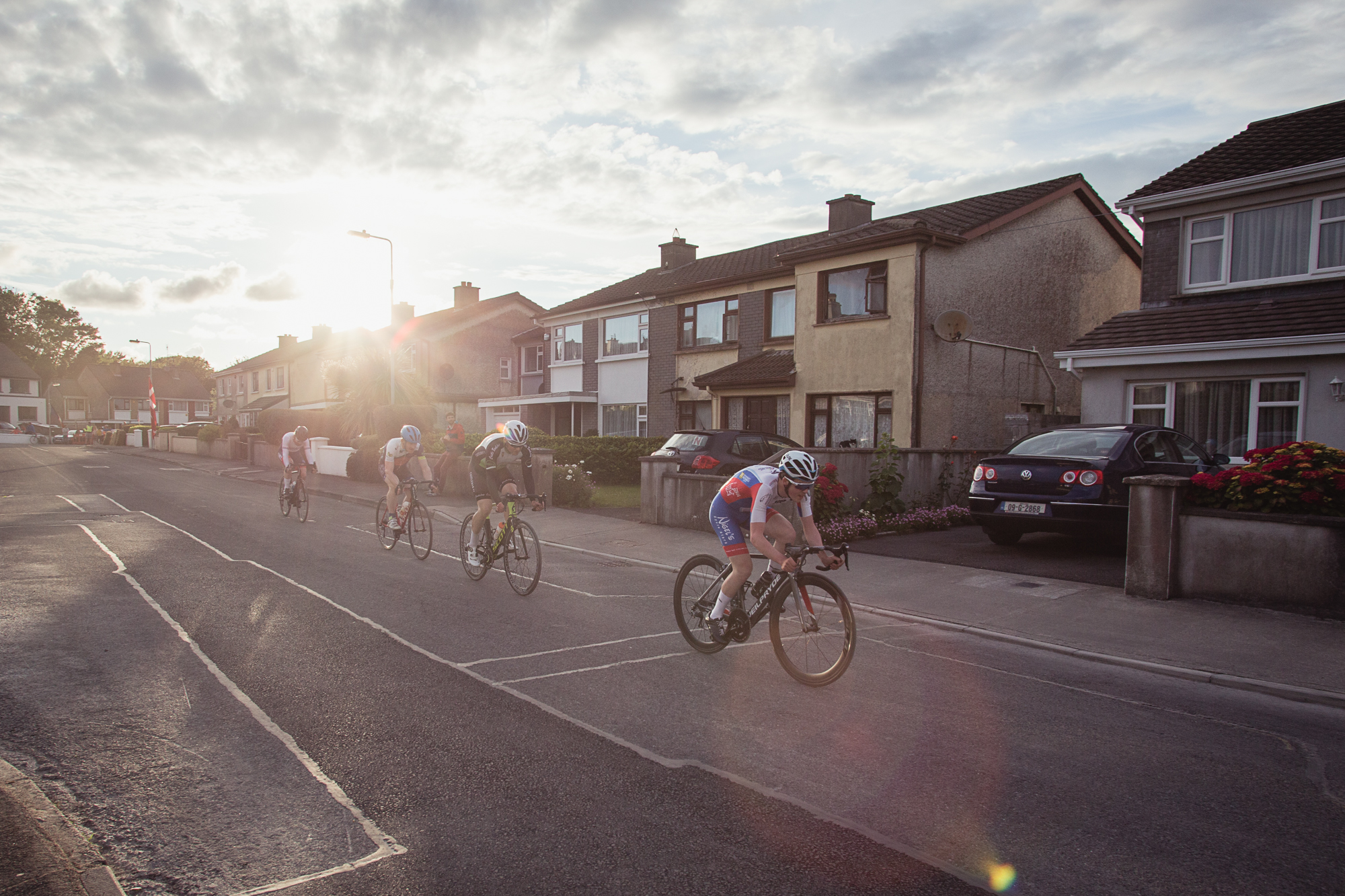
Mucky June weather and the bottom fallen out of the stretch in May but this, this Saturday evening in the little park hidden away in a west city estate, is aglow with generous light.
It throws muddy shadows from bikes as they swing round the circuit, on the flush summer grass, on the country flags creased by the odd puff of breeze.
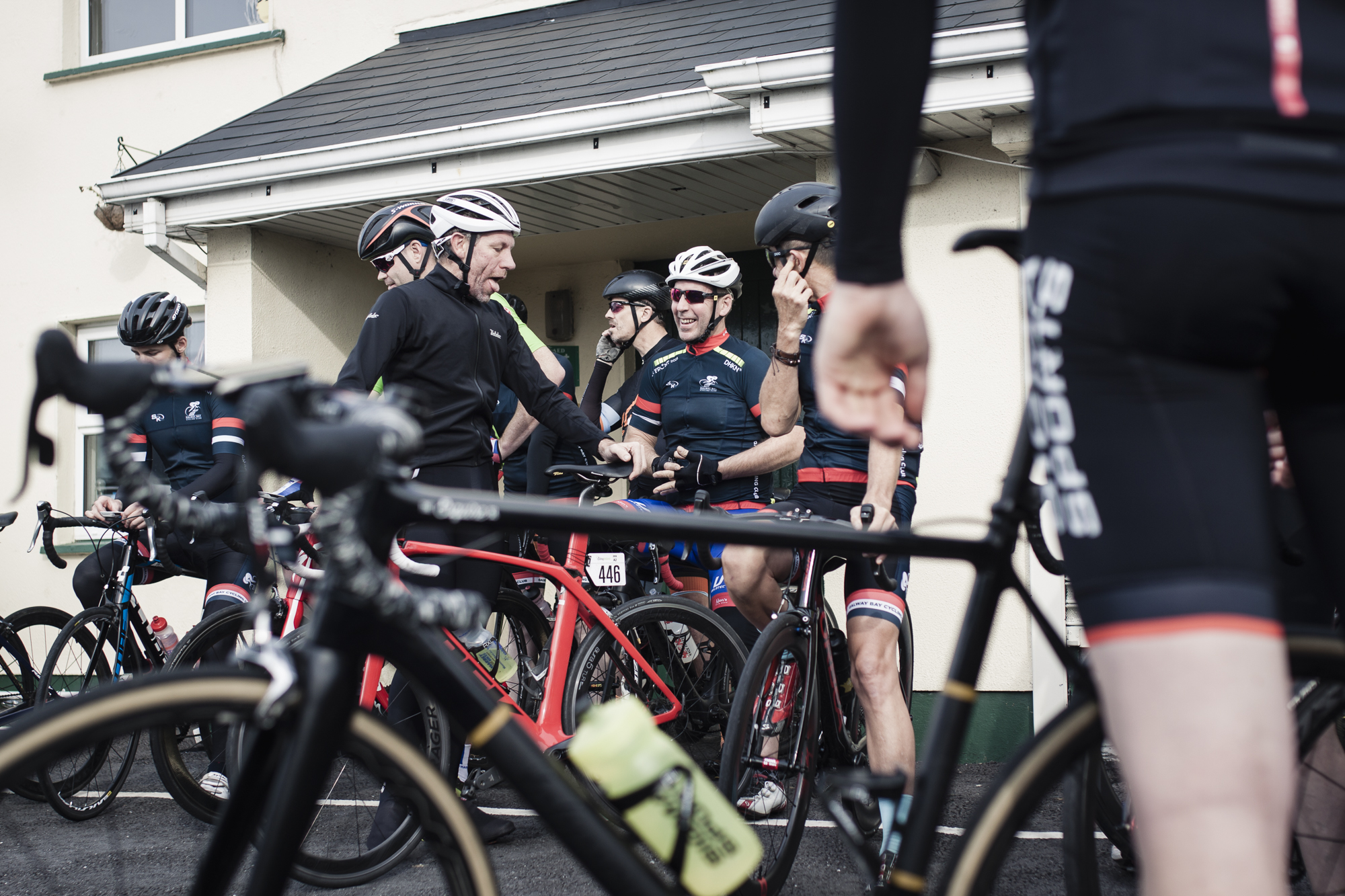
Race organised by Galway Bay Cycling Club with the support of the Highfield Park residents.
Sunday September 16th, 2018. Last race in the season for the club. Summer gone south with the swallows. I saw one, maybe the last, swooping out beyond the water tower.
Riders arrive in ones and twos. There’s hesitation: run it out and back like a normal league race? More riders arrive. Nope, stick with the plan. 60km+, out further to the Galway Plaza and back.
‘Plaza’ still feels alien to me. ‘See you at the Plaza’. Plazzza. Or ‘Applegreen’. Howdyalikethemapples? ‘Circle K’. Don’t get it. Don’t want to look it up. Things change. Things are always changing, underfoot or overhead or right through the middle.
The format is familiar. Club league race anticipation. The same faces might show up every Thursday but you can never know how it’ll work out. Bunch sprint or solo break? Nothing is written until it is.
Wind the legs up, fight for scraps of shelter, dig in and dig in again. If will and energy persist, get up the road. Lean into the landscape, ride into the pain. Count up the miles or count down the kilometres- whatever keeps the mind in its arrow. Dream of graveyed spuds or hot showers. Let a caught tune chase its tail round your noggin. Whatever keeps the body in the bid. Pedal pedal pedalpedalpedal pedaledaledaledaledaledal edal pedpedpedped edaledal pedal edaledaledal pedal pedal
Today the club races for itself, against itself, every rider together and every rider alone. Paul Giblin rode these roads, and rode them well. Rowed and road, powering across the landscape. He’s probably somewhere up ahead, in a break, pushing on. And so it should be.
Horseman, pedal on.
Taken on the semi-functional 50D Canon. Few different lenses. Shutter button fires every so often, and the battery drains fast, and the sensor is dirty and the autofocus lazy. But it's not about the camera, mostly.
Toto pulling at the leash to gobble slices of white pan tossed along Main Street by a Bread-Exit delivery. A rowdy division of suffragettes clashing with a soldier. Sean Clancy’s MC mic getting scrambled with music from a raucous Rapunzel parody. A Men’s Shed rocket scattering smoke in the biting raw breeze. Numb thumbs struggling with camera buttons. Numb fingers playing tin whistles. Maybe the only warm kids are dressed as plump snowballs bobbing around a sharp toothed 15 foot tall Beast from the East. Starred and striped line dancers and tip toed Irish dancers, rugby players, vintage car drivers, historical reenactors, parkrunners, saints, sinners, and wall busting Mexicans, assemble. (and shiver).
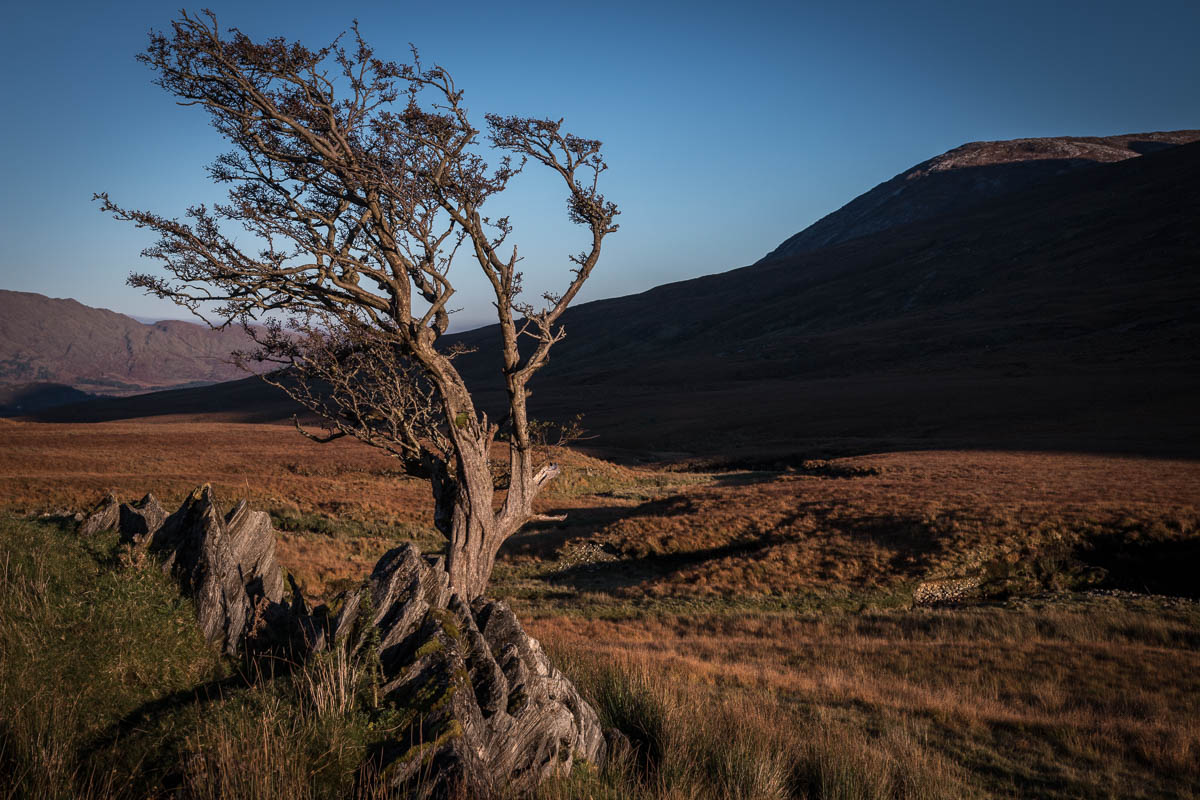
It’s early January, and 2018 is still shiny and new and cold, and I pull in 5 miles from Clifden to get a photo of some mounds of gravel that have been piled up by the N59.
I snap the mounds, and then wait for a van to pass to record that too, diligent accumulator of slices of reality. The morning was bright but the afternoon is dull, and hovering around 0 Celsius.
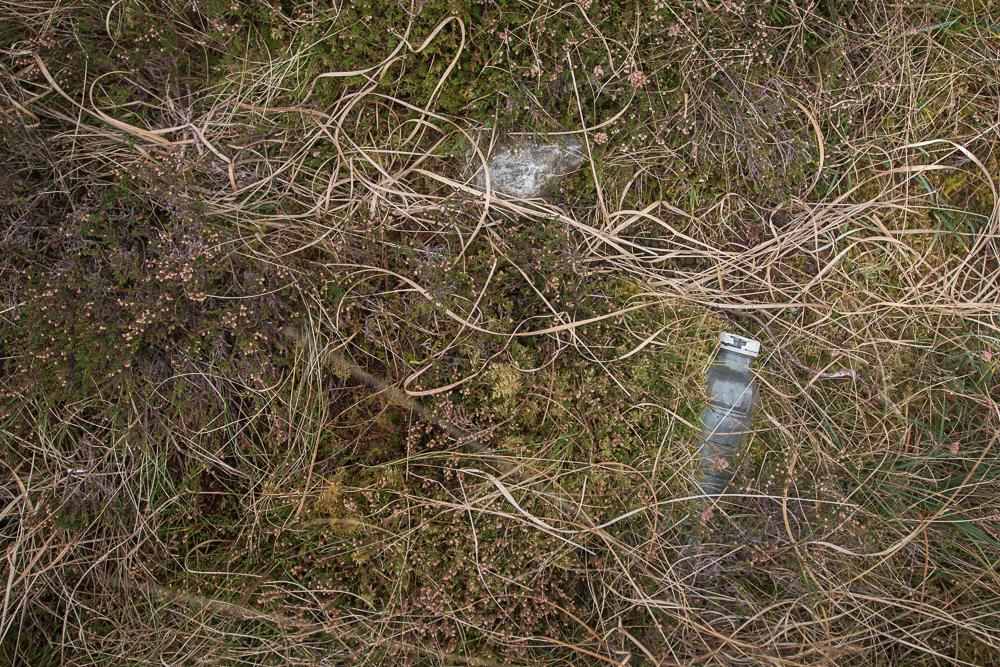
On the way back to the car I see a plastic bottle, half submerged in the mossy earth. Here on the bend there is some flat space on each side of the road. On the other side are the mounds of gravel. On this one a marshy shoulder leading into a rising ridge of stone, where a car can’t pull in. But it can certainly roll down a window, bzzzzzzzzzzzzzzzzzz, and fling out a snot of rubbish, and roll it back up, bzzzzzzzzzzzzzz, without skipping a pistonbeat.
The ground and its ecosystems are normally very keen on the discards of the passings of lumbering creatures. It rots them into its bosom, breaks them down, savours any organic compounds to build and rebuild itself. Nothing is wasted, so nothing is waste. A thriving economy of basic materials.
But these materials, these plastics, these metal foils, these quick-bought quick-used quick-discarded spoils, they do not melt back into the ground. They resist, their long chains of compounds too tough and too toxic.
Instead, they slowly sink down into the soil, unusable obstacles to be grown over and around.
Good old polyethylene terephthalate: cooked from the soups of oil sucked/fracked from the guts of the planet.
I walk from the car along the roadside as far as a broken branch from which hangs a fast food meal bag. 100 paces or so.
How much junk would you find along 100 paces or so of the N59, thrown from the windows of passing cars?
I start to look more carefully, to see what I can see. And every time I look, I find more. More cartons and bottles, more fast food wrappers, tins and glass, car parts and coffee cup lids, gloves, clothes hangers, sun cream bottles, a pregnancy test box, and a set of spectacles left balanced on a bottle stuck into the gravel.
These are the marks of our passings.
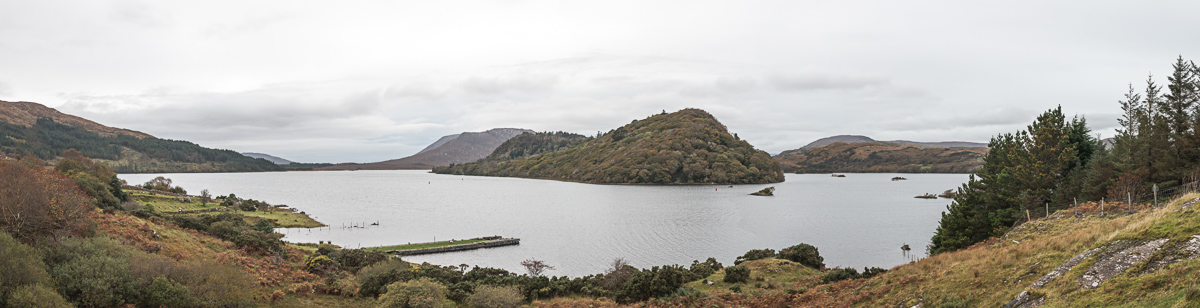
From a distance, there is nothing here but bog and a ridge cut into the bank, under the loom of the twelve Bens, and the N59 snaking along over Ballynahinch lake.
But up close, if you look, are layers of rottable and unrottable rubbish, flung from our day trips, commutes, visits, and shopping errands. We do not see, when the window buzzes down, that we are not merely silently cleaning out car kingdoms into eager emptiness, but are instead adding to mounds of junk that line our passings. On one hand we might sell to strangers the beauty of the wild and rugged landscape, while the other is tossing wrappers out into it, where it will lie for centuries to come.
The Dark Half. If you were to cut a year down the middle, right through the belly, it would make sense (in the northern hemisphere at least), to choose the time of Halloween.
This is when Daylight Savings Time is cut from the clocks and autumn cedes to winter. It’s a transition from light to dark, from long summer days to long winter nights. Yadda yadda yadda.
On the edge of things, comfort and definitions are tested. Hallow’s Eve was a point when the souls of the dead were able to mingle with the living. To confuse them, we, the living, put on masks of them, the dead, and danced a hooley. We marked an indistinct edge between light and dark, life and death, growth and decay, here and not here.
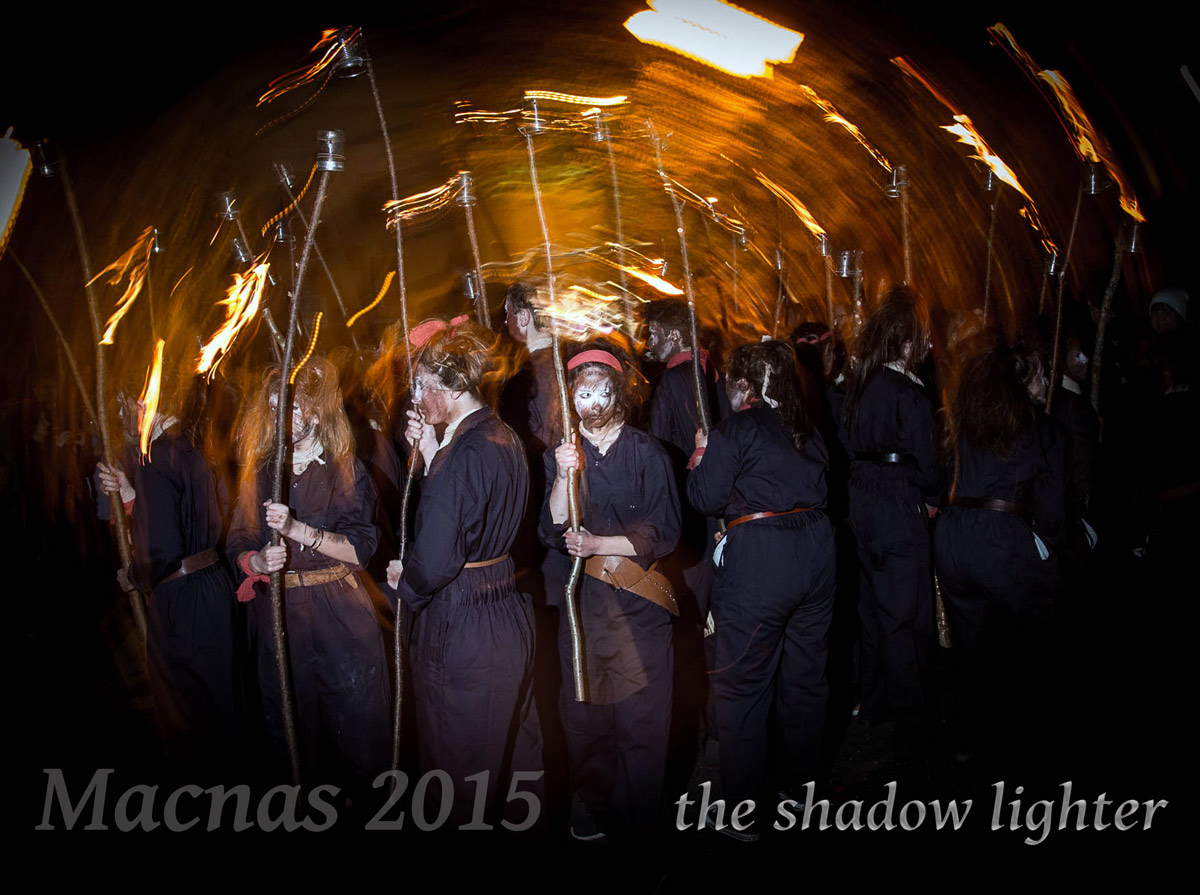
This is where Macnas aims to tread, on the edges, crafting primal energy into a fling with moderated chaos.
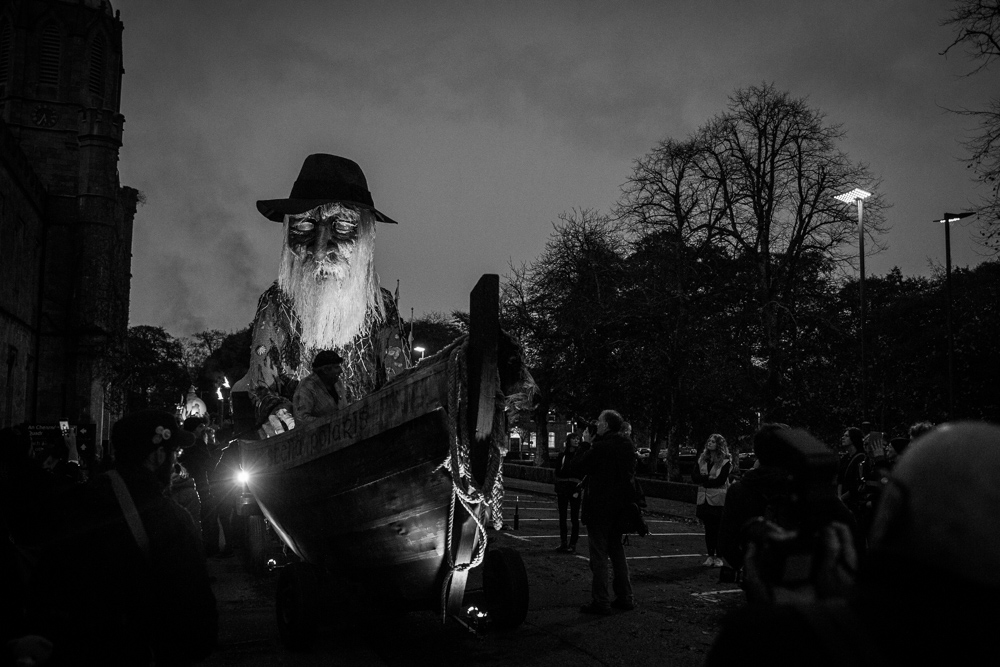
Leaves still cling on for dear colour in the university trees. The whole parade is lined up outside the quad and doing its final prep. This is probably the first time it has assembled in full, costumed, made-up, skipping with wait, ready to roll.
It can’t go overboard. It can’t become the objects of menace that it hints at. But it can resonate with and fill the spirit, and throw a bone to the pagan within.
I’m not sure about being there. I’m an imposter, a parasite, a camera-appended outsider, an invasive specimen.
If you’re in traffic, you are traffic.
If my view is blocked by a photographer’s head, then I’m blocking someone too. I can’t be invisible. To measure, interferes, and to record, is never truly unintrusive. We change when watched. Yet here I have a DSLR and a bag of lenses and here I join more reputable media and here I try to not be there but be there all the same. I’m not sure what I’m trying to get exactly. Just going from one shot to the next, clickity click, aperture down, ISO up, and wishing I could absorb and become the energy.
I sometimes think that in these situations empathy becomes a communal wave, and the social animals within align. Do we need to commune with a spiritual herd, every once in while?
But crowds are tough, and 40,000 is a lot of bodies to cram along narrow Galway streets. So many faces, so many reactions, and all so unique and aware and real. Imagine how the parts of your brain that work on face recognition are right now, zooming from figure to figure in the dark. It can’t keep up; it dissolves and quits. Someone yells at me and it takes me three or four goes to see Morgan there with his family.
Contorted-but-elegant masks. Bangs and belts, thumps, and rumbles. Music and singing and voices over the din. Clapping and roaring.
The crowd must become ones, must interact, react. The audience is part of the show. Et unum pluribus.
Some fill in the blanks with imagination and find fear- yelp and roar.
“Wooooooahh!”
“Aaaaagh!”
“It’s an allllliieeeen!”
Others push out from inside a comfort zone, grimace and grin back, assured that they are solid and correct.
“You’re not scary!”
“Raaaaaaar!”
Some have lost it altogether or never arrived.
“I wanna go hommmmmmmme!”
Tweenage girls notice looks and costumes
“Oh my God she’s so pretty!”
Excited parents ride on the innocent connections of their children.
“Look at the ship Annie! Look at the big dog!”
And then there is the mediation. The extensions. These are our holy digital devices, which we layer between our senses and the world, like necessary appendages. Maybe they form another enormous inter-connected social brain where we extend our empathy. Or not. We haven’t figured it out yet. Too new. Our digital appendages greet us when we wake and lull us to our sleep. We manage our own parade on the edge of being there and not being there. Life, mediated.
What is the most THERE you can be? I mean, in the world. I’m trying my best. Engaging the senses. Using my camera to stare, and hopping along between a group shaking sheets of wobbling loud metal, and a beautiful singing lady with a silver ship for a hat and her own trailing lighthouse. A woman with a smoke-making device keeps pace, and every few dozen metres fires it off. Such a smell! My left eye is still seeing green squares from when I stupidly fired the flash into it at point blank range earlier. I guess now I’ll find out if it really does damage the retina. And all the time I feel I shouldn’t be there, and should be grabbed and flung out. Am I in the moment? Clickity click. Shutter speed too slow, ISO too high, Av, manual, back to Av, autofocus just not on point at f1.8. Where am I?
I shouldn’t be there, in the body of the parade, but once I make the transition from the preparations to the streets, which seems to happen with no border (was I expecting a starting pistol?), it seems like there’s no way out. There isn’t a single chink in the buzzing wall of people from NUIG all the way through town to the Claddagh. Left across the Salmon Weir bridge, right onto Eglinton, right onto Shop Street, down the cobbles to Mainguard, across Cross into Quay, on over the Wolfe Tone bridge, and left off Fr. Griffen to the Claddagh.
The entire city seems to be wearing a costume and has transformed, and stepped into a gap (mind the gap, mind the gap) between by-the-book routine and what-the-hell chaos. It’s a touch Mad Max, with more dancing and less Rocky Horror, with uproarious noise and balls of fire and smoke and masked dancers. There is a beauty, and a grace, bulbous contortions, sudden leaps, intense pauses and frantic swivels.
And then, it ends, like it began, with no distinct finish line or checkered flag, only a gradual breaking up. I’m frazzled as hell and have filled a 32Gb memory card and am a bit drunk on being-there. Still feeling guilty, too. Still wishing I had a lanyard and a title and a tag to give me a bulwark against the idea of me-as-parasite, showing up, tagging along, soaking it in, adding nothing. I assume my pictures will be mediocre.
And I’m thinking about the way we put devices between ourselves and the world or if the devices are just more of the world. I’m wondering if we can fully immerse or if we could ever fully immerse or if the noise is just noise and we need to remember that we can tune out and see that the country is richer than it ever ever was. That the sense of foreboding is itself an indulgence. I’m somewhere on an edge under a squadron of diving thoughts. Feckers. One of them is that all witnessed things need to be given space, and put on a pendulum not a pedestal, not held up as pure, atomic, definitive episodes, only nudges to a scales. Hyperbole. Hyperbore.
The water in the Claddagh quay is calm and still. The roads are back open to cars again. The city has dropped the costume into the River Corrib or the Atlantic (where does one end and the other begin?). Buskers return to the streets. It’s still not raining, but grows cool then cold. 40,00 people need to be fed. It is a full-house Bank Holiday Sunday night.
We have gone to an edge, signposted, planned, and policed, and now return back to the safe routines. But we will go edgewards again, one way or another.
Dull, damp, October. A pheasant in the middle of the road. I always have the wrong lens, and he flies off before I can find another. The road ends, a track begins. Fading signposts point out the Western Way. A gaggle of houses perched over the Corrib. Honeysuckle.
Leaves on the ground turning to sodden mush. I make slow progress, booted, stopping, stooping, trying to see, to grasp. Grasses, mosses, ferns, lichens, mushrooms; endless details of the mundane. I do not know their names. I am a surface junkie. I can name some of the trees: birch, beech, oak, chestnut. Names are surfaces too.
A pair of dark-haired donkeys. I scratch one’s ears. Sheep stare from the ruins of old homes. Forestry, some cut, with saplings growing in plastic tubes. Streams, pools, and the lake. Surfaces and depths. I wonder is there anything there to see, or if I am just more water streaming into a pool. My boots sink into a soft hole: I have left the road, clambered to the shore. A tree has fallen on the edge, still living, laid out in the waves. Maam rises to the North.
I stop where the ground turns to wetter exposed bog, and head back up to the car. It darkens. Raindrops. Am I taking the same photograph again and again? If you keep going back to a place, do you tread any deeper? It is important to re-tread, to exist in spaces at different times, in different moods and seasons. The water will have changed. Yet in our minds we carry static snaps, snipped from one visit or compressed from a mass of passings. It is so hard to see the places where you commute every day. It is hard to see what seems to be always there. It is not always there.
We need to go back when we can see the change, or try to change how we see. We change regardless, without pause, without effort, and it is hard to catch. Maybe it is an accumulation, or maybe a flow: a river path eroding lines through fracturing terrain, down to some waiting pool.
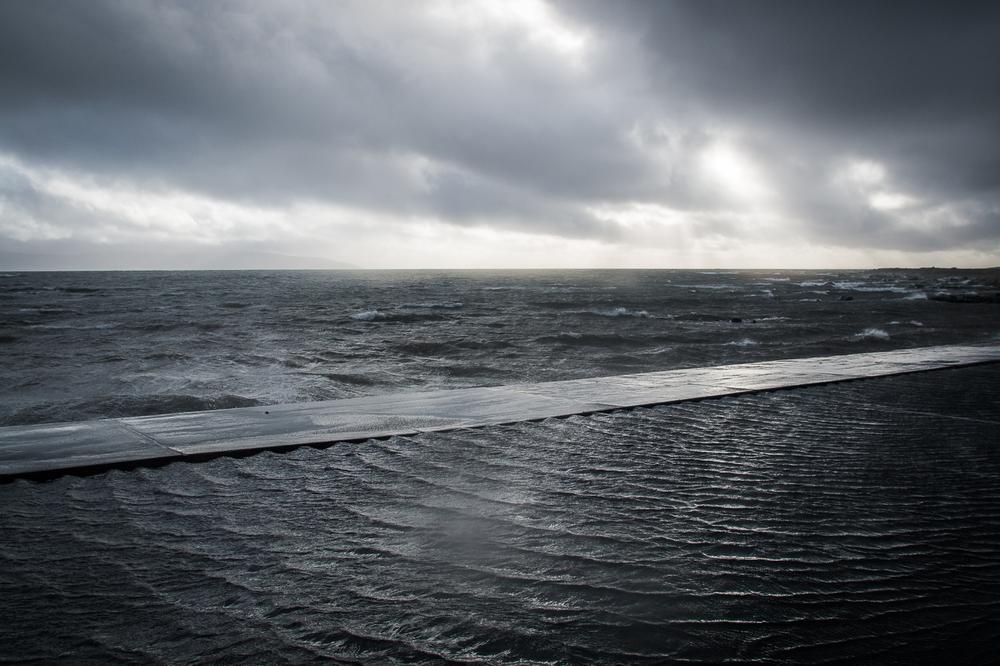
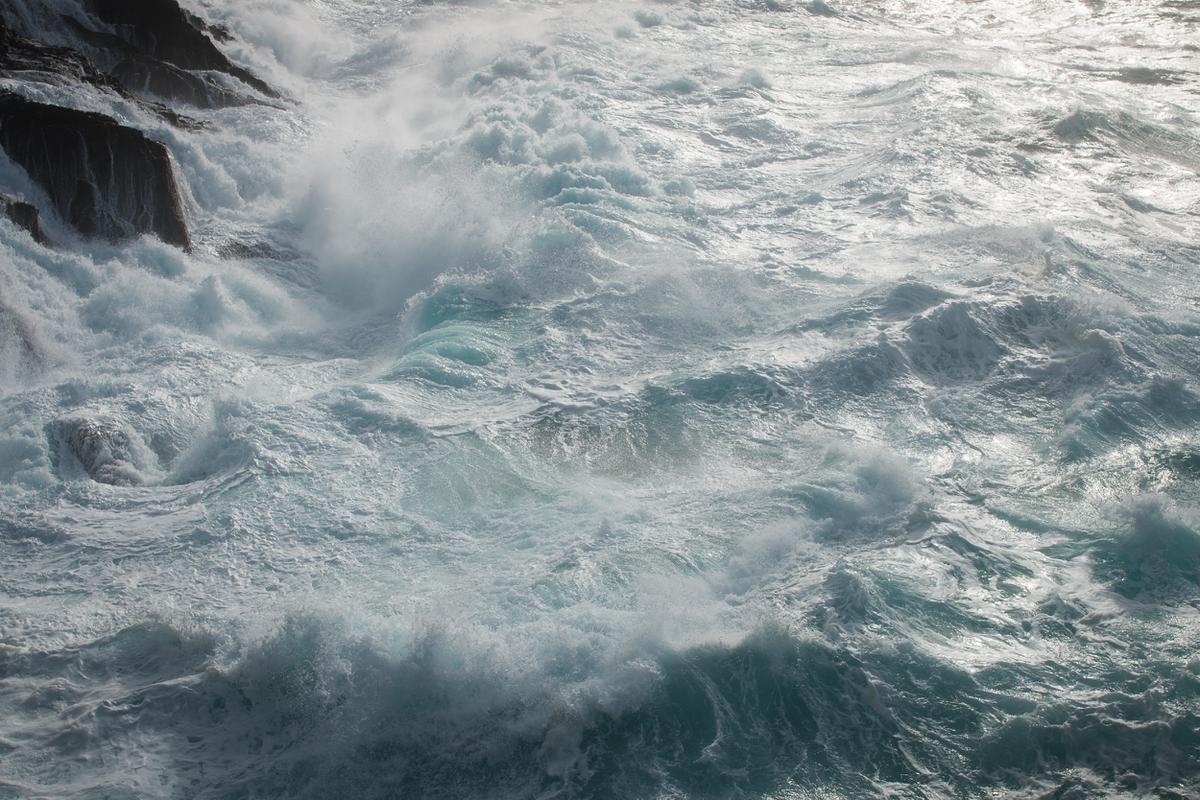
Is it here yet? We are plugged into radio, tv, boards.ie, facebook, twitter. RED warning. refresh, refresh, refresh. Cork’s getting a hammering. 169 km/h way down at Fastnet Rock. Waterford. Tipperary. The eye is tracking up the west coast. Is this it? Now?
Lough Corrib is churning. It’s raining full pelt. Up in the high bogs the clean new cloud-scraping windmills continue to turn. Water whips from the blades. Trees bicker and bend. Bend and bicker. but they do not fall. Midday and then beyond. The skydome rotates; gales suddenly flip from South East to South West. That means the centre has moved north?
So, have we escaped the worst? The trees flail but don’t fall; rattle but don’t collapse. Safe enough to venture out? Out to the coast. The sea is amok amach, and high tide has already passed. Rossaveal, Inverin, Spiddal, Barna, Salthill. Seaweed strewn.
Thousands of dead worms near the prom. The car park has been flooded again. Giddy teenagers kick balls, soak each other, bounce, record. Everyone is recording, on phones and cameras. Me too, me too. Updates, updates, updates. Is it done?
It has been moving north. Darkness falls. Seems windier in the dark. News again. Three people dead up the country, where trees did buckle and split and crack and fall. The real deal. Three hundred thousand homes without power. Thirty-five Lime trees knocked in Centre Park road in Cork. Would we complain if nobody are hurt? Why are we so angry at those who went swimming, surfing?
All images and text copyright Donal Kelly. Don’t use without permission.
September. Wave stripping wind. A drive back to Cleggan. Missed the early ferry. Was stuck behind buses thought about overtaking, but nope, pulled the plug on aiming for the early ferry and had coffee in Clifden. Made ferry 2. Bang, bang, bang into the waves once it left the harbour.
Windmills on the hills slowly rotate in the August breeze. John Sullivan, eighty-plus, with a healthy shock of hair, hops onto the stuttering old Massey Ferguson, his back injured and twisted from years of hard work on the land. But he is still nimble, like the tractor; chipped and scraped, scarred and weathered, but with engine alert and the wheels turning.
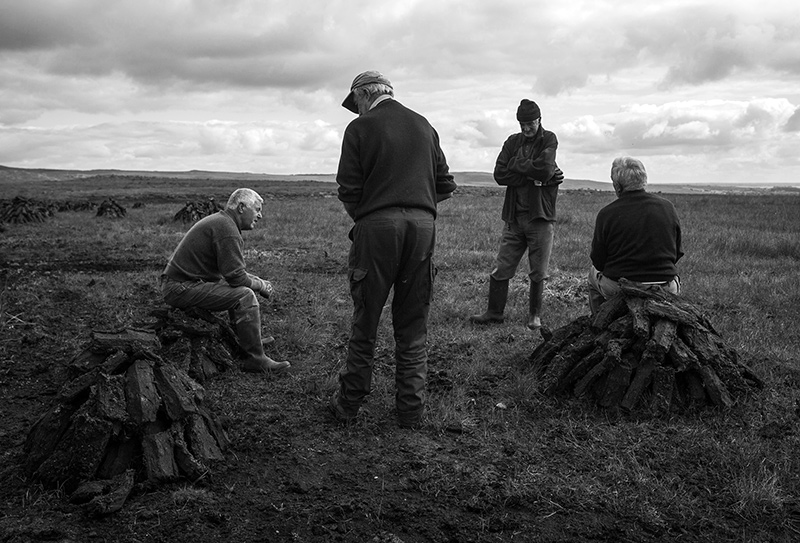
The year after winter started with a good dry spell, but little turf was cut, and the weather broke again, and a lot of the plots weren’t cut until after. But there was time, and even in the wetter spots enough weeks and drying to cut, turn, foot, stack, and now bring out and haul home, for the final shed-stacking and eventual burning, the sods and clods and dust.
It is nearing the end of summer, and time for that final part- bringing the turf home. It is right now built into three-feet-high stacks, and is in good condition, though patches of the ground are yet soft and wet. It will be brought from the soft inner bogland using the Massey, with its extra wheels and light weight able to navigate the unsteady ground. A heavier tractor with narrower wheels would soon sink into the earth.
The turf is then brought to a tipping point where it can be loaded into a trailer on the road, which is then driven home.
Summer was a long haul of slosh and soakings, and then finally in Autumn dry stretches fuse into a few weeks of easy goings and comings, crunch of leaf underfoot, mudless soles, no winds worth their leaning into. Come November 1st, and the temperature strays above 15 Celsius.
That trip to the Maamturks was long on the list of lists, and given the day that was in it, a Sunday morning after a Hallow’s Eve spent away from the costumed beering, costumed leered and costumed leering, bonfires and bangers and bolt-scared horses, my waking settings conspire towards endeavour. Get up, you lazy lump… drag that dull clump of self from its bedding to wander under some notion’s bidding.
The plan: drive to Mamean valley from the East end and lock a bike where the road gives way to track and drive back to the midpoint of Maam valley and hike over the mountains and use the bike to get back to the car. Simple.
Glutton for the punishment of simple physical effort: do we exercise or exorcise them demons? A mode of distraction that sometimes, somehow, reduces the ignoble noises of life to lost feelings of streamed purpose.
These are barely lumps in the ground to a mountaineer, but to my lowland condition they stress leg and lung. I have a map, or better, a watch that stores a plotted route, sensitive to the beamings of GPS beacons, some 20,000 km above the pale Blue.
Trig stations mark fixed points for geographical surveying
It’s a little bit of dark, a little bit of chaos, a lot of imagination, and a stick to shake at the arriving winter. Dwell in the dark, take refuge in the symbols, there is energy and density in the bulbous, the twisted, the animal, and the shadow.
The first set of black and white photos were taken with a Canon AE-1 program with a 50mm f1.4 FD lens on Ilford FP5 Plus ISO400 film, developed with Rodinal (8 mins, 25:1) and scanned on an Epson flatbed.
The second set were taken with a Canon 70d, Sigma 18-35mm f1.8 lens, mostly at ISO 800, some at ISO1600. A 430 EX II flash was used via Yongno ETTL wireless triggers.
All pictures by Donal Kelly. Do not copy or use without my permission: they take a lot of time and energy, yet I don't like how watermarking or tiny images are simple crap to look at.
It is the last race of the road season for me, but I don’t know it.
I don’t know it until halfway through stage 2 when the bunch is going down a straight descent into Dungarvin. A rider comes down somewhere in front on the left, and a dominoes game of falling cyclists begins. Given the speed there isn’t much that can be done. I swerve round a few bikes and riders and water bottles, then a white frame bounces up in front of and bang.
So instead of getting a kicking on the last two stages, I take some photos instead. I brought along my Canon eos 1n that’s almost as old as myself, and a couple of rolls of Kodak Tri-X. Before going to wartch the finish of the last stage atop the Nire, I added a roll of Kodak Gold 200 courtesy of Boots.
STAGE 1: GETTING THERE (+100km with hills)
Stocking up on suppliesClassic wheelsArchitectural Triumph?Derek ready to roll; the stage start was delayed by 20 minutesPost stage 1, eating pasta with a plastic spoon.Selfie after stage 1, finished in the bunch, lots of guys ‘up the road’Gear drying after a rinse. It was still wet the next morning.Clonmel, though this is actually in Waterford on the South bank of the SuirThe River Suir got some fancy bridges with flood-proofing and snippets of literatureSuir Island, West WardClonmel Rooftops, home to pigeonsClonmel Window display, flowers and curtains
Stage 2: LUMPY ROAD STAGE
5 hours in Clonmel A&E clogging up the place with other guys who came down in the spill on the descent into Dungarvin after less than 40km.
Stage 2 didn’t go exactly as planned (Samsung S2 + Instagram filters).
Stage 3: CRITERIUM; WET WET WET
The criterium is neutralized for GC due to monsoon rain. Riders only have to complete 20 minutes to stay in the race, and most choose to pul out after this.
Finishing straight for the critThe streets are wet and shinning in the rainThe strong riders figure out the best lines early on and stick to them lap after lapUCD rider walks back after falling on a bendPaidi O’ Brien, centre here, is in the front split, while most other riders pull outJLT Condor’s Luke Grivell-Mellor gets a gap in the last few laps and goes on to win comfortablyRiders had to complete 20 minutes to stay in the overallRonan closing a gapDaire Feeley putting the power downMurky night for racingFast pace despite the monsoonLined out at the frontGetting back to shelter after the finishLicence to SellThe Ice Cream ConeHotel EntranceInterior, post raceClonmel Rooftops at nightSuir Island at night
STAGE 3: THE VEE AND THE NIRE
Window View of ClonmelMorning Self(ie)Open SpaceMy 19th Century airbnb home for the weekendRiver SuirPre-race chatAidan gearing upDerek heading to the startReady to rollRace Start
Clonmel Streets on a Bank Holiday Monday
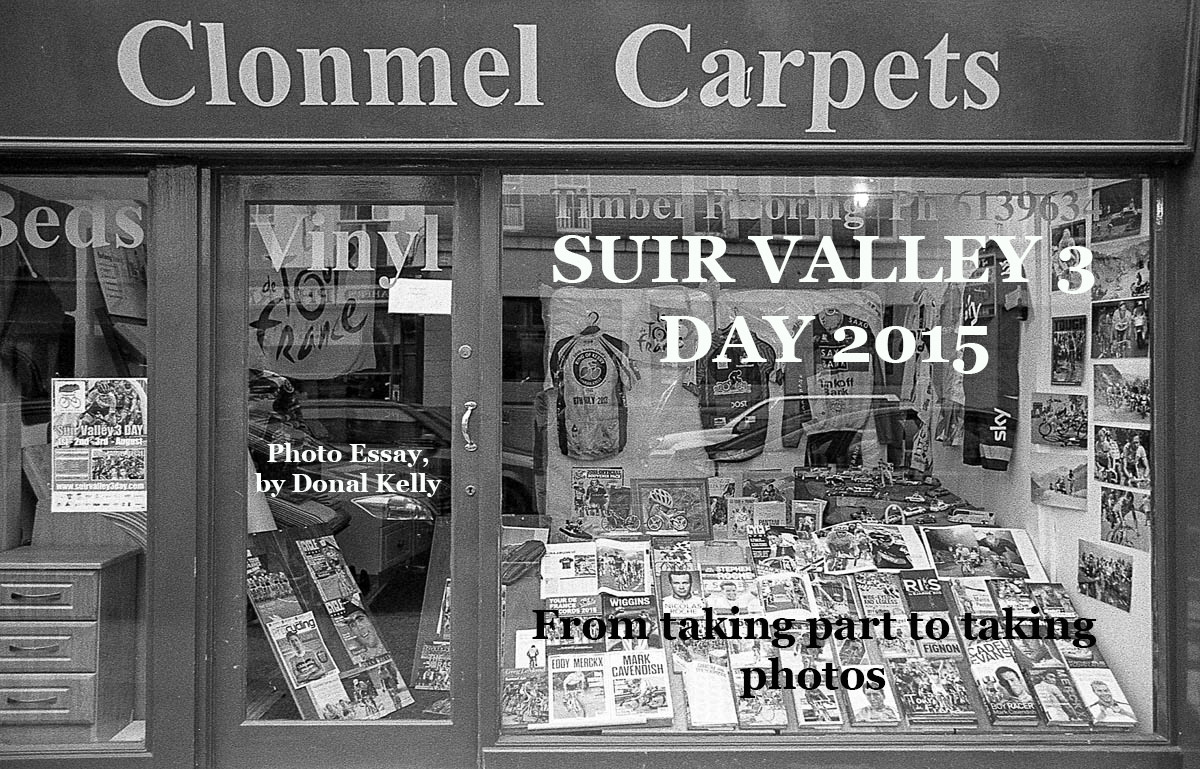
Abbey StreetTown Hall12 W. MagnerWindow DisplayExpensive facade and bell towerChampionRight onlyR. O’Donnell Select BarNo collections to the right of this signWindow reflectionRyan’s Butchers 1Ryan’s Butchers 2; closed after 109 yearsButler’s BarHouse of Lourdes (spot the cat)Liam DalyLe JardinPower & Co.The Men of ’98The Golden Harp, LoungeClonmel Carpets window displayClonmel CarpetsKOM Start on the race-finishing Nire ClimbOn the Lower SlopesTeam CarEd Laverick (JLT Condor) reachs the top with a minute over the nearest rival, winning both stage and overall.SecondThird, the wearer of the leader’s jersey at the start of the stageEoin Morton from UCD finished well on the climbDaire FeeleyNational Champion Damien Shaw (Team ASEA) rode aggressively on the final stage to try and get clear before the climb but was hauled back before the Nire climb by the teams of the other GC ridersRonan finished strongly on the 10km climbFinishers arrive in ones and twosDerek after crossing the lineAidan after the stageThe Recovery beginsPrize giving pub