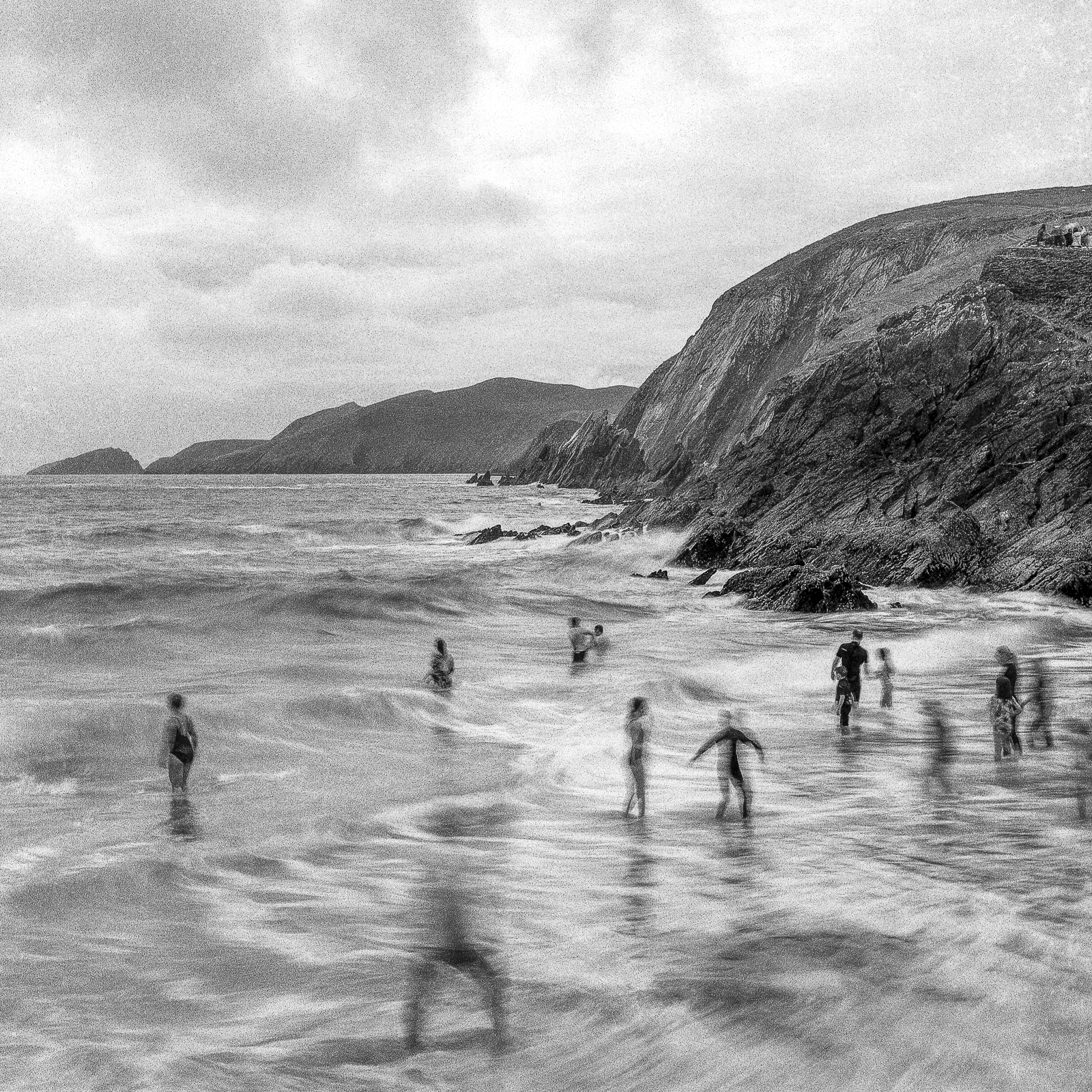
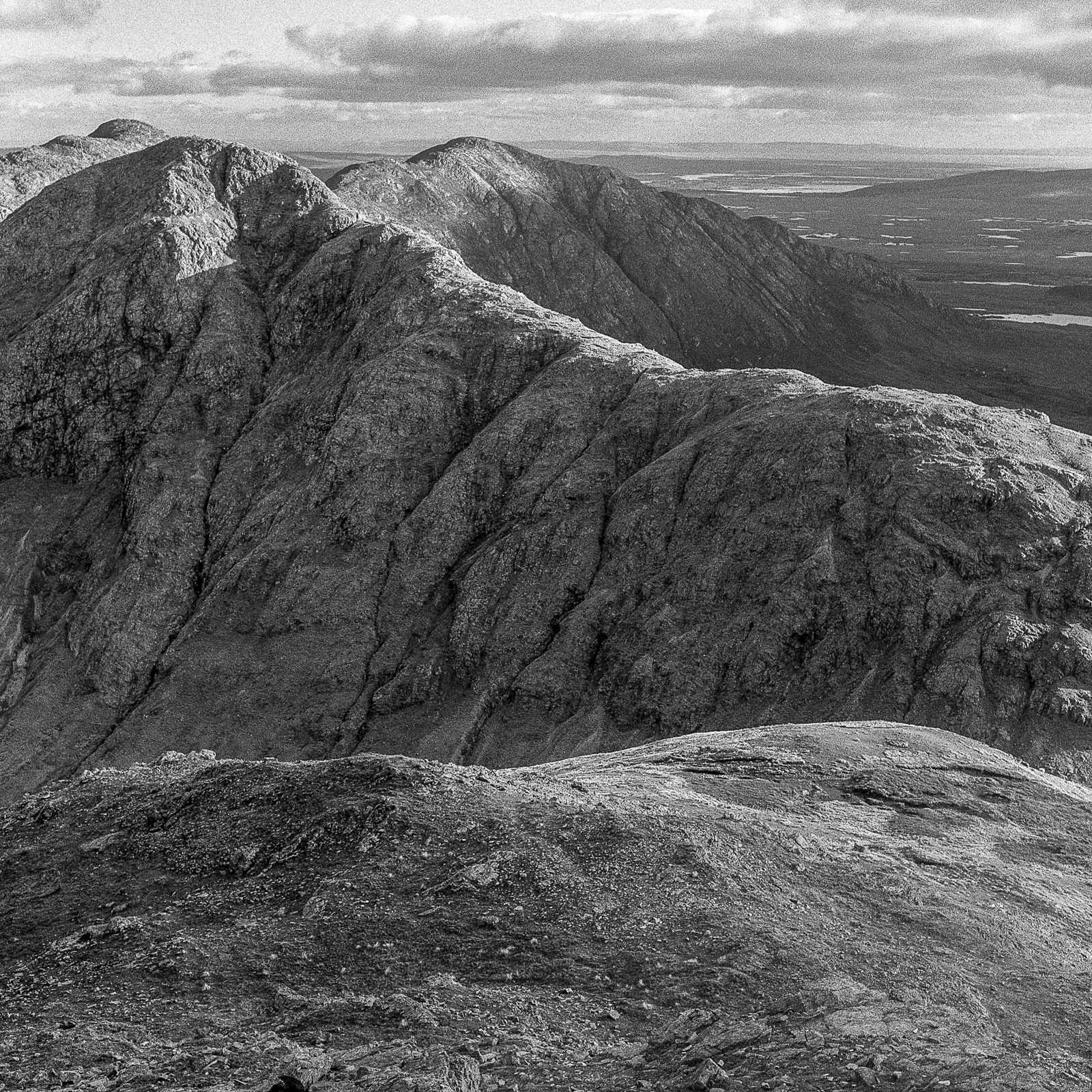
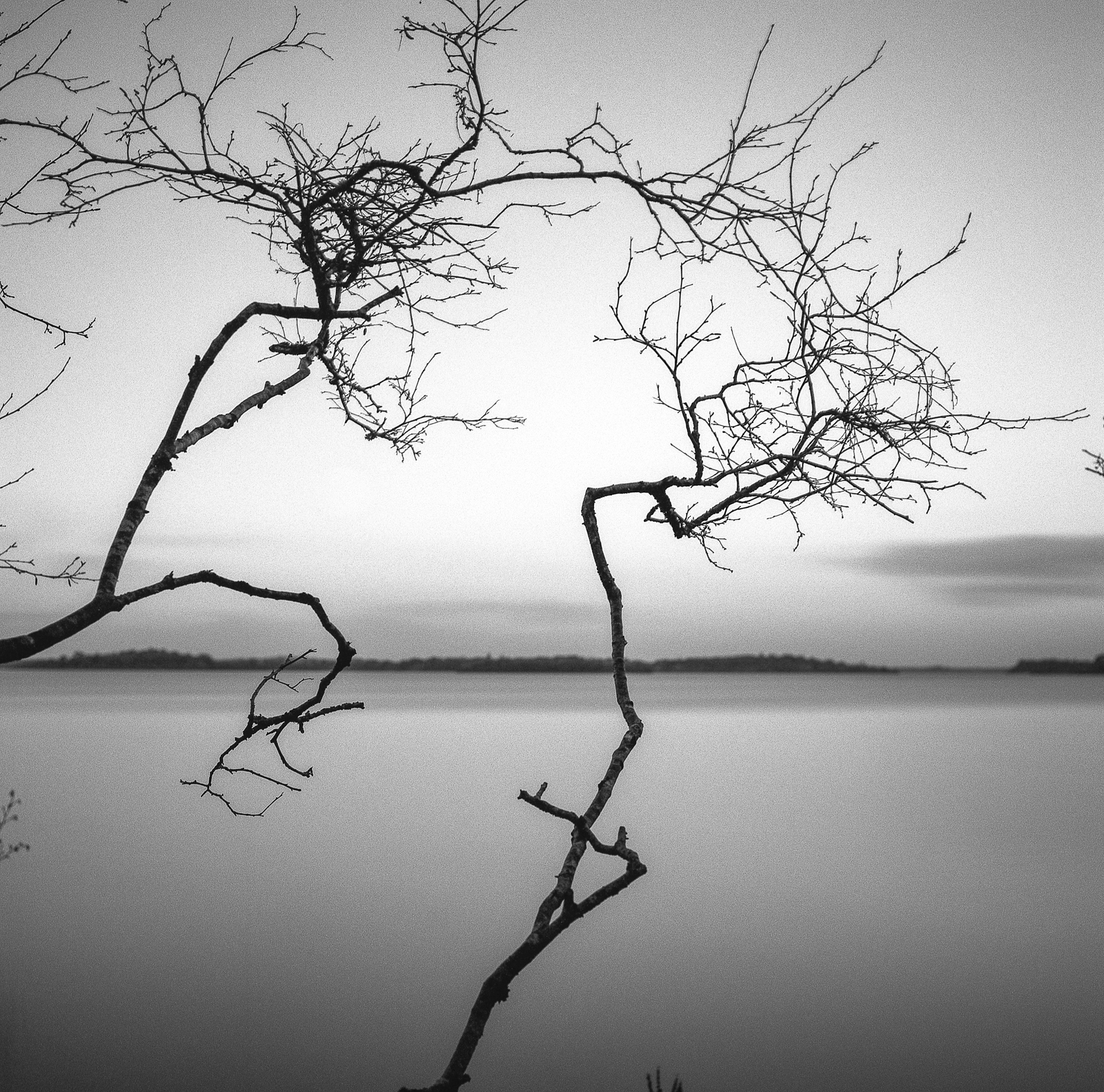
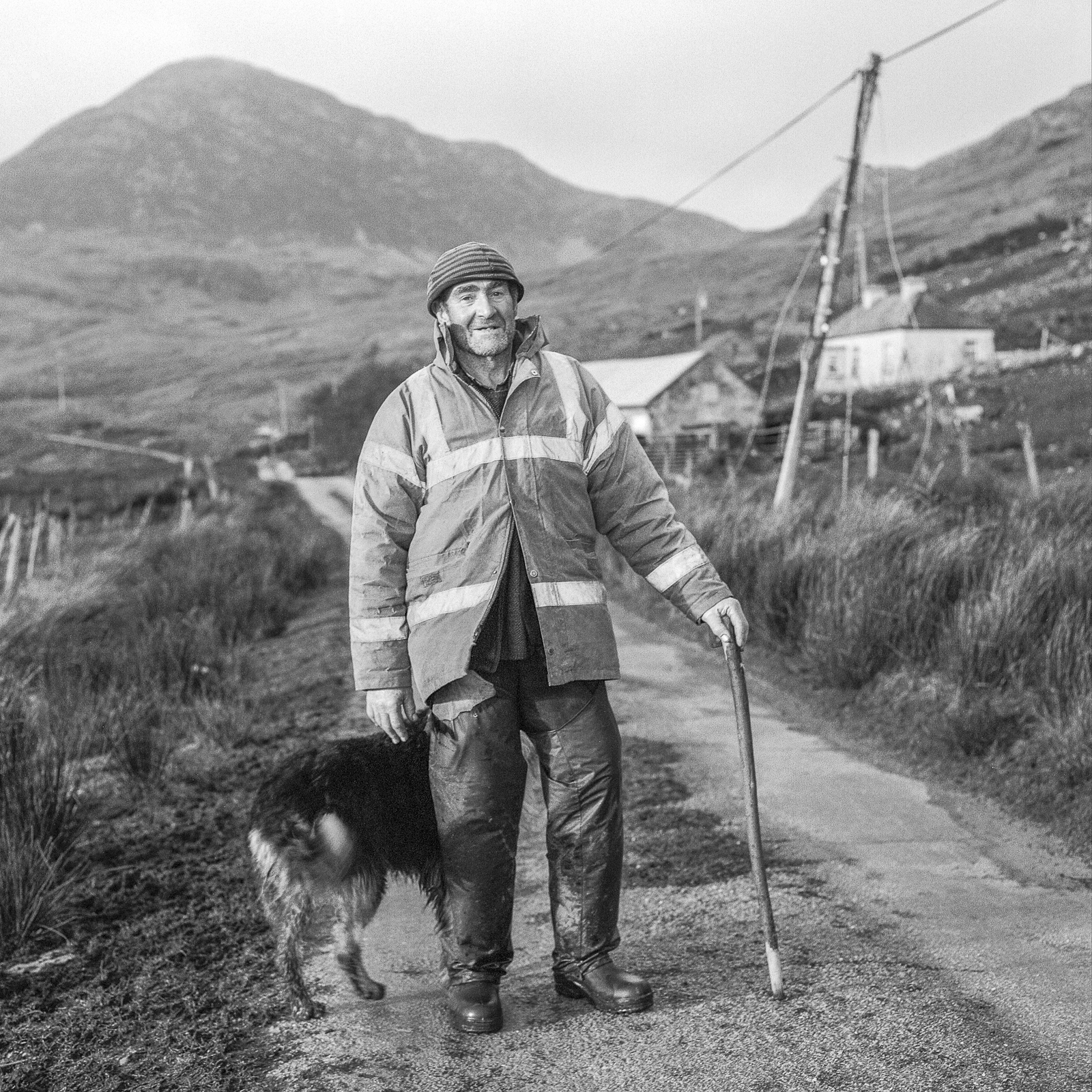
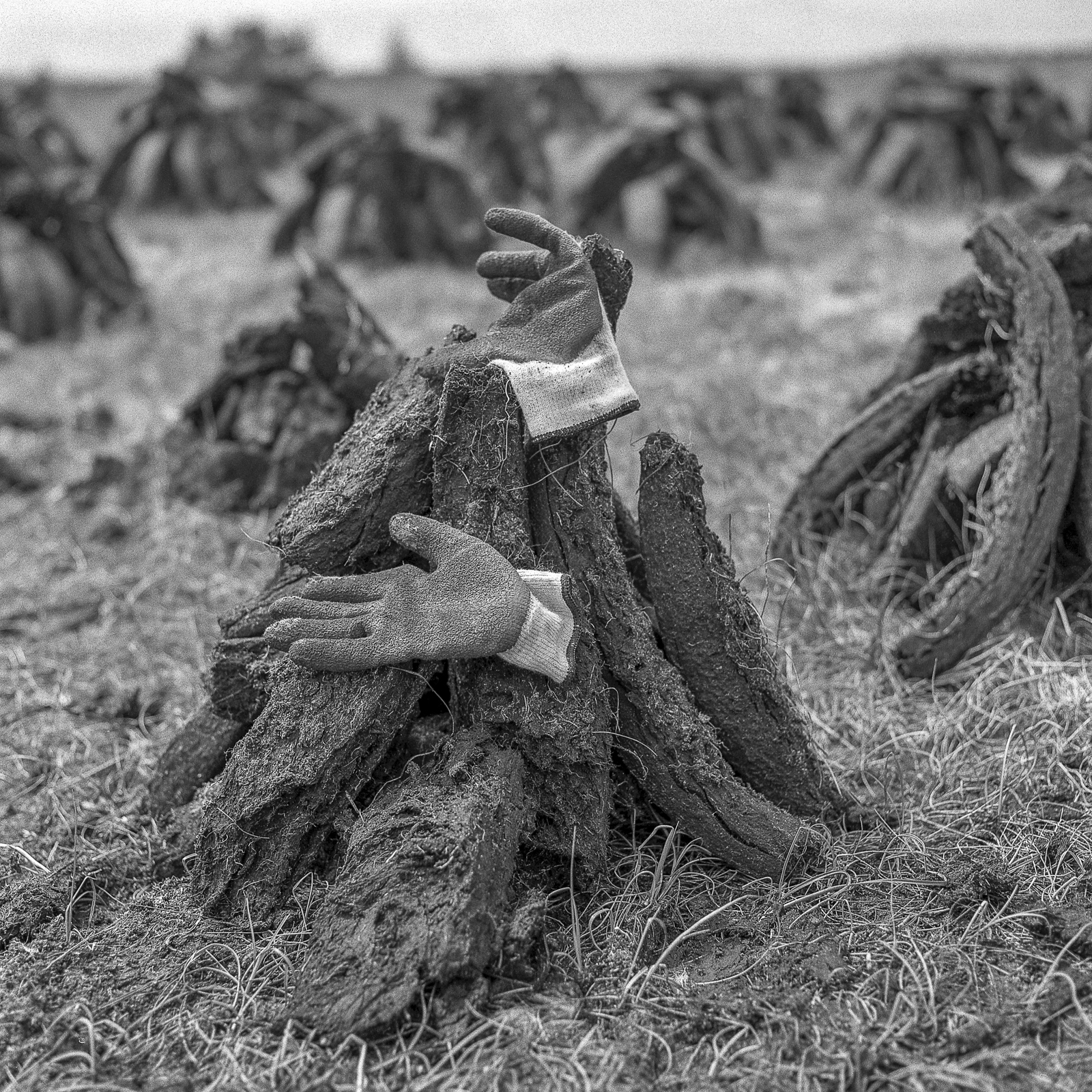
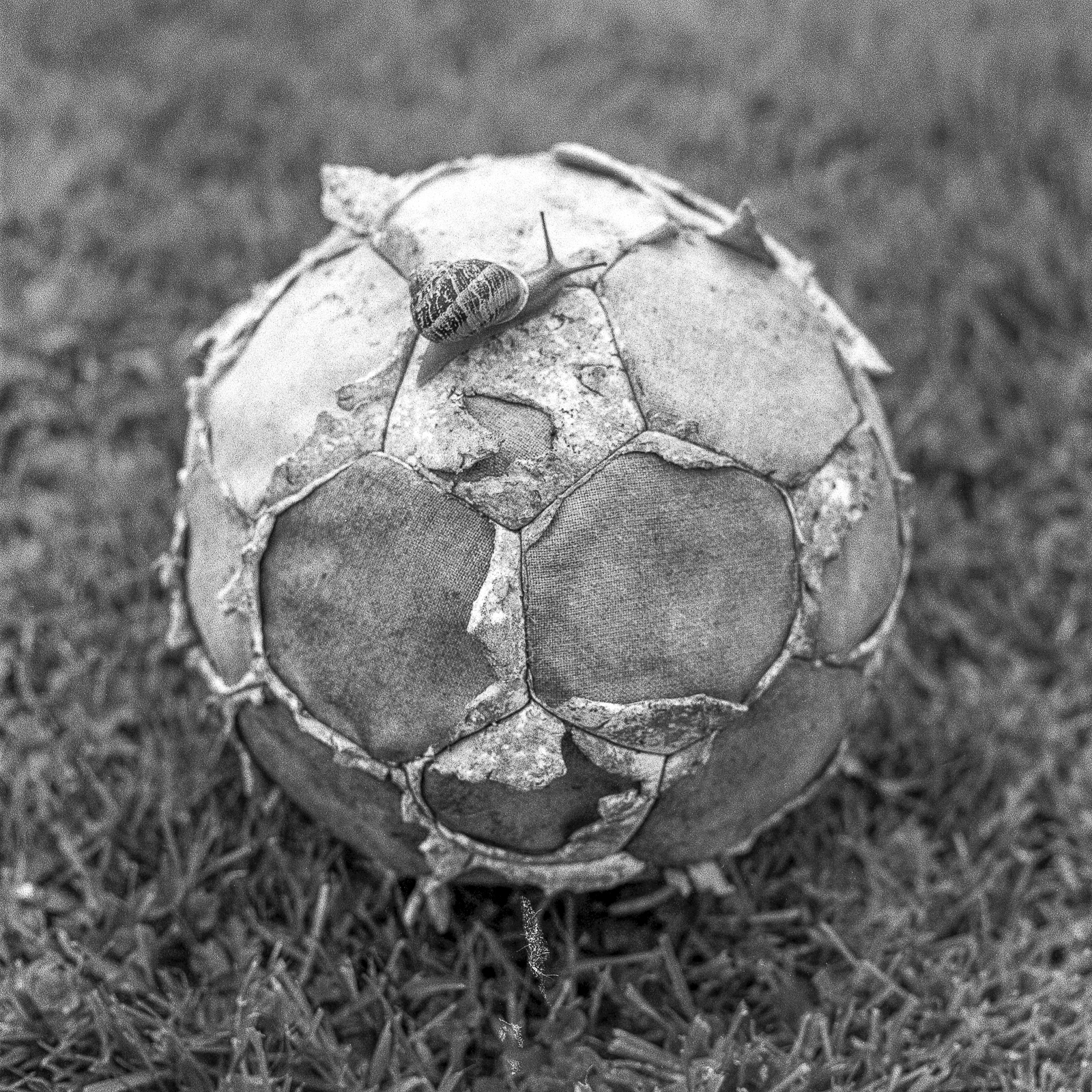
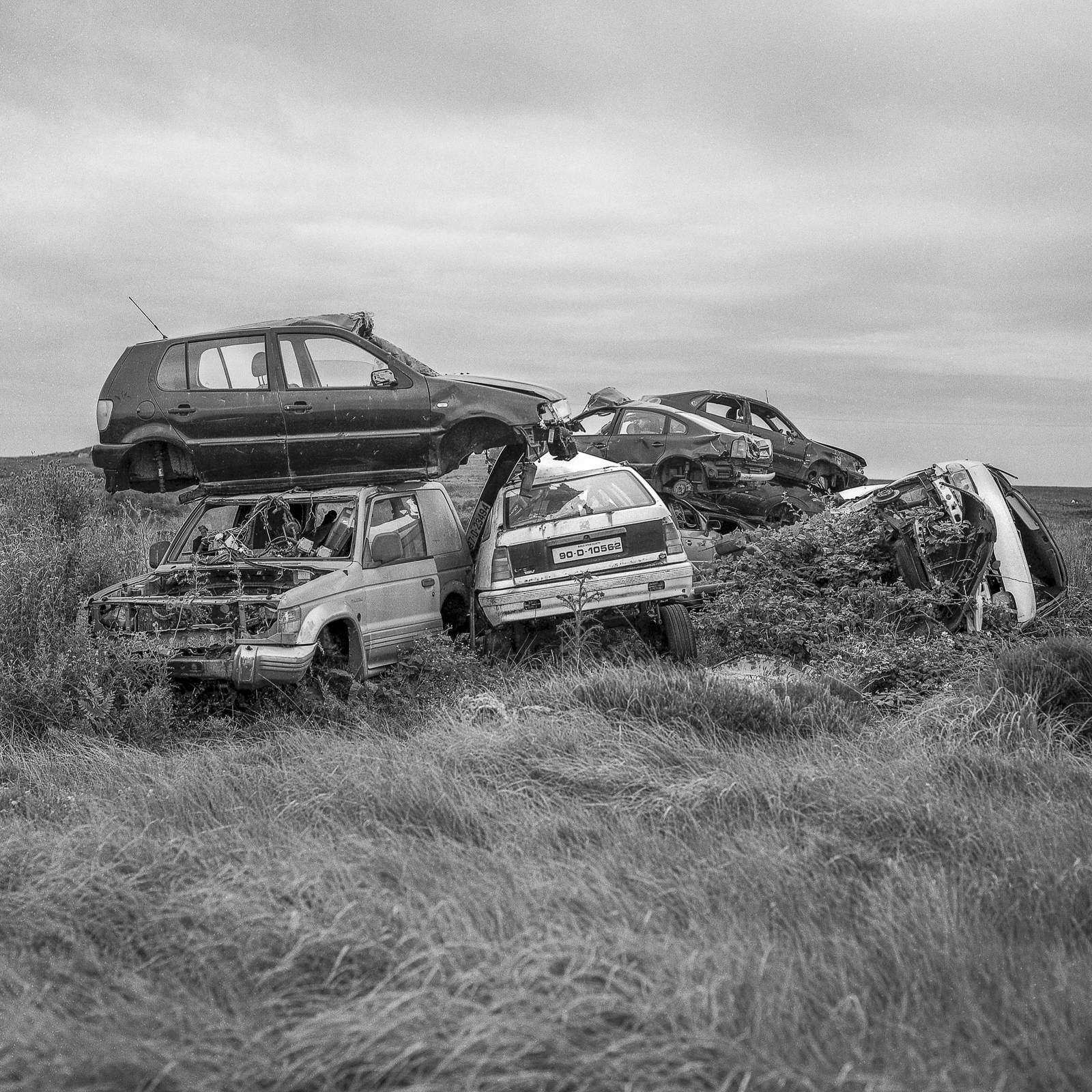
Walking Edges was shown by Outset Gallery, Galway in Spring of 2024, curated by Tom McClean. Photographs were selected from the many trips I had been making in the landscapes of the west, long days of walking and looking. These photographs were not taken with any singular vision or expectation of exhibiting, but as they accumulated, they took on their own assertive energy. At some point, it is almost an act of respect to share art, even if there is always a taint of self indulgence, too. And an act of disrespect to hoard them, or put them on on fleeting digital feeds.
On so many of these walks, I felt lonely, adrift, and uncertain. Only afterwards does the moving perspective render it solid, almost like the rendering flat of the world by a photograph.
All of the photographs were taken on medium format film, all on a square 6cm x 6cm format, and all using an 80 mm lens. The older ones were all shot on a Hasselblad, while newer ones were shot mostly on a Mamiya C220 that was upgraded from a ‘backup’ role after the Hasselblad was damaged via a collision with a rogue wave down on the north coast of Clare.
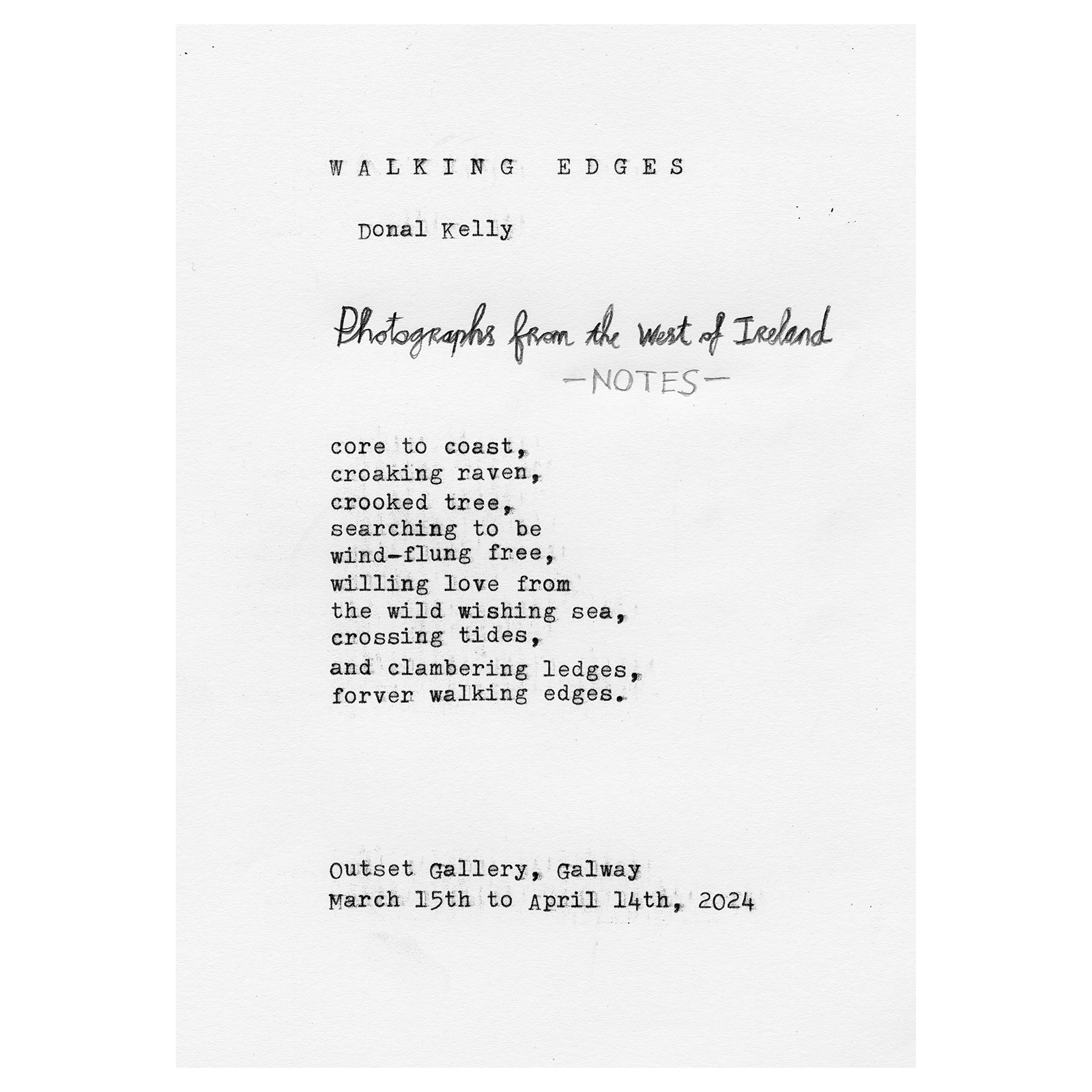
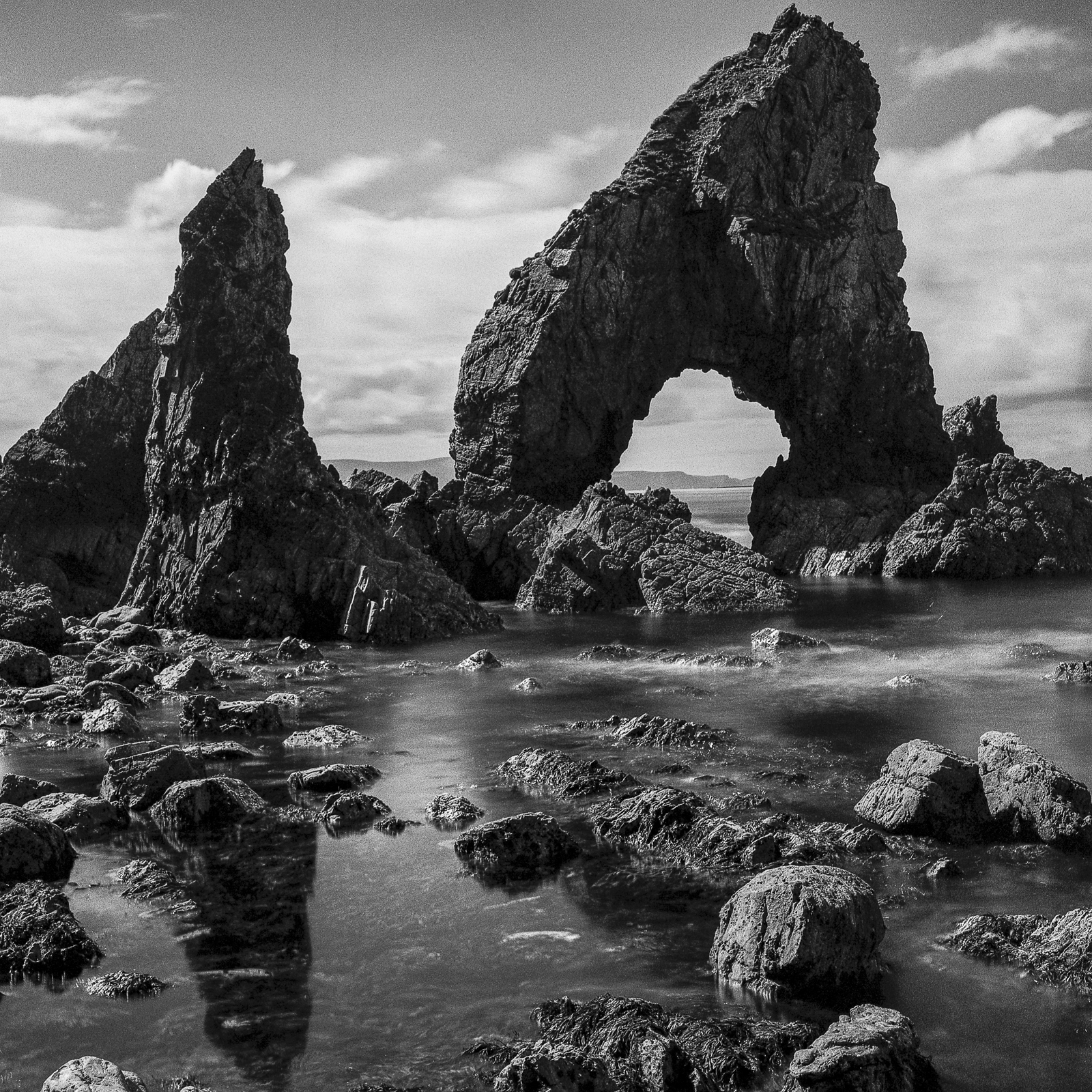
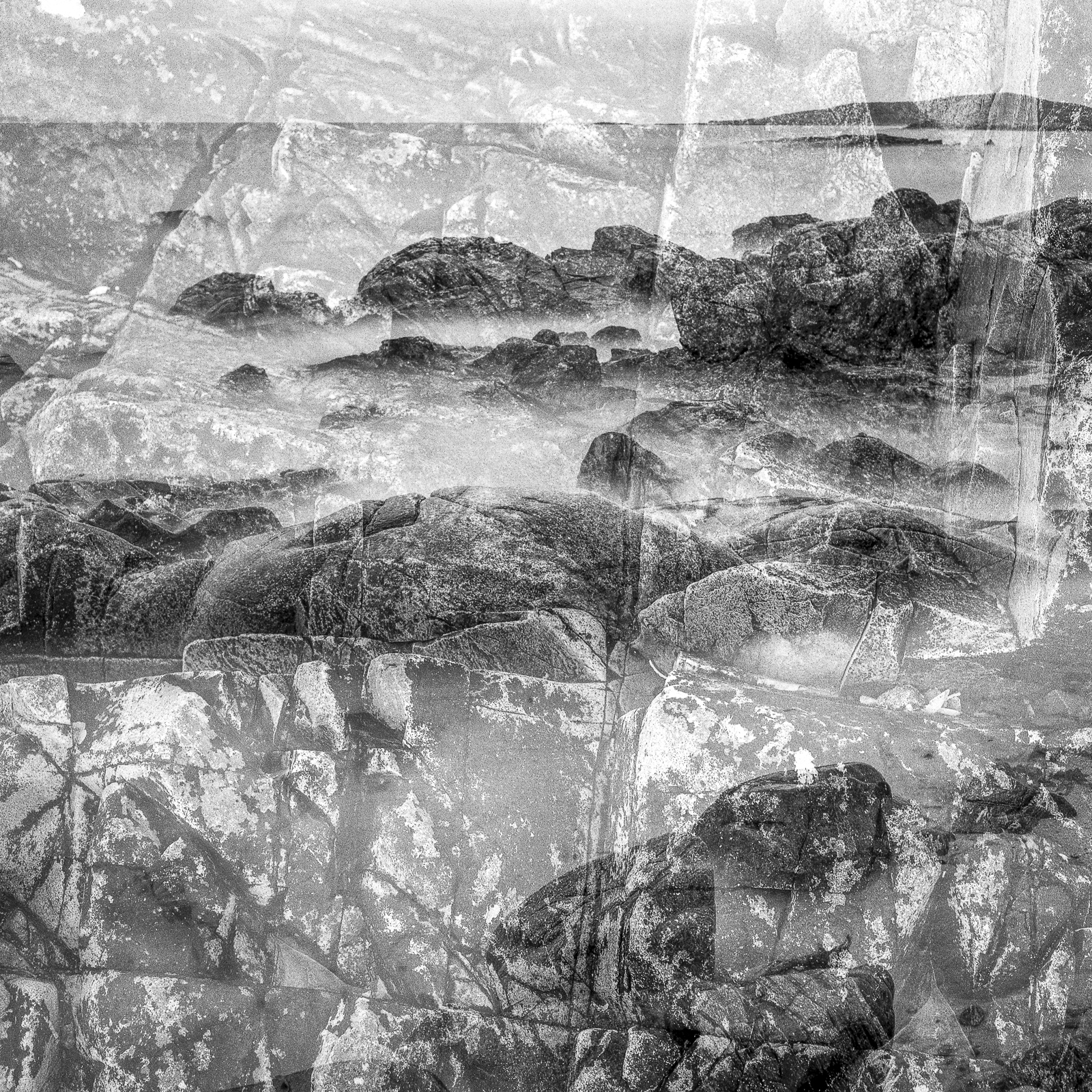
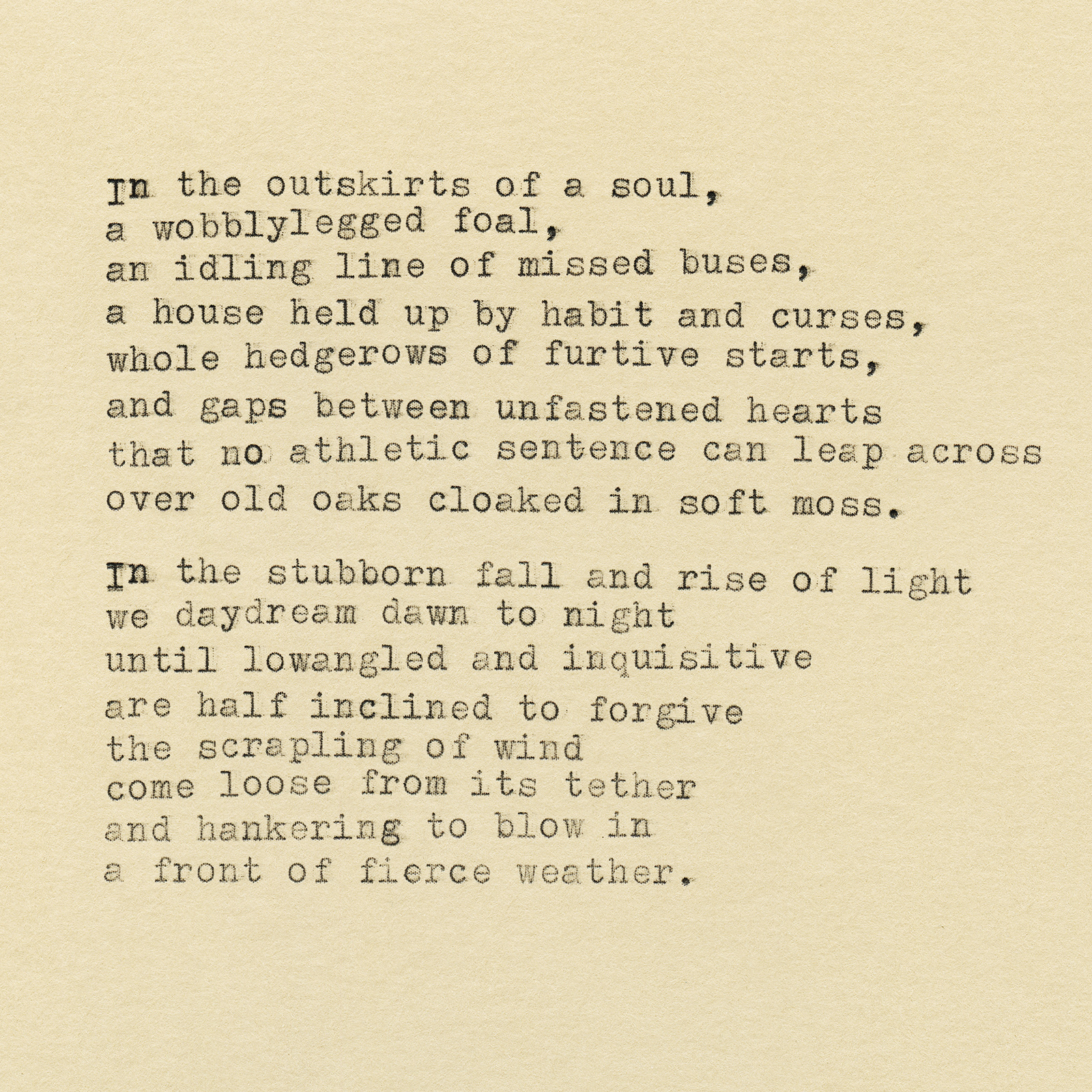
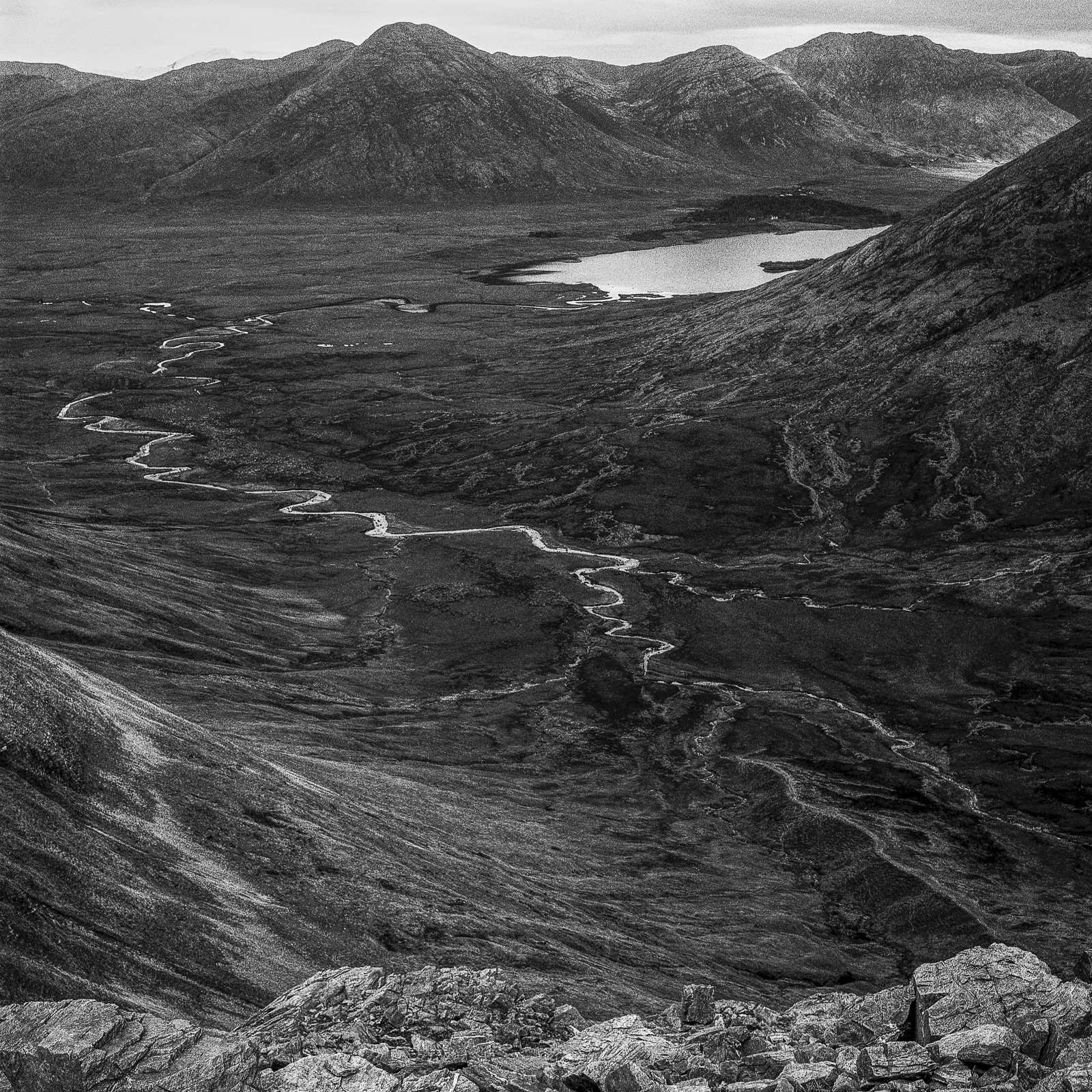
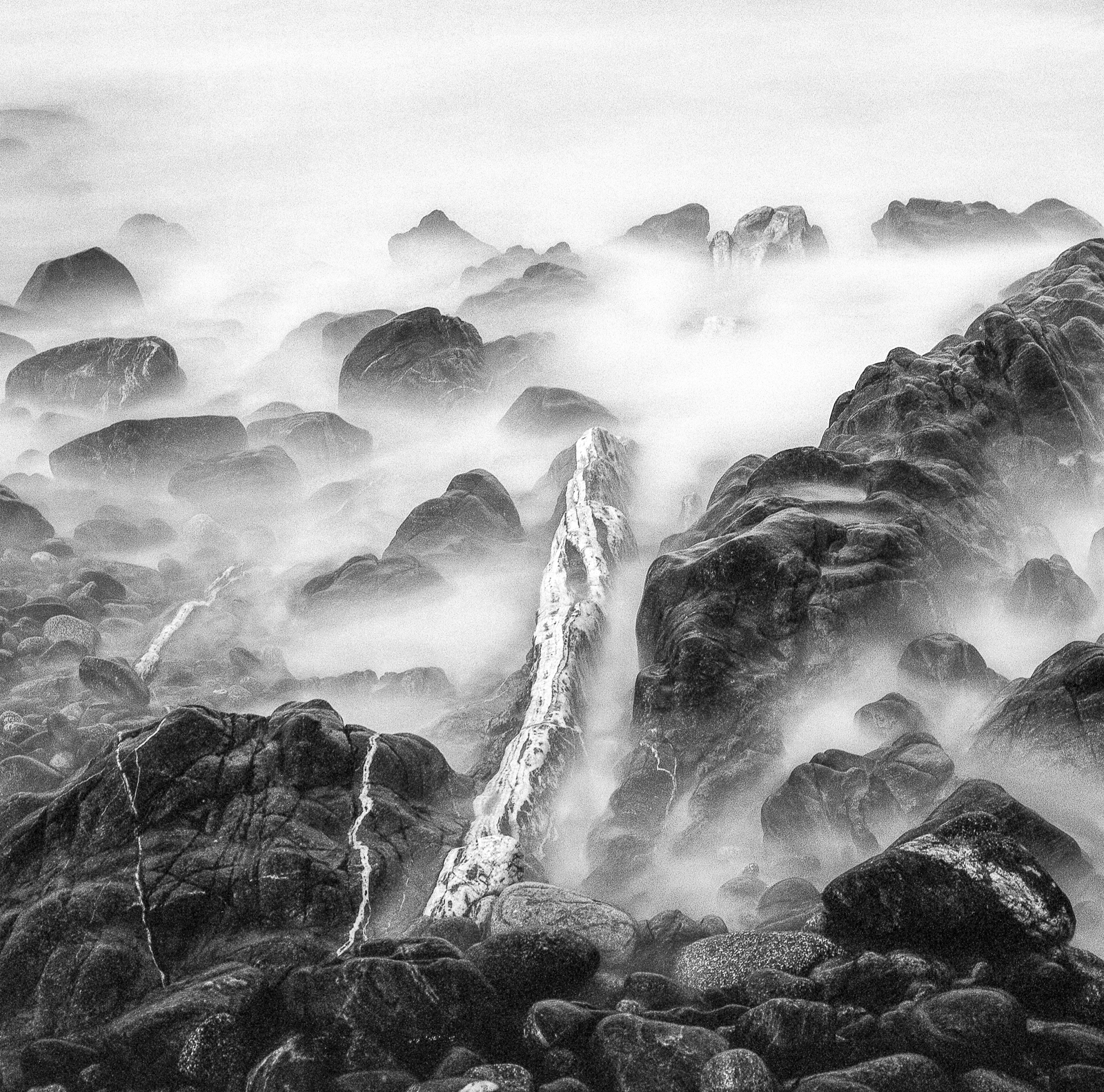
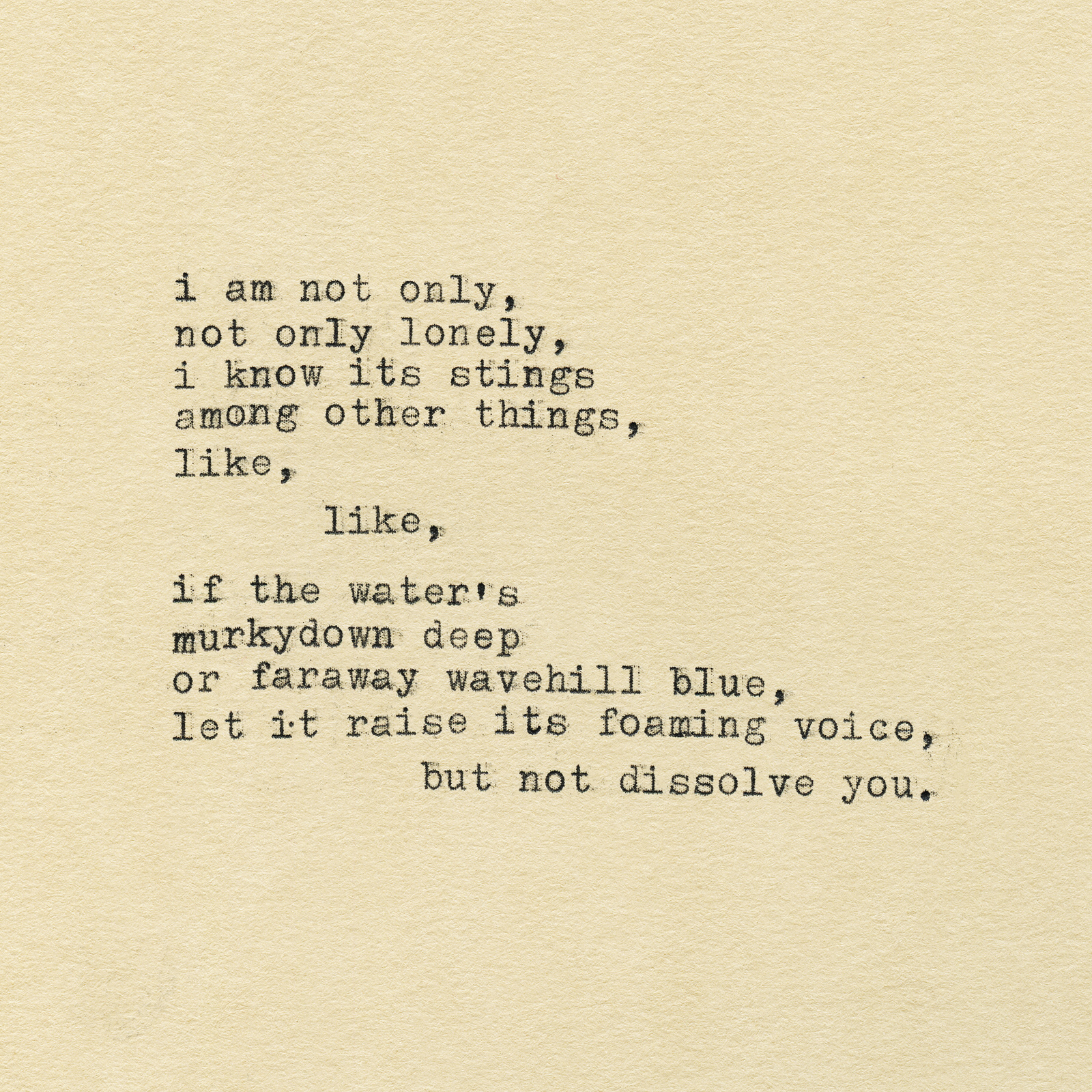
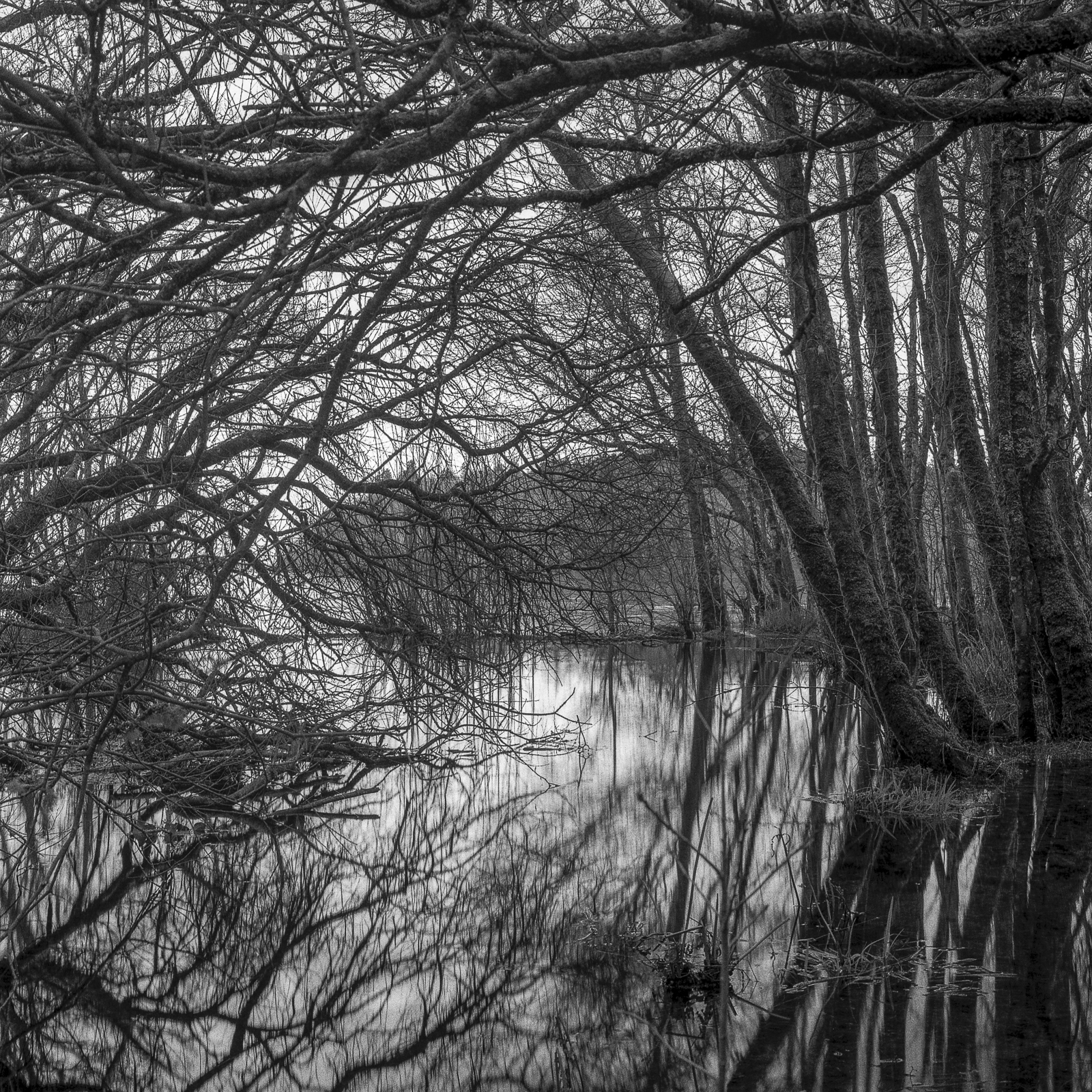
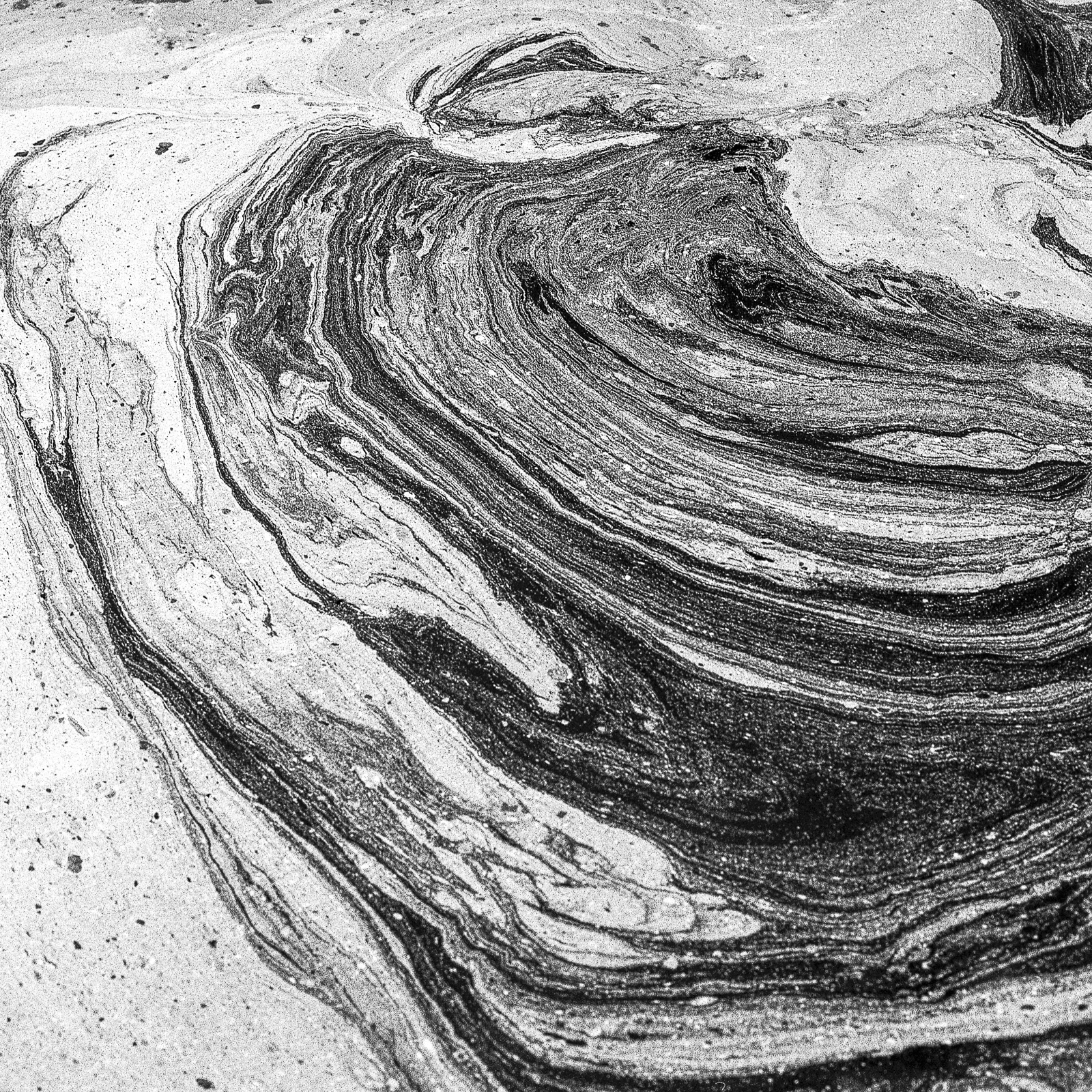
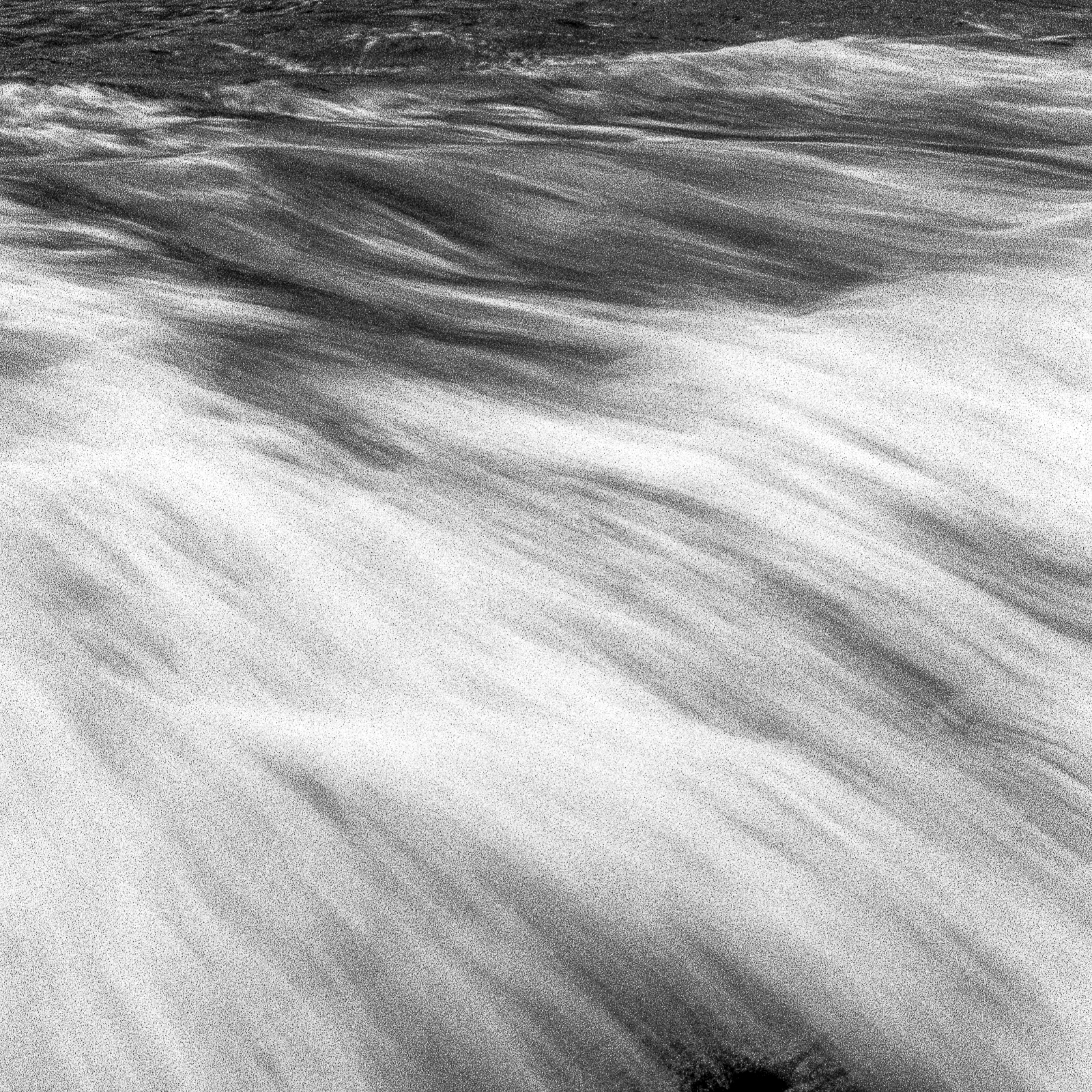
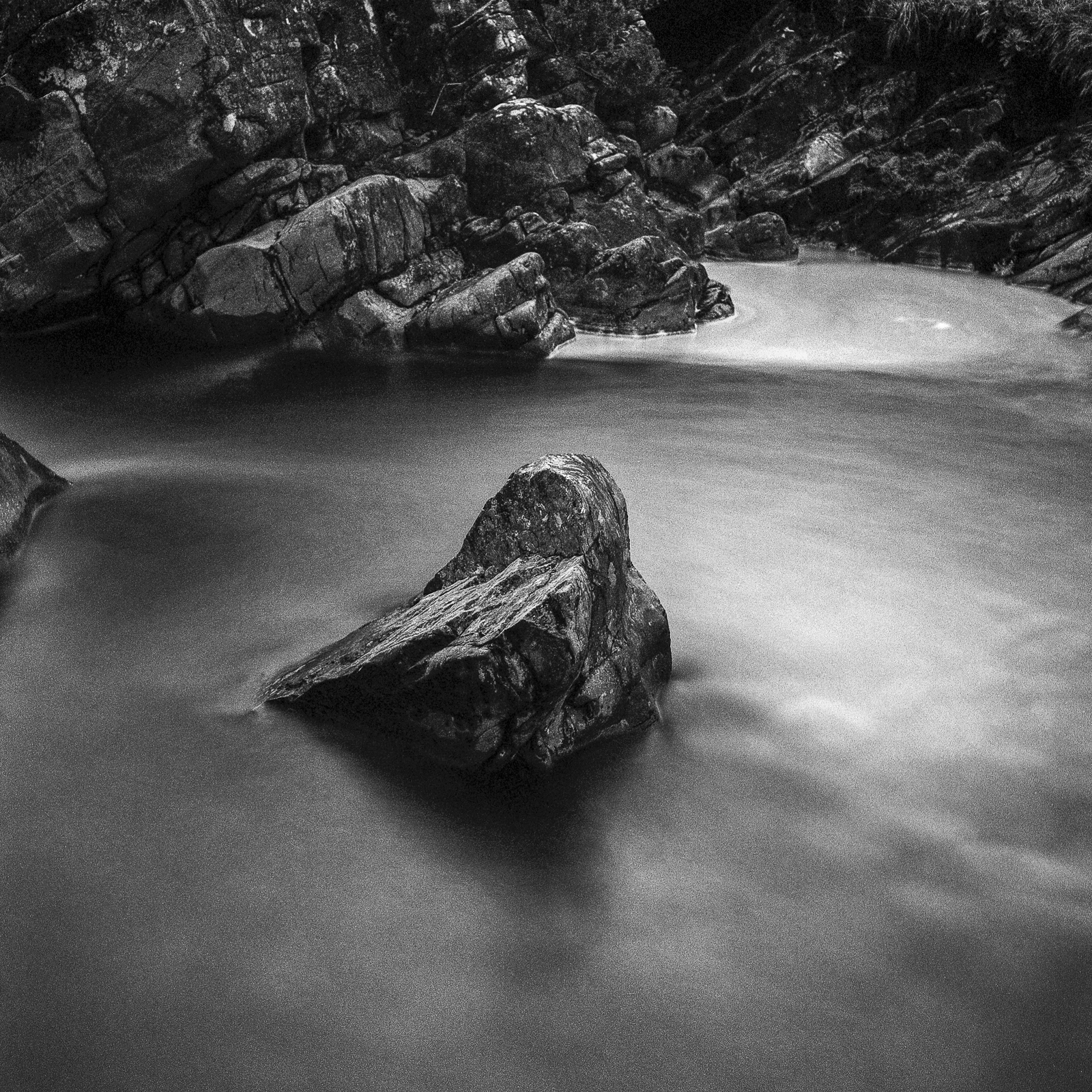
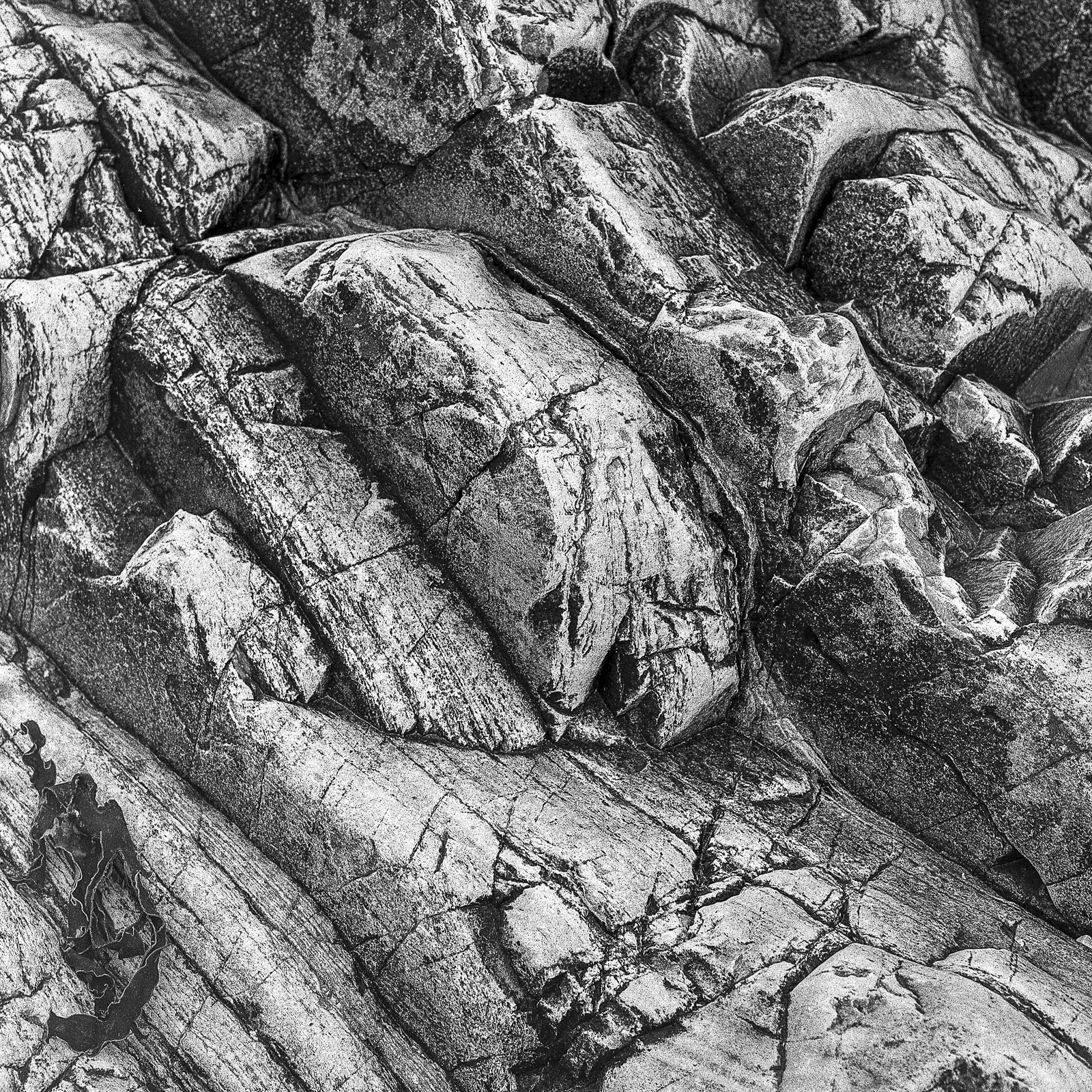
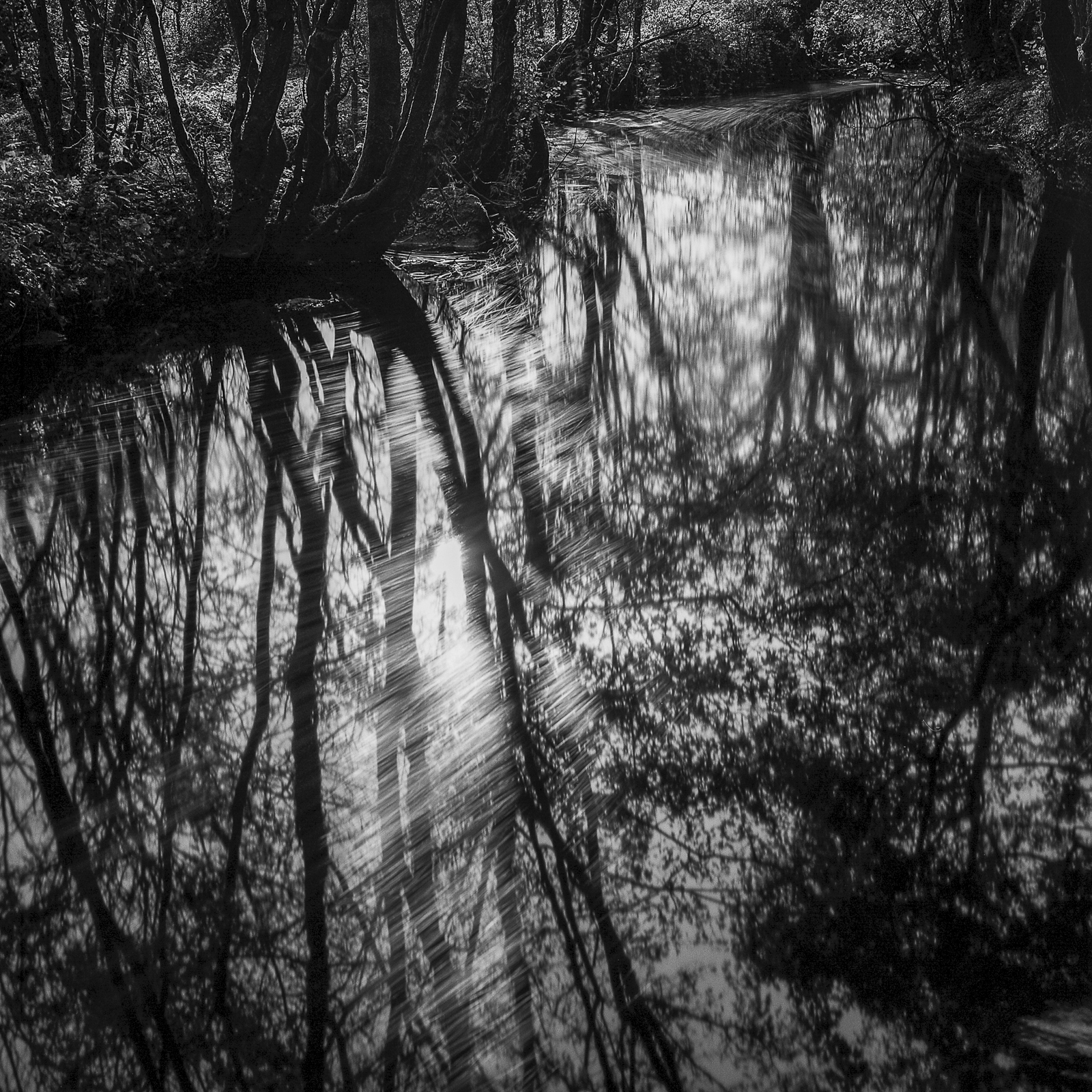
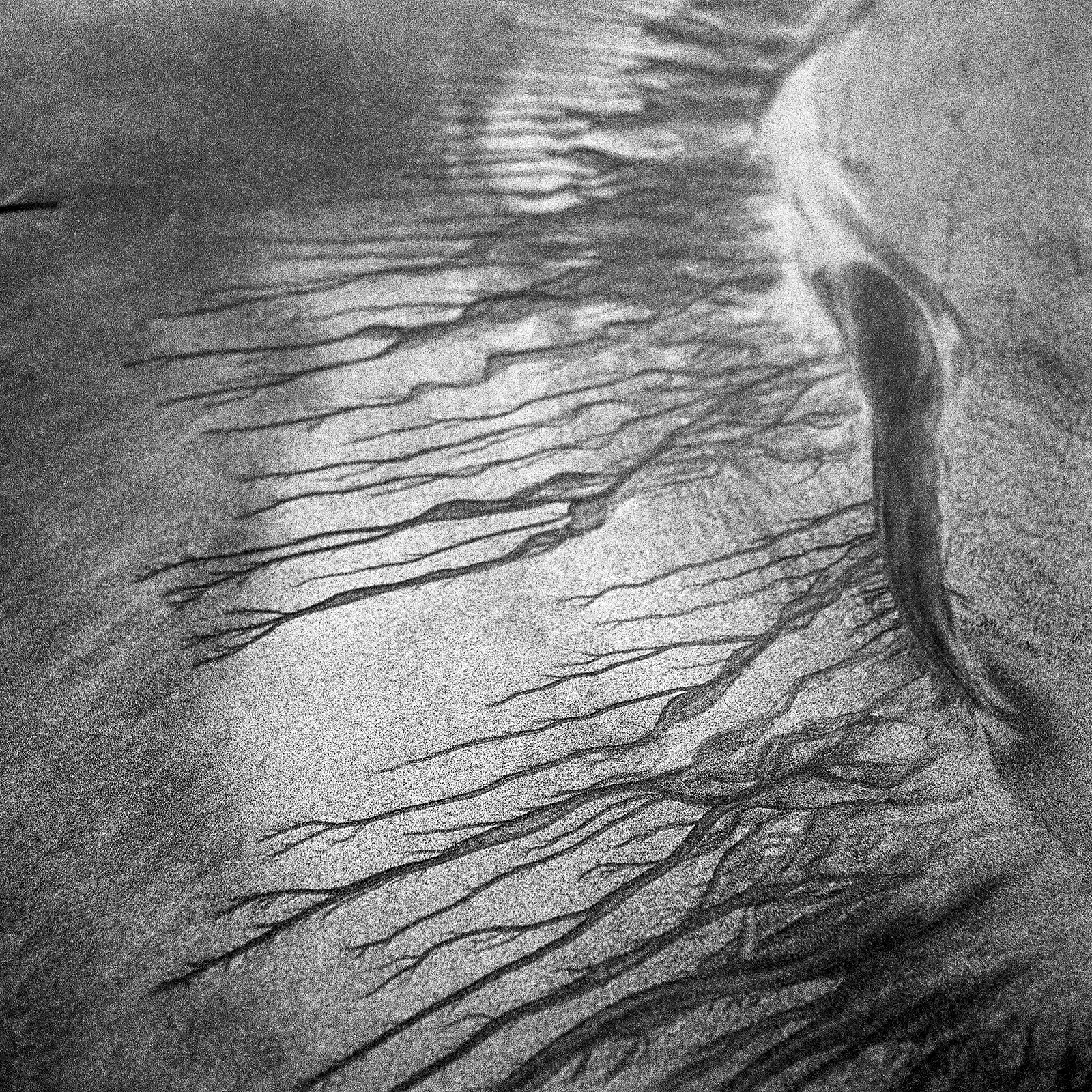
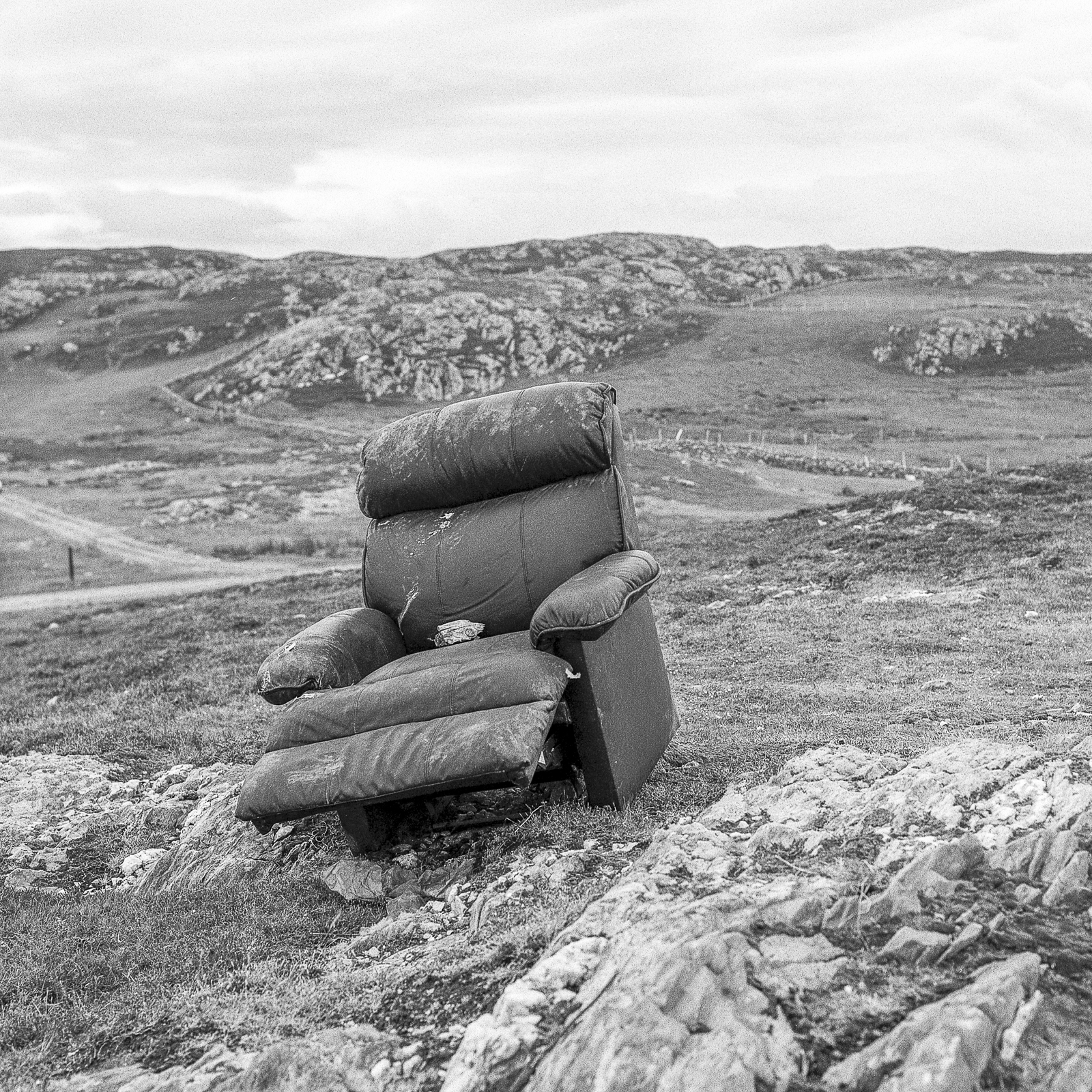
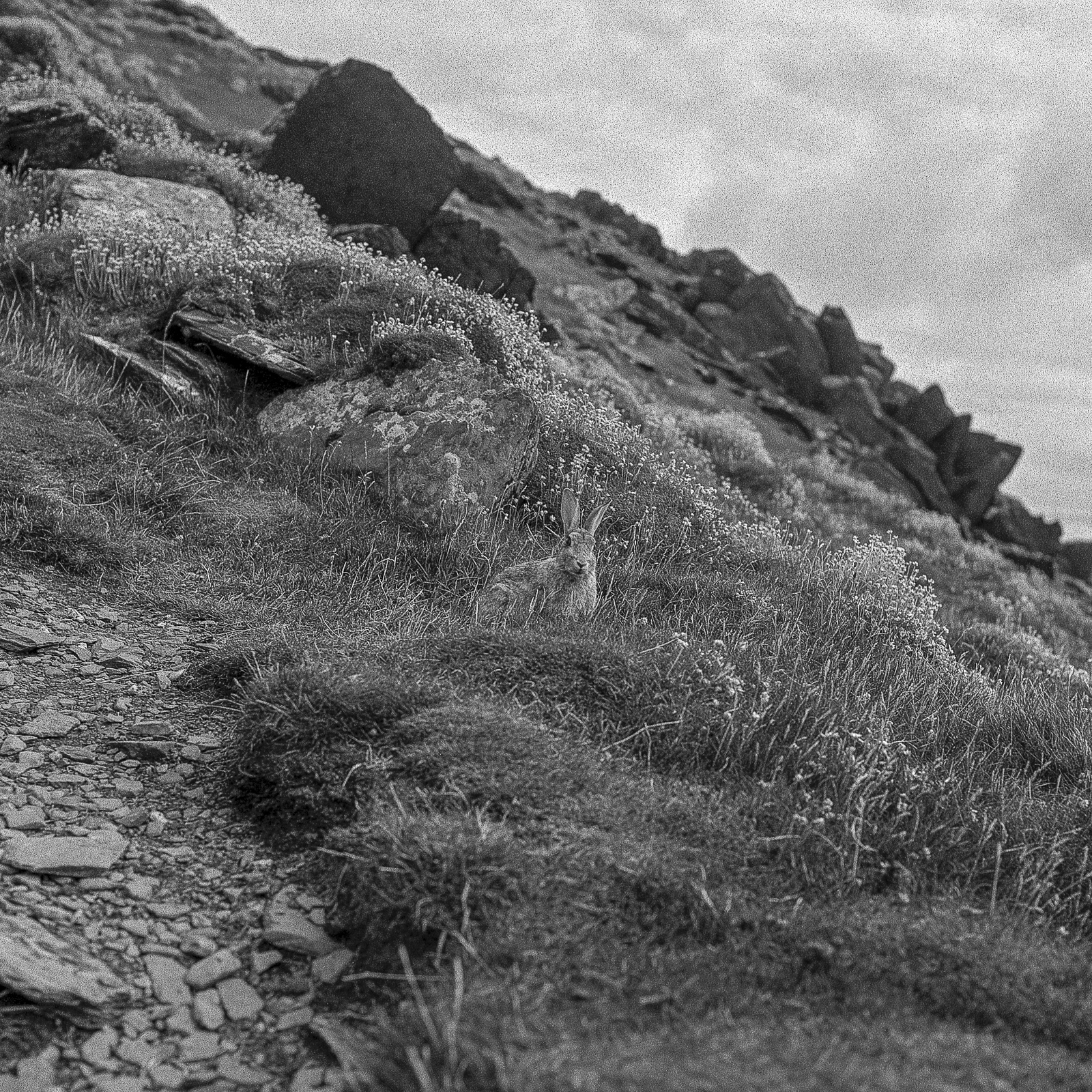
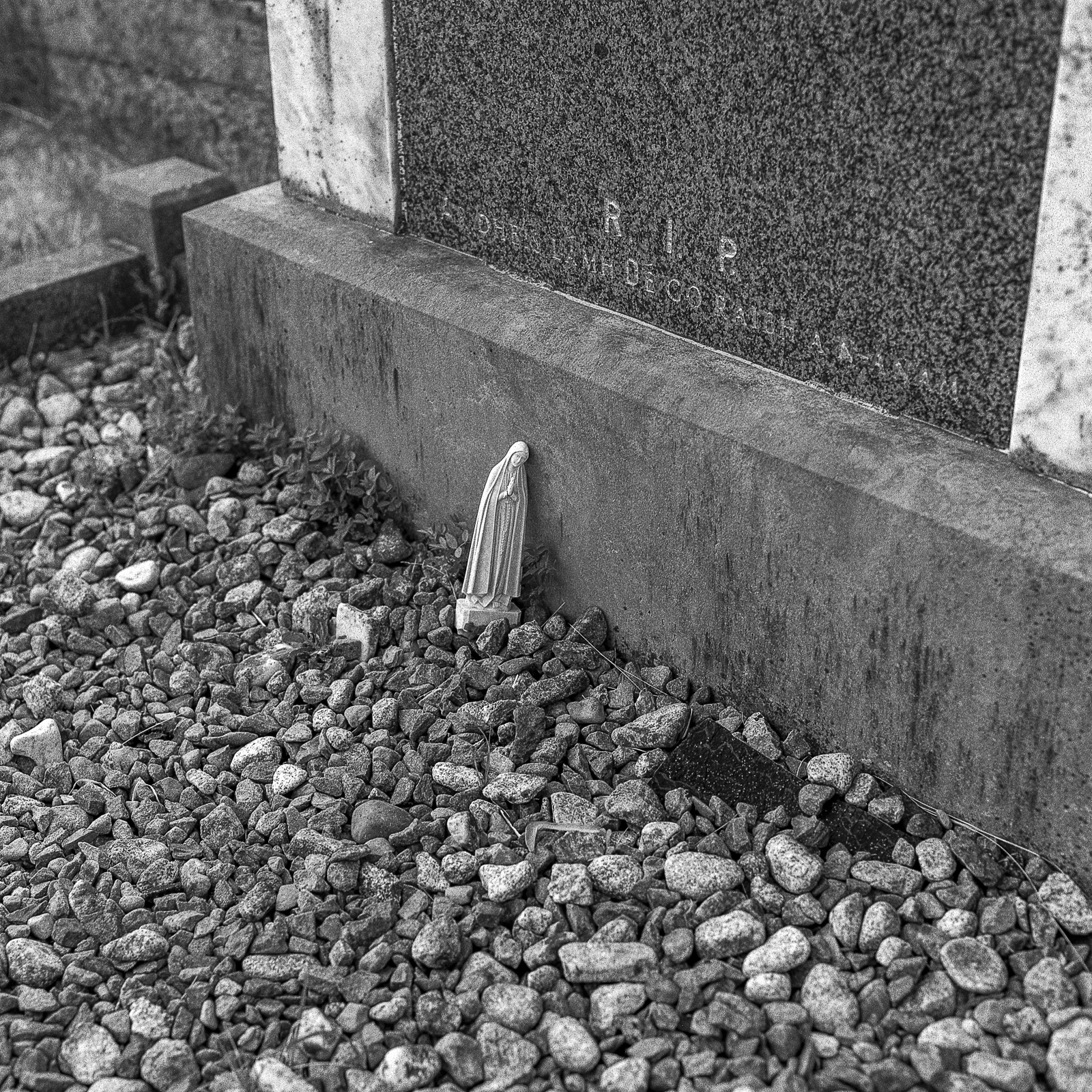
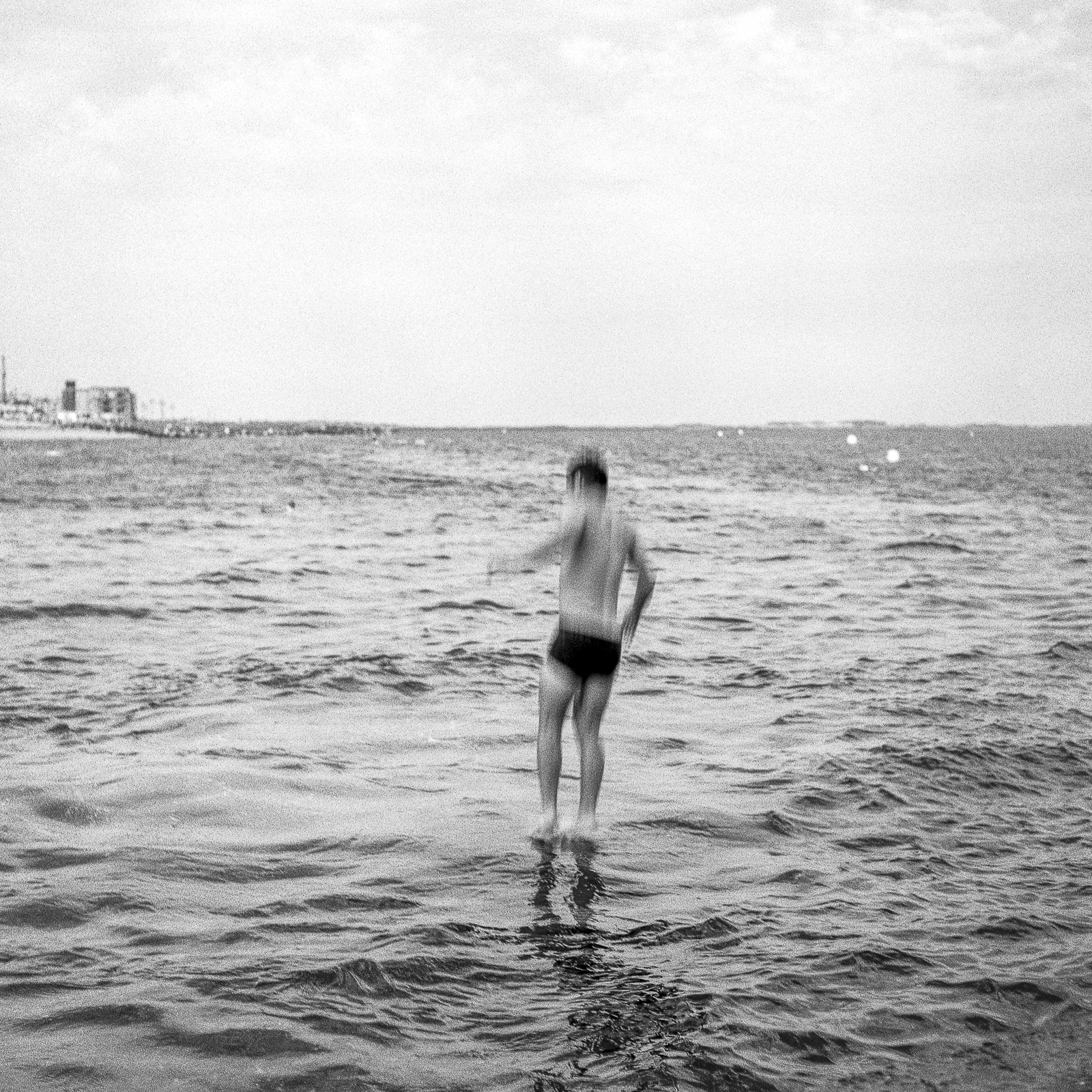
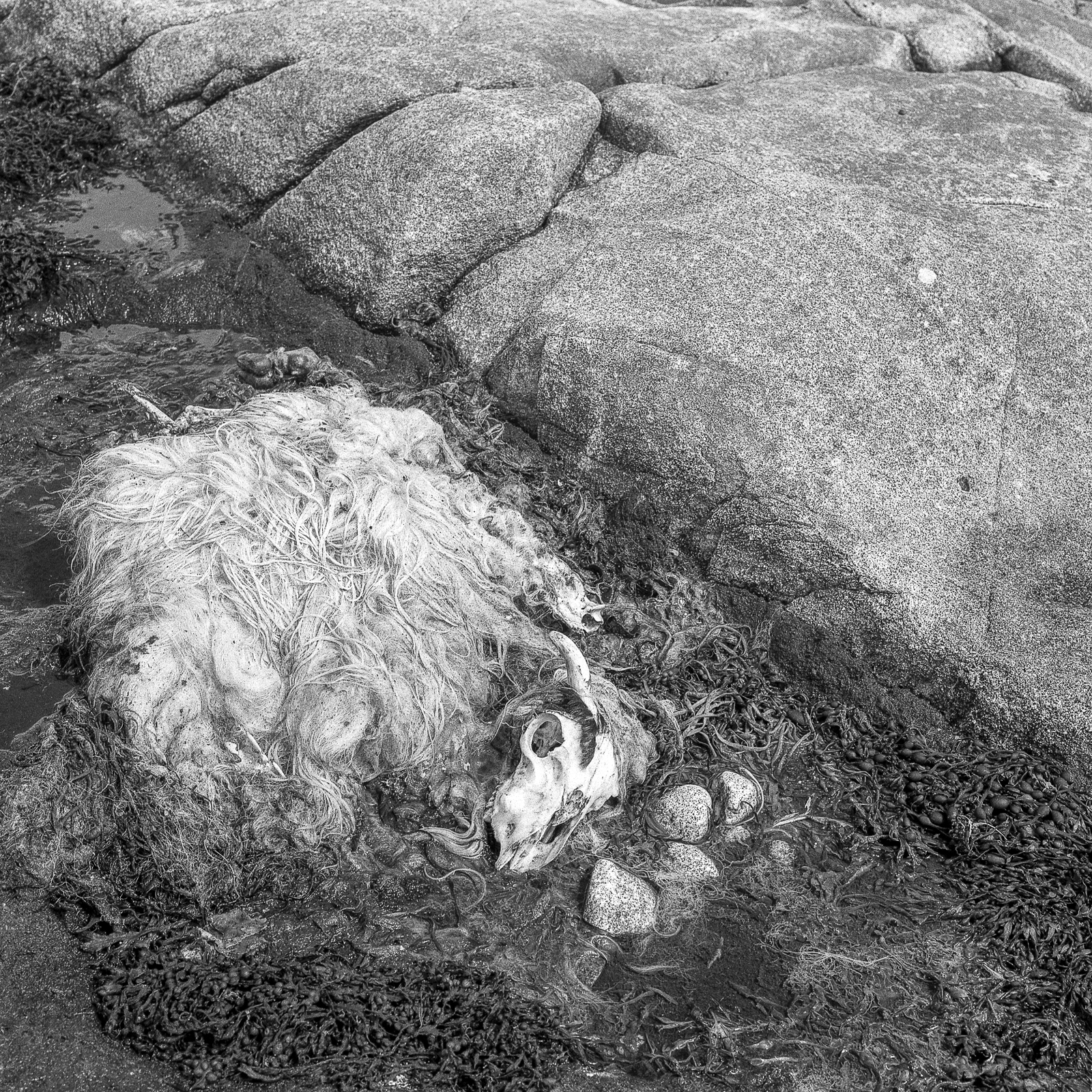
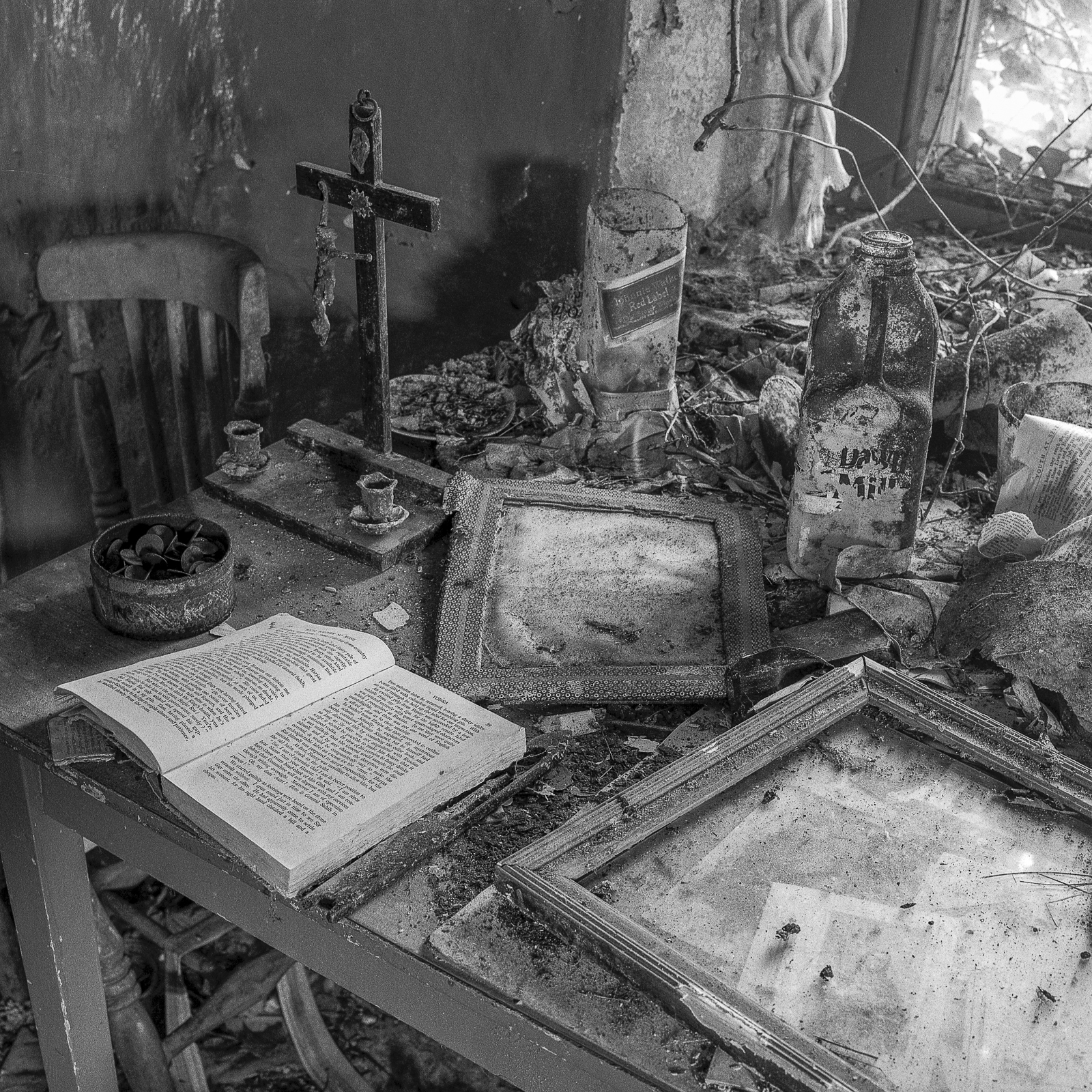
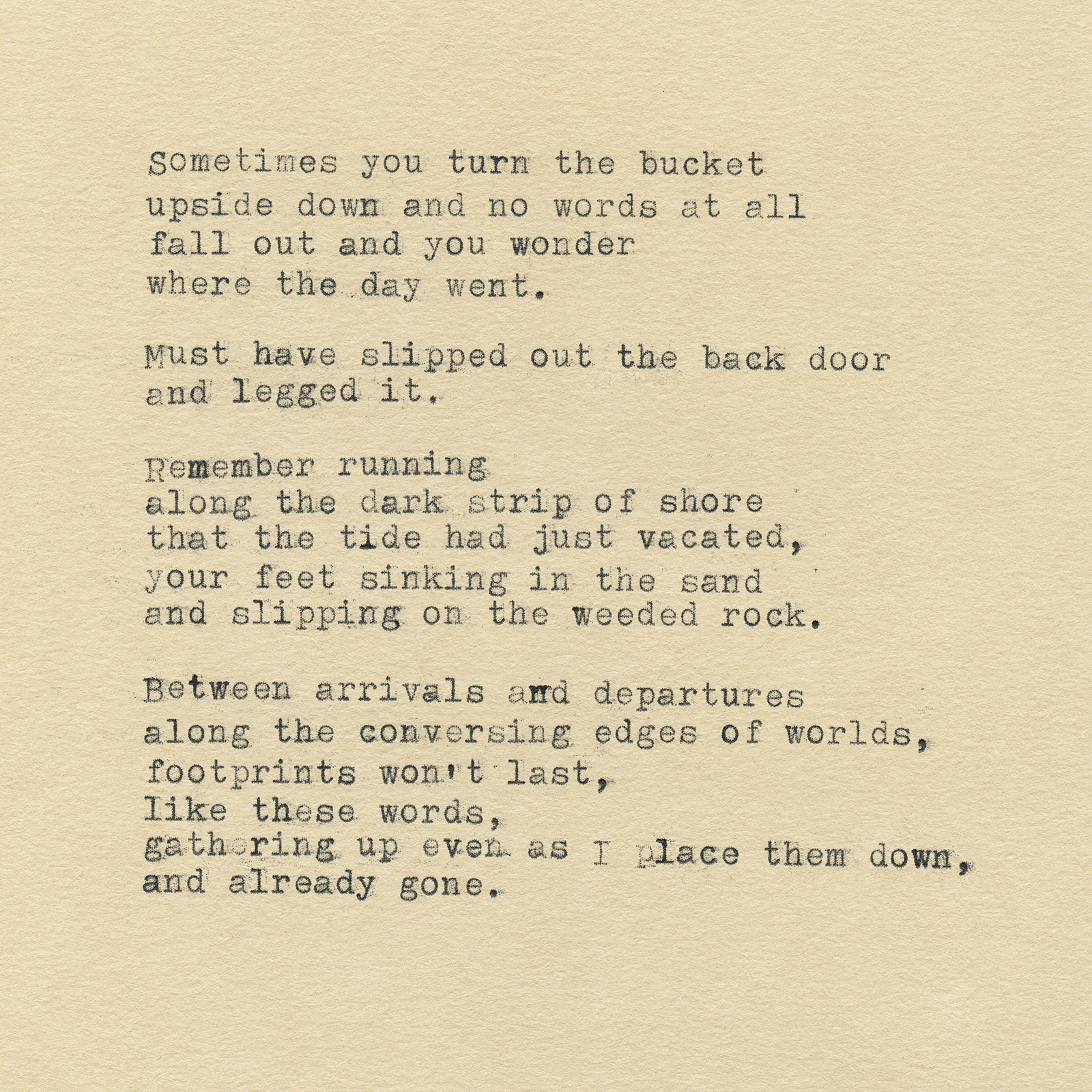
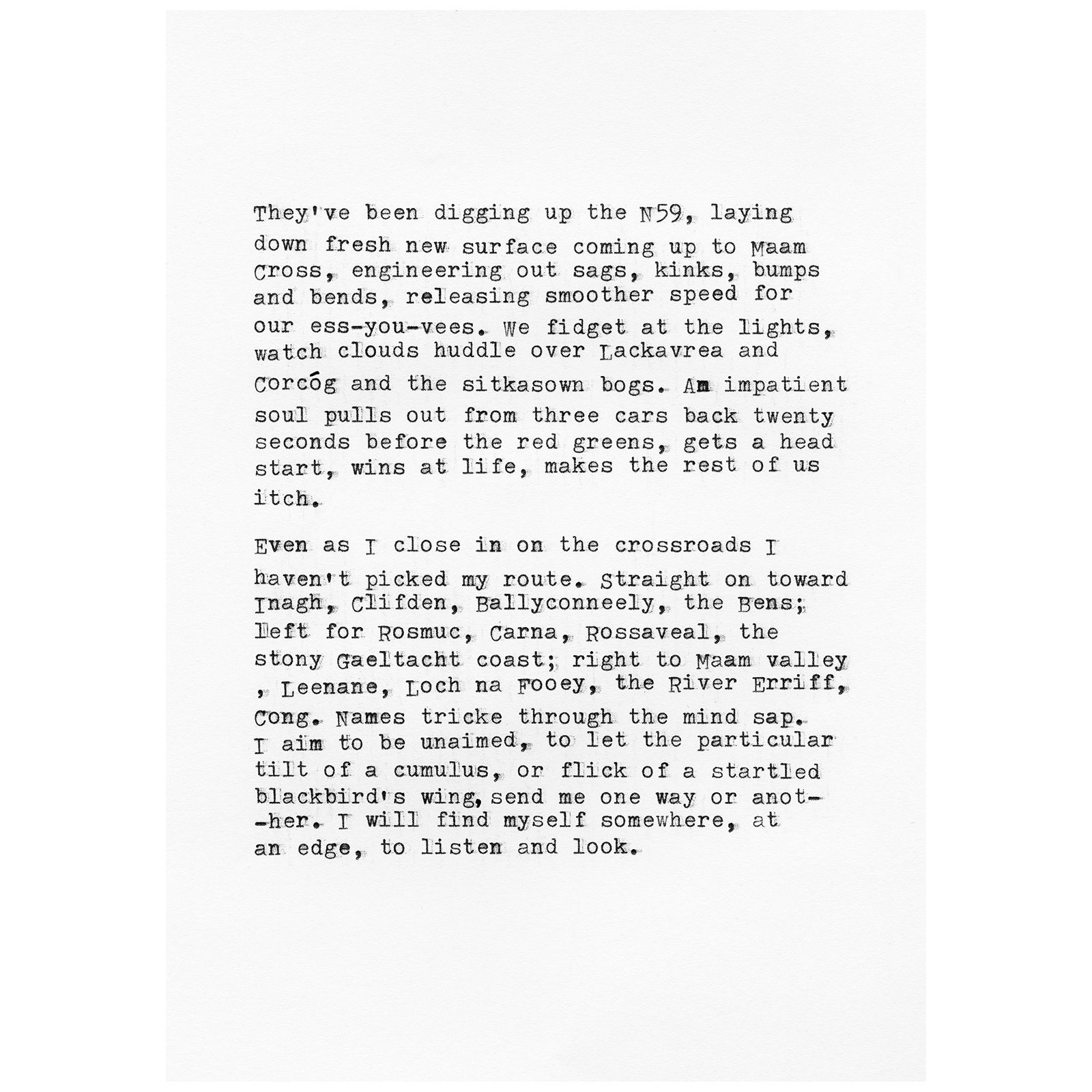
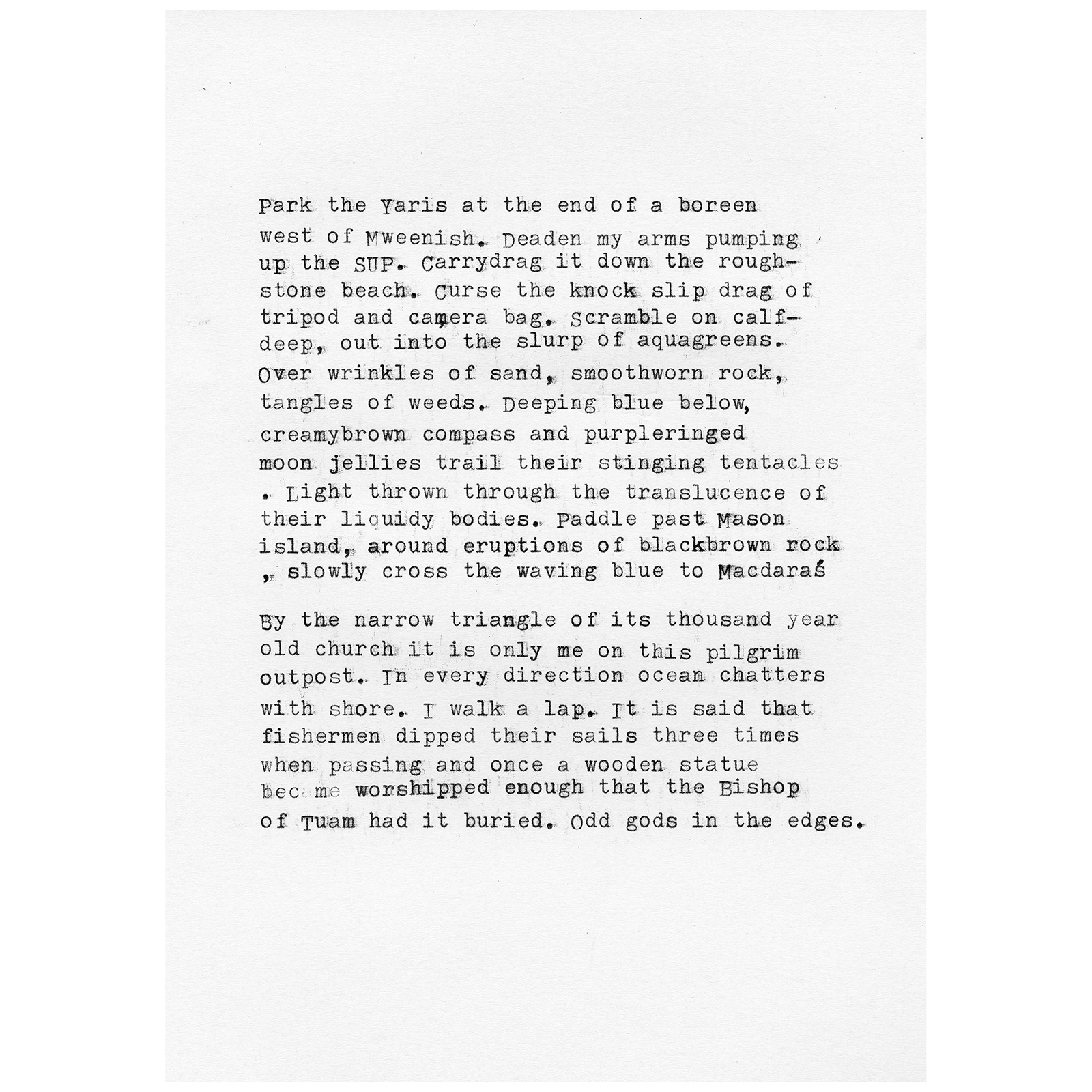
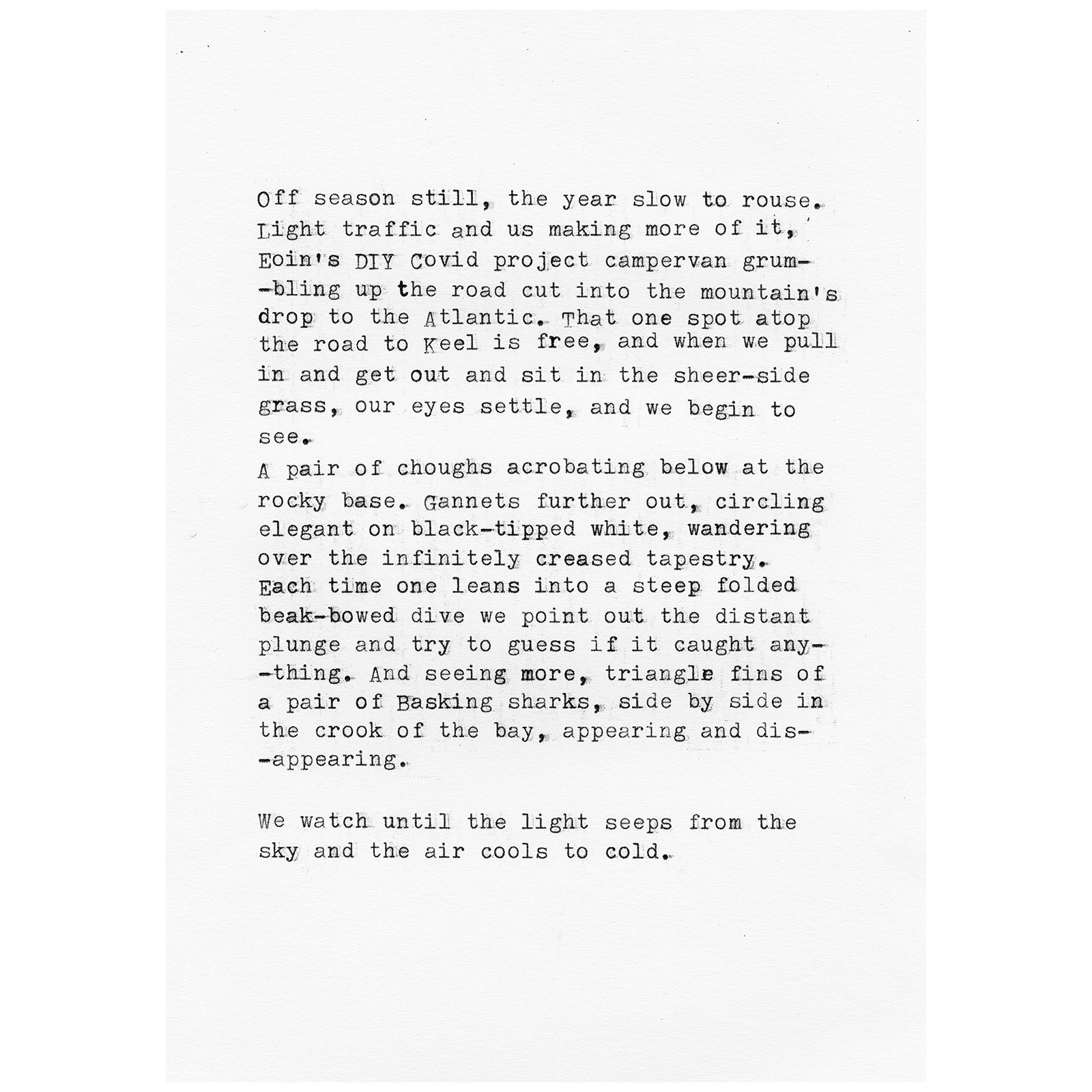
Walking Edges: an interview with the artist. Spring, 2024, Outset Gallery, Galway City.
Galway-based artist, Donal Kelly is learning to look closely and listen deeply along Ireland’s weathered Atlantic-facing west. Slow hours in quiet spaces and the methodical processes of analogue photography mirror the gradual depositing of geological and historical layers in these images. Gathered over many years, and many walks into the diverse terrains, Donal’s archive observes the many ways in which humans codify and manage seemingly accidental landscapes.
Below, art writer Meadhbh McNutt talks to the artist about his process, and the many “edgescapes” captured in black and white, crowded with ghosts, dented by the loves and losses of generations—marked by tides and the lifespans of human, tree or stone. Curated by Outset Gallery Co-Director Tom McLean @tommclean_art
Donal Kelly (@donakello) was the Winner of the Outset Gallery Showcase Award as part of OXO 2023 and was awarded a solo exhibition including production, curatorial & marketing.
Meadhbh McNutt: Can you walk me through your process?
Donal Kelly: My background isn’t in fine art education. So, this practice has been a diversion from life—as opposed to my focus. Most of these pictures were taken without any expectation that they would ever be used. The archive built up gradually. It’s almost an emotional thing; I keep going out and accumulating [these images] without even wanting to. I had been posting on social media but the images were getting swallowed by the feed. So,out of respect for these photos and their locations, I started to submit to places to see if I could give the work a [sense of] presence.
I had about 20 titles in mind for this exhibition; we [eventually] settled on Walking Edges. I did hundreds and hundreds of walks over the years, most of them along ‘edge’ spaces: marginal lands. You’re mostly outside the gaze of society in these spaces, and you have this sense of freedom. I [feel and act] differently when there is a building next to me, even if there is nobody inside. I know that somebody could look at me out of the window [at any moment], but in these more marginal areas, you are left to your own devices.
MM: A break from utility, maybe?
DK: Yes—a mental space where you’re pottering around and exploring like a kid. I think this is one of the factors behind our fascination with abandoned houses. It’s not only the clichéd story of loss and abandonment, but almost a voyeuristic [joy]. Whatever you’re drawn to, you can go to, and you don’t feel like you’re being watched. I used to drive up the M59 not quite knowing where I was going. There is the junction there at Maam Cross branching off to Leenane, Clifden, and Carraroe, and I would try to base the chosen route for my walk on some random [element of chance].
MM: That psychological state seems less about building a body of work out of an initial concept or overarching theme (as in a proposal or manifesto), and more about finding a “third space” where you’re not working, you’re not doing domestic tasks or buying things; you can just be a human for a while.
DK: You get to be human, and then you can listen more deeply and notice more. There is also a struggle in that I become more ecologically and environmentally aware. I’m noticing interference, interruptions and degradation. It’s not escapist. I could choose a more escapist way to inhabit the landscape, where I drive to a beach, sit on the sand and have a break from my routine. But I found myself going to the beach, climbing a fence, then walking a few miles this or that way. And [ultimately], getting yelled at by a farmer.
MM: [Laughs] …for going outside the lines.
DK: Yes! I’m restless, but I’m noticing more. I’m still in the reality of the landscape, noticing the bird life, the ocean, the way the humans inhabit the land. There is a sequence of dead animals throughout the images—dead dolphins and whale bones. The sheep image (the one such photograph included in the exhibited selection) has a more classical reference.
MM: There is a gothic feel to the sheep image, and throughout, actually.
DK: That is semi-conscious. I made a zine during COVID with poems and images, and people were picking up on the lonely, more melancholy aspects. I hadn’t directly picked up on that myself, although I knew I was doing this partly as a coping mechanism. I grew up in a big family, and even as a kid, I would do a lot of wandering on my own. A camera gives you that; you don’t need a studio—at the start at least. Eventually, you can accumulate a lot of images, and I really struggled with the curation side. A formal education might help more in that sense of understanding curation and project-driven, conceptual work. When you accumulate a lot, you have the opposite problem, where you don’t quite know how to pin things down. The basis of the work is the need to be out in these spaces, looking and thinking about my relationship with the landscape. I also have this guilt that I should be off doing something more productive.
MM: Art practice is so tainted by guilt, isn’t it?
DK: A lot of art does feel indulgent, but it also requires indulgence. You keep going round in circles, revisiting places, trying again. Then gradually, it becomes a body of work.
MM: Style seems to come from repetition and redundancy. I think any photography can be somewhat mournful in that you’re trying to snatch an image from time.
DK: One hundred percent. Every photograph is a [document] of something that’s dead in a way. The moment is gone. The photographer is yearning to just be in that moment, and the photograph is trying to grasp at the world. What you’re really doing is flattening the moment onto a surface and then doing something else with that.
MM: With editing software and more recent AI developments, images are no longer serving as documents or evidence in the way that they used to. Has that level of saturation influenced your choice to work with analogue materials?
DK: It has. My (education) background is in Computer Science; I did a BA in Philosophy and IT, and a Master’s in Software, but my photography has actually gotten less and less technical. I went through a phase where I was more nerdy about cameras and megapixels. Now, I haven’t bought new kit in a long time. I get uncomfortable when I see the latest models, and AI is a whole different level. Nobody knows where that is going to go.
MM: There is a paradox of choice with AI as an artistic tool. Look at the black and white, square format of the images around us — there is some satisfaction to be found in those kinds of limitations.
DK: AI takes out a lot of the constraints, and constraints are important. The interest that keeps you making work can also be undermined by AI. Authenticity is really hard to pin down, but it’s fairly obvious that a statistical, content-fed model isn’t authentic. The form [means less] without the human experience.
MM: It’s an amazing tool but I guess it’s a tool that aims to supplant all other tools, and we may enjoy consuming art but we also enjoy the act of making.
DK: Some people compare AI to calculators. There were concerns that calculators would disrupt how kids learn and make them all dumb. Then, the calculator soon became incorporated into education. But, it didn’t raise the same kind of problems that AI is raising. AI could give the form of every assignment for every course you’ve ever wanted to do, in minutes. Even emotionally, we’re at a stage where we don’t know how to feel because we can’t quite figure out what it’s [capable of] doing. Photoshop gives you these amazing tools now but they don’t know how people are going to use them. Most of the edits I make are dust spot removal on scans and some tonal changes – the equivalent of standard darkroom processes.
MM: In the project description, you talk about the history of these natural landscapes. Is there also personal history there?
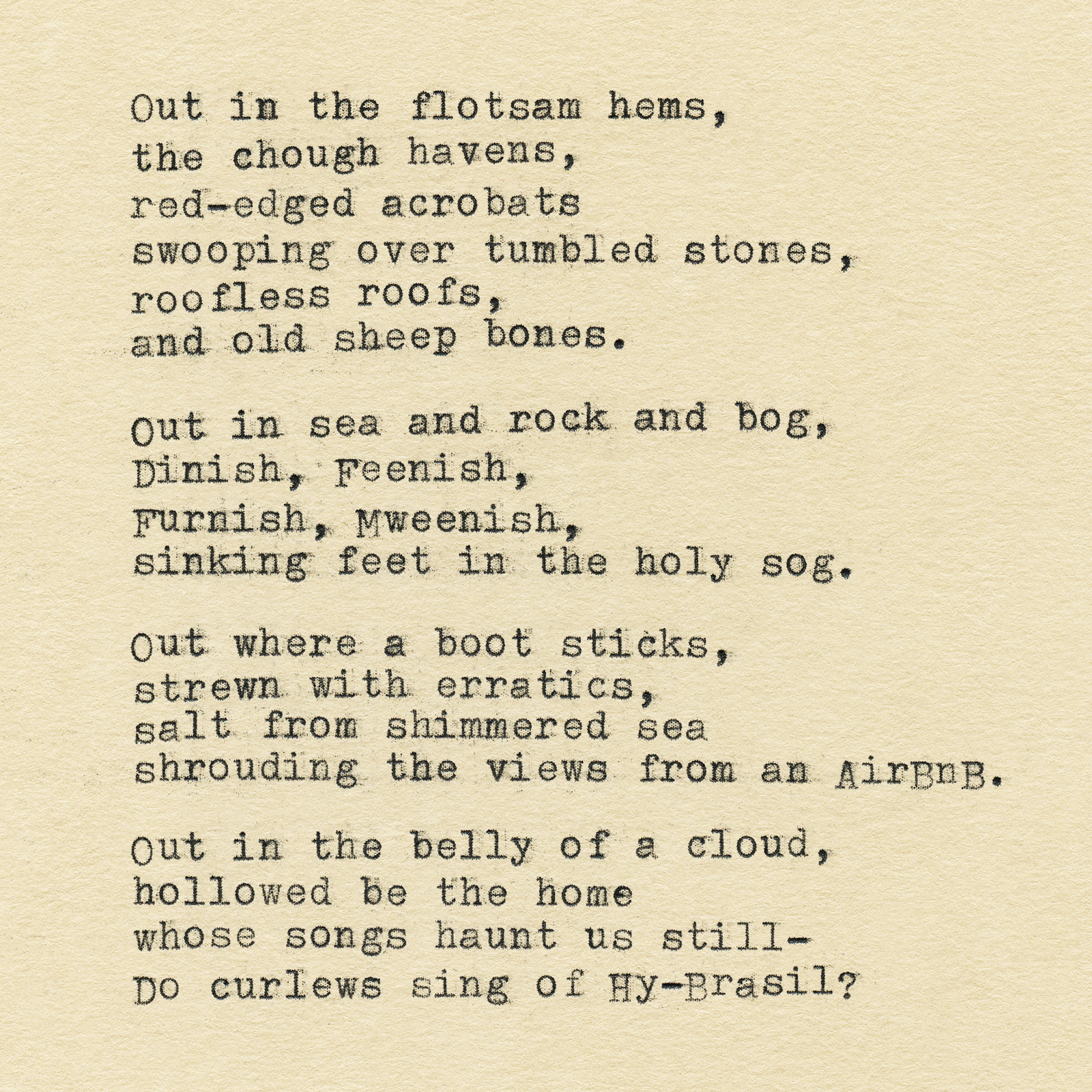
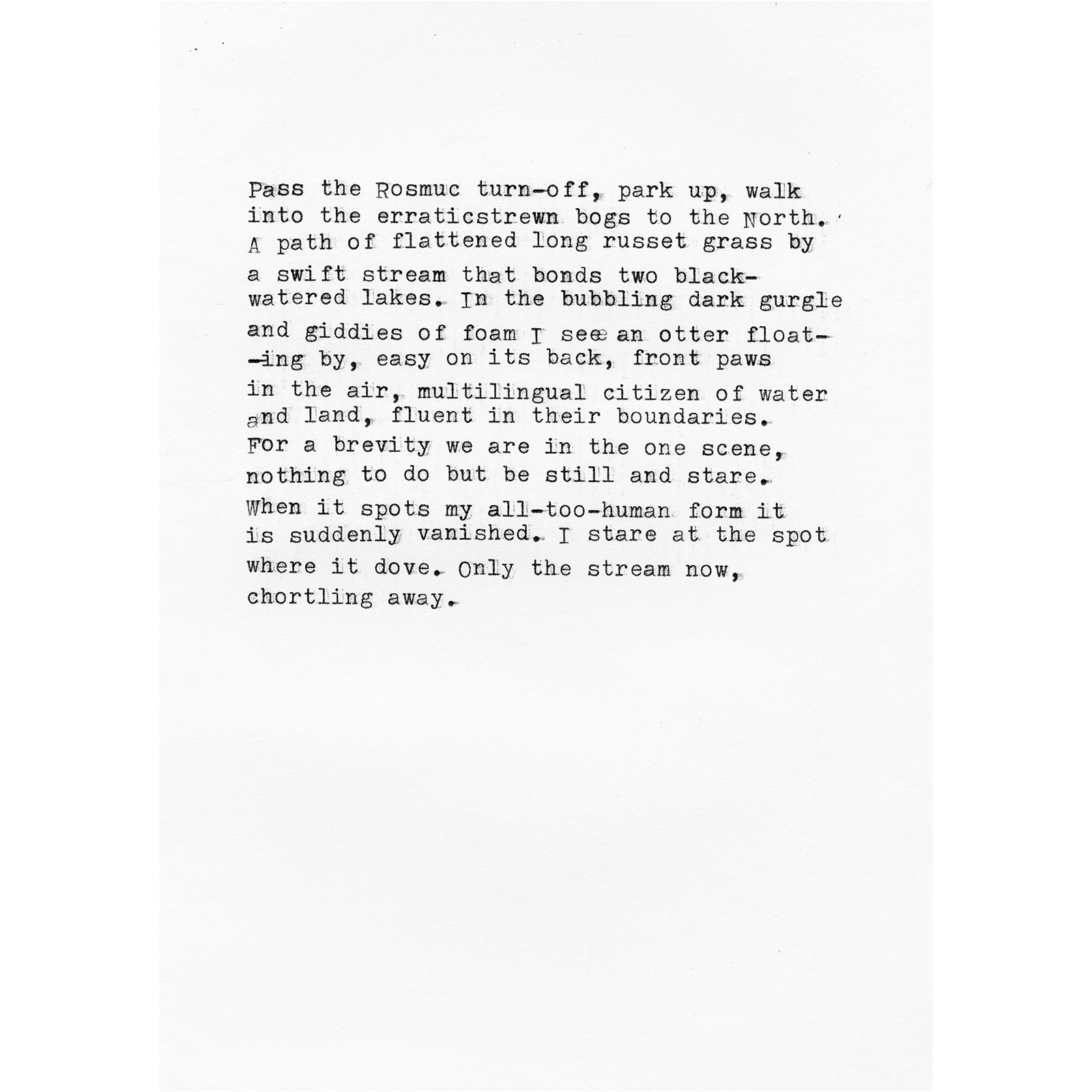
DK: Sure, I’ve gone to a lot of places that are somewhat tied to family history and other places that share similarities with the landscape that I grew up in. There were a few different strands to the project; one was uninhabited islands. My great grandmother was born on an island near Renvyle in Connemara (now uninhabited). I kayaked out to the island and did some paddle boarding around there. I have visited around 15–20 islands now. I was trying to find ways to describe these islands and the images, which culminated in a lot of text snippets. These would often start as captions on Instagram and morph into poems. For me, good landscape work is emotional work. You’re documenting both the interior and exterior space. There is always the risk of a postcard aesthetic with landscapes. There’s nothing wrong with postcards, but a postcard serves a specific purpose in its prettiness. My attempt with these images was to give the landscape a wholeness that lends itself to emotion.
MM: Being from the countryside, you can’t help but notice the landscape changing throughout life. The shores change shape, or more rubbish shores up, or you might see less and less shellfish.
DK: Yes, I think it depends on the currents, too. I have photographed so many washed up items, like fishing gear, and wellington boots. Your surroundings do influence your perspective on the management of the landscape. Some visitors to the West of Ireland will think that the sheep are wildlife. They might photograph a sheep on a hill as if it were an animal in the wild. Then, they gradually start to see that almost all of the west coast is farmland. And almost all the access to nature is vulnerable to being shut off. I’ve done some other photographic work on Sitka spruce plantations. Most people are happy to see woodlands, but these types of trees bring their own problems. You start to realise that there is very little left of the landscape that is untouched by us. That deep noticing and listening can leave me feeling cynical, but I’m also trying to hang on to the curiosity
I can get insecure about my work because I have to repeat the same processes again and again to find something good, but the process is worthwhile. It’s good for people to have opportunities to wander and observe. Sometimes, we want to disappear, but that urge switches off something important for society, and that is society’s ability or willingness to look at itself.
Meadhbh McNutt is an Irish artist, editor and writer (b.1992, Donegal IE). A recipient of the VAI/DCC Art Writing Award 2020 and 2022 Agility Award, Meadhbh’s work can be found in publications including Tank Magazine and Mirror Lamp Press. She has written and edited for a range of organisations including GARAGE Magazine (Vice Media) and the Douglas Hyde Gallery (Dublin). Meadhbh has facilitated talks and workshops at various institutions including the Crawford Gallery, Cork; Galway Arts Centre and TU Dublin School of Creative Arts. She is currently Communications Officer at the College of Business, Public Policy and Law in the University of Galway.
meadhbhmcnutt.com | @meadhbhmcnutt